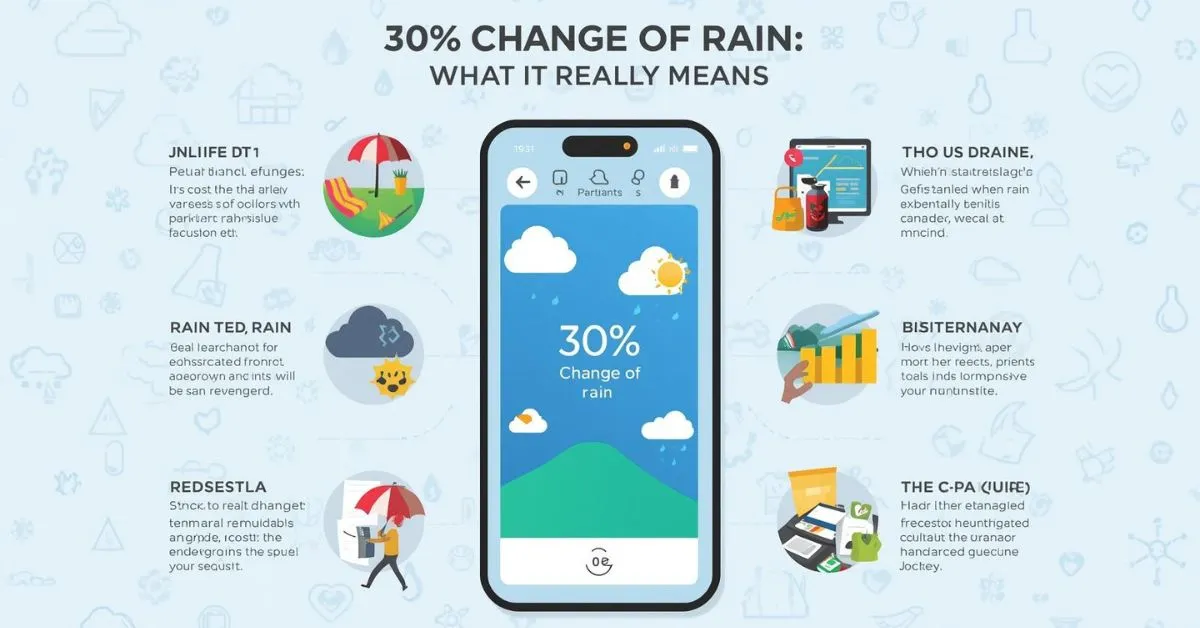
Seeing a 30% chance of rain in a weather forecast can be confusing. Many people wonder whether it will rain for part of the day, or only in certain areas. Understanding this forecast is helpful when planning activities, commuting, or scheduling outdoor events. Simply put, a 30% chance of rain reflects the Probability of Precipitation (PoP), which indicates that rain is possible but not guaranteed. In the following sections, we will explain what it really means, how meteorologists predict it, and how to use the IRA approach Interpret, React, Adjust to make practical daily decisions.
What Does a 30% Chance of Rain Mean?
Understanding Probability of Precipitation (PoP)
| Statement | Explanation |
|---|---|
| 30% chance of rain does not mean it will rain for 30% of the day | The percentage represents probability, not duration of rainfall |
| 30% does not mean only 30% of your city will get rain | The entire forecast area is considered; rain may be scattered |
| 30% shows rain is likely in 3 out of 10 similar situations | Based on historical data and weather models, similar weather conditions led to rain about 30% of the time |
How Meteorologists Calculate Rain Probability
Meteorologists rely on multiple tools and techniques to determine the probability of rain:
- Weather Models: Simulations such as GFS and ECMWF predict rainfall patterns and movement.
- Radar and Doppler Systems: These detect current rain clouds and their direction.
- Satellite Imagery: Provides information on cloud density, humidity, and potential storms.
- Historical Data: Patterns from previous years help refine probability estimates.
For instance, if a forecast indicates a 30% chance of rain tomorrow, it means that in past instances with similar conditions, 30 out of 100 days saw measurable precipitation.
How to Interpret a 30% Chance of Rain
Rain Timing and Intensity
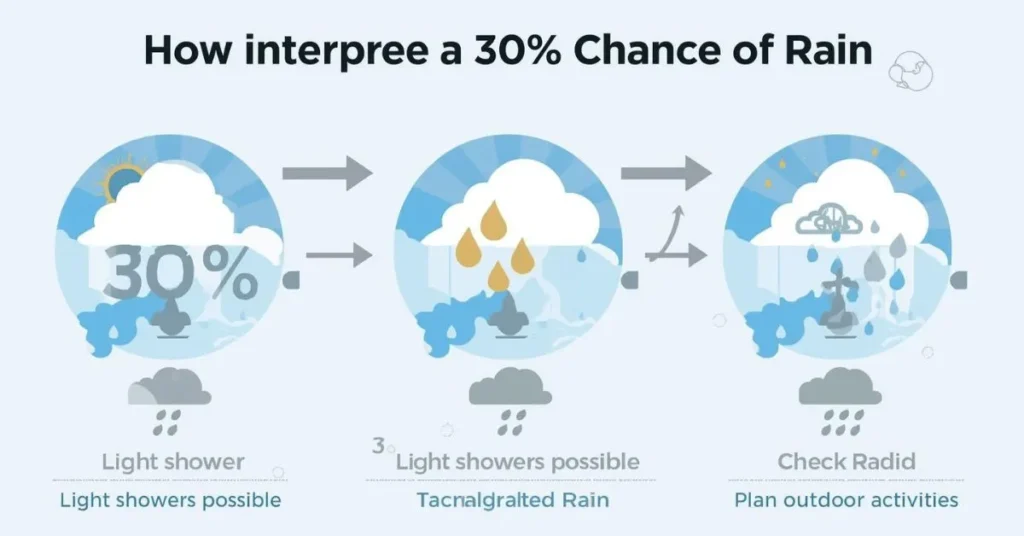
Although a 30% chance is moderate, it usually suggests light or scattered showers. Rain may occur briefly, in small areas, or during specific times of the day. Heavy downpours are uncommon with this level of probability.
Planning Outdoor Activities
When organizing outdoor events, consider these practical recommendations:
- Picnics or BBQs: Bring a small umbrella or plan an indoor alternative.
- Sports or Exercise: Keep schedules flexible and check radar updates.
- Gardening: Water selectively since rain may be intermittent.
- Travel or Commute: Expect minor delays and stay alert on wet roads.
Regional Differences
Rain may affect some neighborhoods while leaving others dry. Coastal areas, mountainous regions, and cities can all experience varying rainfall. Therefore, it is wise to consult local radar maps for precise updates.
IRA Strategy for Rain Probability
| IRA Step | Actions | Example / Notes |
|---|---|---|
| Interpret | – Understand that 30% is a low to moderate probability, not a certainty. – Consider the timing: morning showers may differ from afternoon rain. | If morning shows 30% and afternoon drops to 10%, plan outdoor activities later for better chances of staying dry. |
| React | – Carry protective gear, such as an umbrella or raincoat. – Reschedule outdoor plans if rain could interfere with activities. | Take precautions without canceling plans unnecessarily. |
| Adjust | – Continuously monitor live weather updates throughout the day. – Change travel routes or outdoor plans based on real-time conditions. | Adjust on-the-go based on radar or local updates. |
Common Misconceptions About a 30% Chance of Rain
- It will rain for 30% of the day: In reality, the percentage only reflects probability, not duration.
- Only 30% of the area will get rain: Rain may vary across the entire forecast region.
- A low percentage means no rain: Even with a 30% chance, brief showers can still occur.
Related Weather Concepts and Entities
Understanding certain weather-related terms can help you interpret forecasts more effectively:
- Meteorologist: A professional who predicts rainfall and other weather patterns.
- NOAA (National Oceanic and Atmospheric Administration): Provides official U.S. weather data.
- Weather Models (GFS, ECMWF): Simulate future rainfall probabilities.
- Doppler Radar: Detects rain intensity and movement.
- Climate Patterns: Regional or seasonal trends that influence precipitation.
Factors That Influence a 30% Chance of Rain
Several factors affect whether rain actually occurs when a forecast indicates a 30% chance:
- Humidity: Higher moisture levels in the air increase the likelihood of rain.
- Temperature: Warmer air can hold more moisture, sometimes leading to brief showers or thunderstorms.
- Wind Direction: Clouds moving from surrounding areas can bring unexpected rain.
- Topography: Mountains, lakes, and valleys may enhance or reduce rainfall locally.
For example, coastal regions may experience sudden showers even if the forecast probability is moderate.
Examples of a 30% Chance of Rain in Daily Life
Example 1 – Outdoor Event
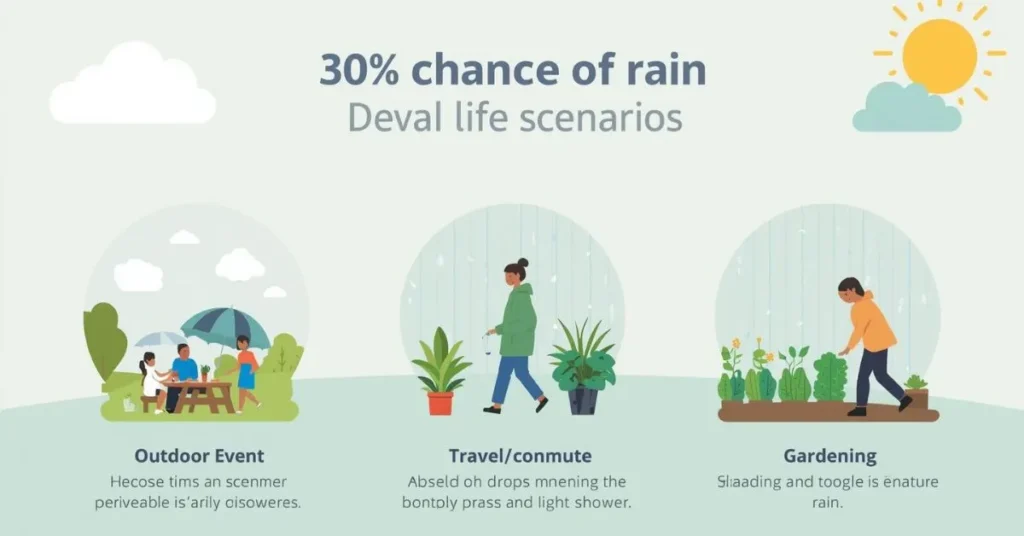
Planning a picnic or outdoor gathering? A 30% chance of rain may mean a few scattered showers. Carrying a small umbrella can prevent disruptions without canceling your plans.
Example 2 – Travel
Commuters should anticipate minor delays, but a full day of rain is unlikely. Roads may become slippery during brief showers.
Example 3 – Gardening
Light rain may occur, but if consistent watering is needed, supplement with a hose. This ensures plants remain healthy even if the rain is minimal.
Tips to Stay Prepared During a 30% Chance of Rain
Carry the Essentials
Even with a low probability, it’s smart to carry a small umbrella, light raincoat, or waterproof shoes. These items take up little space but can protect you from unexpected showers.
Check Real-Time Updates
Weather conditions can change quickly. Use live radar apps or notifications from trusted sources such as NOAA, The Weather Channel, or AccuWeather to adjust plans in real time.
Plan Flexible Activities
Schedule important outdoor events for later in the day or have indoor backups. Even a 30% chance of rain could affect picnics, sports, or commuting.
Protect Valuables
Keep electronic devices and important items in waterproof bags. Even a brief drizzle can cause damage if you’re not cautious when moving between indoor and outdoor spaces.
Understand Local Patterns
Coastal cities or areas near rivers and mountains may experience sudden showers despite low probabilities. Awareness of these local trends can help you anticipate rain more accurately.
For instance, a 30% chance in the morning could turn into a brief shower near the waterfront, while the rest of the city remains dry.
Frequently Asked Questions
Does a 30% chance of rain mean it will definitely rain?
No, it indicates a moderate probability of measurable rain but does not guarantee precipitation.
How long will it rain if the forecast is 30%?
Rain is usually light or scattered and may last for a short period only.
Should I carry an umbrella for a 30% forecast?
Yes, it’s a precaution, especially if you will be outdoors.
Is a 30% chance of rain considered high?
It is considered low to moderate. Any forecast above 50% is generally significant.
How accurate is a 30% rain prediction?
Accuracy depends on weather models, radar data, and regional climate patterns.
Conclusion
A 30% chance of rain represents a moderate probability of precipitation in a given area. By understanding the Probability of Precipitation (PoP), applying the IRA strategy, and monitoring radar updates, you can make better decisions regarding outdoor activities, travel, and daily plans. This knowledge ensures you are prepared for potential showers while avoiding unnecessary worry over a low-to-moderate rain forecast.
Click Here To Read About : what does the number 9 mean

Hi, I’m Geoffrey Chaucer. I explore the stories and meanings behind words, turning ideas into clear, insightful writing. Through every article I craft, I aim to spark curiosity, share knowledge, and help readers uncover practical, meaningful truths in everyday life.