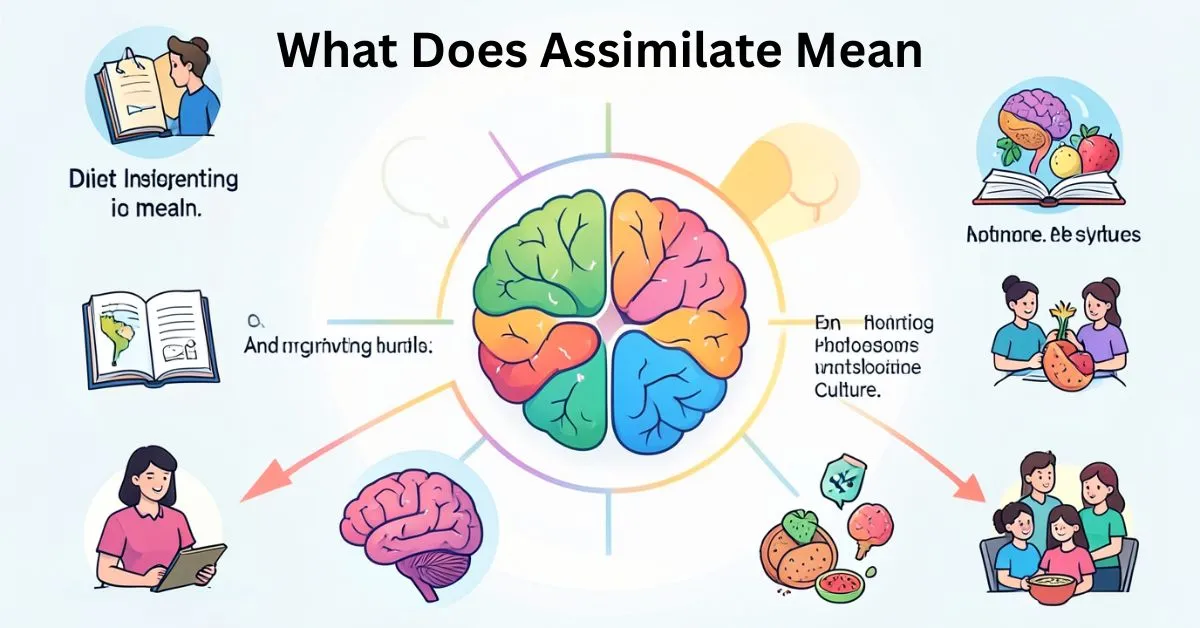
Understanding words helps us connect with the world, and “assimilate” is one of those key terms. But what does it actually mean? Simply put, it refers to taking something in, understanding it, and making it part of yourself or a larger system. This idea is used in many parts of life. It appears in school, culture, the body, the mind, and work. Knowing what it means can help you talk clearly, learn faster, and adjust easily in daily life.
For example, students often need time to absorb new information in school. When someone moves to a new country, they may adapt to society by learning the language and customs. Even our bodies process nutrients from food to create energy and maintain health. In all these cases, the idea is about taking in, blending, and integrating new knowledge or experiences into a larger system.
By the end of this guide, you will know what does assimilate mean. You will see examples from many situations. You will learn helpful synonyms and antonyms and will also avoid common mistakes. Plus, you will get easy tips to use this word in writing, learning, and daily life.
Simple Meaning of Assimilate
So, what does assimilate mean in simple words? It means taking in something new and making it part of yourself.
In school, students learn and remember new information. When they study a lesson and use it in homework, they have fully understood it.
In society, it means joining a new community. Immigrants often learn the rules and customs while keeping their own identity. This helps them feel accepted and connected.
In the body, it means absorbing nutrients from food. The cells use them to create energy and stay healthy.
In psychology, it is about learning, thinking, and changing behavior. By knowing this, you can use the idea correctly in many situations.
How to Use Assimilate in a Sentence
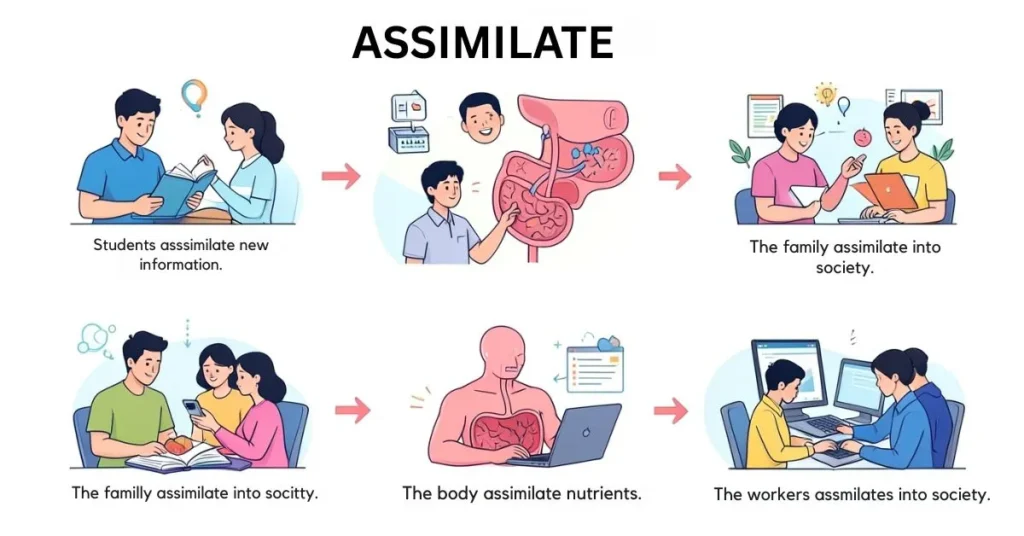
Now that you know what does assimilate mean, let’s see it in real examples:
- Learning: “Students need time to assimilate new information before progressing to advanced topics.”
- Culture: “The family slowly assimilated into the multicultural community.”
- Biology: “The body assimilates nutrients after digestion for energy and growth.”
- Workplace: “The company quickly assimilated new technology into daily operations.”
As you can see, to assimilate means to take something in and make it part of a system. It can be knowledge, culture, or the body. It always involves absorption, adaptation, and integration.
Assimilate Meaning in Different Contexts
1. Assimilate in Learning & Education
In classrooms, students assimilate knowledge through learning, comprehension, and information processing. Their memory keeps the concepts they learn. Schema integration helps them connect new ideas with what they already know. This process changes behavior and improves critical thinking.
2. Assimilate in Culture & Society
Cultural assimilation happens when a person moves into a new society. They learn new customs and daily habits.
They slowly adjust to the way people live. At the same time, they still keep parts of their own identity.
They may speak a new language and follow local traditions. This helps them feel welcome and safe. As a result, they feel like they belong in the community.
3. Assimilate in Biology
The biological process involves digestion, nutrient absorption, and energy conversion. Cells use nutrients for growth, repair, and daily energy. Without proper assimilation, the body cannot function efficiently.
4. Assimilate in Psychology
In psychology, assimilation involves cognitive processing, perception, and mental adaptation.
It helps the brain fit new experiences into what we already know. Because of this, our behavior can change. As a result, we understand things better.
5. Assimilate in Organizations & Systems
Companies assimilate innovations or policies through system adaptation, integration, and organizational change. Successfully merging new tools improves efficiency and ensures smooth operation.
Difference Between Assimilate and Integrate
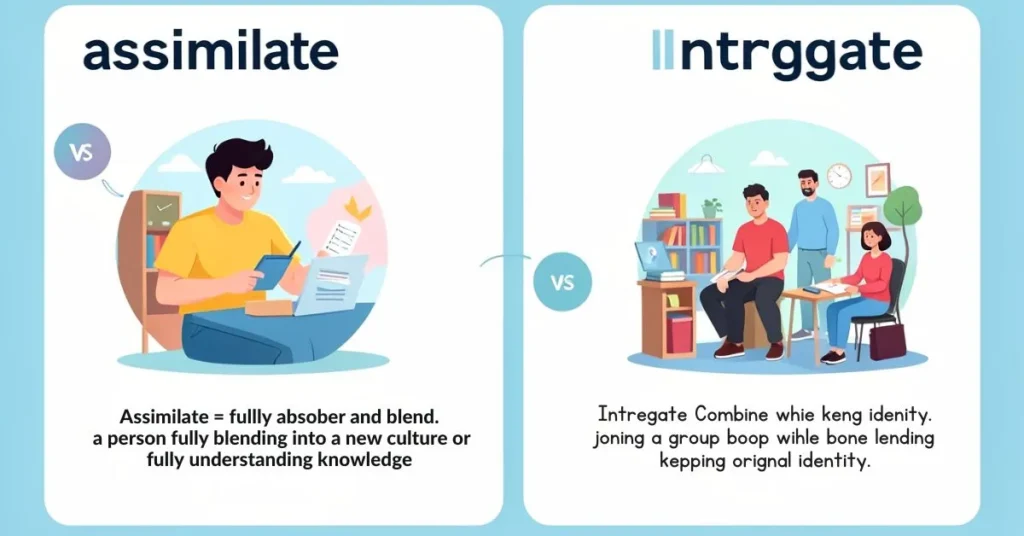
Many people mix up assimilate and integrate, but they are different. Integrate means joining parts together while each part keeps its own identity. Assimilate means taking something in and becoming a full part of the whole.
For example, a student may add new ideas to notes. That is integration. However, when the student understands the idea and uses it in real life, that is assimilation.
In culture, people can live in a new country and still keep their traditions. That is integration. On the other hand, if they start following most of the main culture’s customs, that shows assimilation.
Knowing this difference helps your writing stay clear and correct.
Assimilation in Daily Life
Assimilation occurs in our daily lives, often without us realizing it. For example, when learning a new skill like cooking or riding a bike, we follow instructions and practice until the activity feels natural. At work, employees adapt to new software or procedures to complete tasks efficiently.
Social life needs small changes. When we join new friends, we learn their cues and actions. This helps us feel comfortable.
In biology, healthy food helps the body take in nutrients. These nutrients give us energy. They also help us grow.
These examples show something important. Change and adjustment happen every day. They are part of both personal and work life.
Tips to Improve Assimilation Skills
If you want to assimilate knowledge, culture, or habits more effectively, there are practical strategies:
- Focus on understanding, not memorizing: Ensure you fully grasp new information before moving on.
- Connect new ideas with existing knowledge: Use schema integration for better retention.
- Practice consistently: Repetition helps the brain assimilate information faster.
- Engage socially and culturally: Participate in communities to assimilate into society naturally.
- Maintain a healthy lifestyle: Good nutrition helps your body work well.
It lets your body take in nutrients easily. These nutrients give you energy. They also help you grow and stay strong. Healthy food helps your body use vitamins and minerals the right way.
By using these tips, anyone can get better at learning new things. You can understand ideas faster. Everyone can adjust to new places more easily. You can build good habits step by ste and You can also use new knowledge in daily life. Over time, change feels natural. Growth becomes easier and more comfortable.
Synonyms and Antonyms of Assimilate
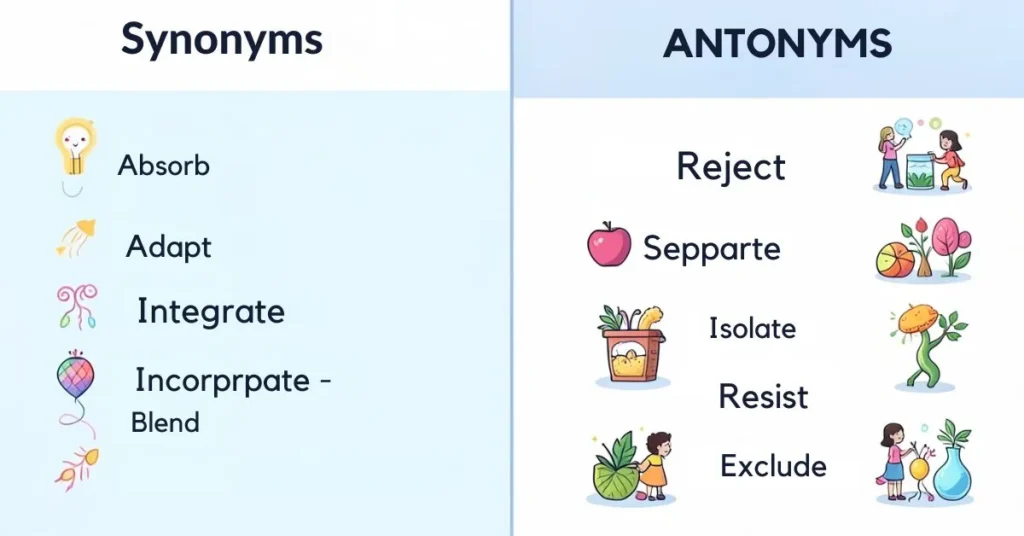
Synonyms: Absorb, Adapt, Integrate, Incorporate, Digest (information/food), Blend
Antonyms: Reject, Separate, Isolate, Resist, Exclude
Using similar and opposite words makes your writing better. It also helps you understand the meaning more clearly. For example, absorb knowledge means to take in facts. However, true understanding goes deeper. It means the idea becomes part of your thinking. This shows full learning and use.
Common Mistakes When Using Assimilate
Many people misuse assimilate. Here are the most common errors:
- Confusing with adapt: Adapt only implies adjustment; assimilate implies full integration.
- Limiting to culture: Assimilate also applies to learning, biology, psychology, and organizations.
- Incorrect sentence structure: Always include what is being assimilated. For example, “She assimilates the information” is correct, but “She assimilates quickly” is vague.
- Mixing with integrate or absorb: Integrate means to join things together. Absorb means to take something in. Assimilate means to take in, understand, and make it part of you.
Correct usage ensures clarity and precise communication.
Frequently Asked Questions (FAQs)
1. What does assimilate mean in simple words?
It means to take in and make something part of yourself or a system.
2. Can you give an example?
“Yes. ‘She assimilated the new rules quickly’ or ‘He assimilated into the multicultural community.’”
3. What does assimilate mean in biology?
It refers to absorbing nutrients from food for energy, growth, and repair.
4. What is cultural assimilation?
It is adapting to a new culture while participating fully in society.
5. Is assimilation always positive?
Mostly yes, as it helps learning, growth, and social integration, but it can be challenging if someone feels pressure to lose their identity.
Real-Life Examples of Assimilation
- Students assimilate knowledge through study and practice.
- Immigrants assimilate into communities by learning languages and customs.
- The body assimilates nutrients to maintain health.
- Organizations assimilate new technology for better productivity.
Assimilation is everywhere, helping individuals and systems grow, adapt, and function effectively.
Final Summary
Now you know what Assimilate word means. It is about taking things in and becoming part of something bigger. This idea works in learning, culture, biology, the mind, and even at work.
When you understand this word, you can learn better and grow faster. You can take in knowledge, adjust to new places, and improve your thinking skills. You can also work well with systems and groups.
Remember, this word is not just about small changes. It means becoming part of a whole. When you use similar words, know the opposites, and see real examples, your speaking and writing become clear. Learning also becomes easier and more natural.
By reading this guide, you now know what does assimilate mean in all contexts, making you confident to use it correctly, naturally, and powerfully.
Click here to read about :what does 2 check marks mean on whatsapp

I am Clara Lexis, a writer driven by clarity, depth, and authenticity. My focus is on transforming ideas into meaningful content that is both informative and engaging. I write with intention to communicate clearly, thoughtfully, and with purpose.