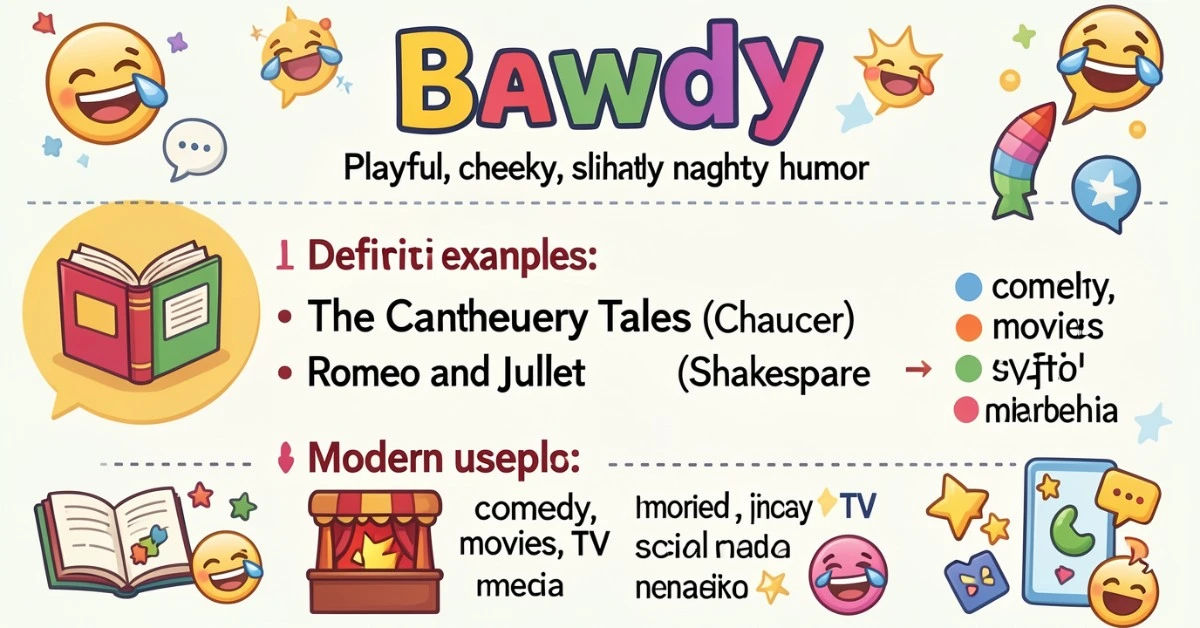
Have you ever wondered what this word really means? Sometimes it is used to describe a joke, a story, or even a play. In general, it refers to humor that is playful, cheeky, or slightly naughty. However, it is not just any naughty joke; it often involves clever wordplay or double meanings.
Furthermore, this type of humor has been used for centuries in literature and theater. Writers like Geoffrey Chaucer and William Shakespeare included it to entertain audiences without being offensive. Understanding this allows readers and audiences to enjoy humor, literature, and performance more fully.
This guide explains the concept in detail. It covers its meaning, history, literary examples, modern uses, comparisons, synonyms, correct usage, and more. By the end, you will understand how to recognize and use this playful style effectively.
Clear Definition
It is an adjective describing humor, dialogue, or stories that are playfully indecent. Typically, it involves slight sexual undertones or cheeky references.
Key Points:
- Playful, not offensive
- Often uses double meanings or clever wordplay
- Found in literature, theater, comedy, and everyday speech
Examples:
- “The comedian told a naughty joke that made everyone laugh and blush.”
- In The Canterbury Tales, Chaucer included humorous and suggestive stories about love and marriage.
- In Romeo and Juliet, Shakespeare often used witty lines with humor that audiences loved.
Additionally, this type of humor is not inherently offensive. Its meaning depends on the context, audience, and tone.
History and Origin
The word bawdy comes from Middle English. It comes from the words “baude” or “bawde”, which described someone bold or improper. Over time, the meaning changed from describing people to describing speech, jokes, or stories that are slightly naughty.
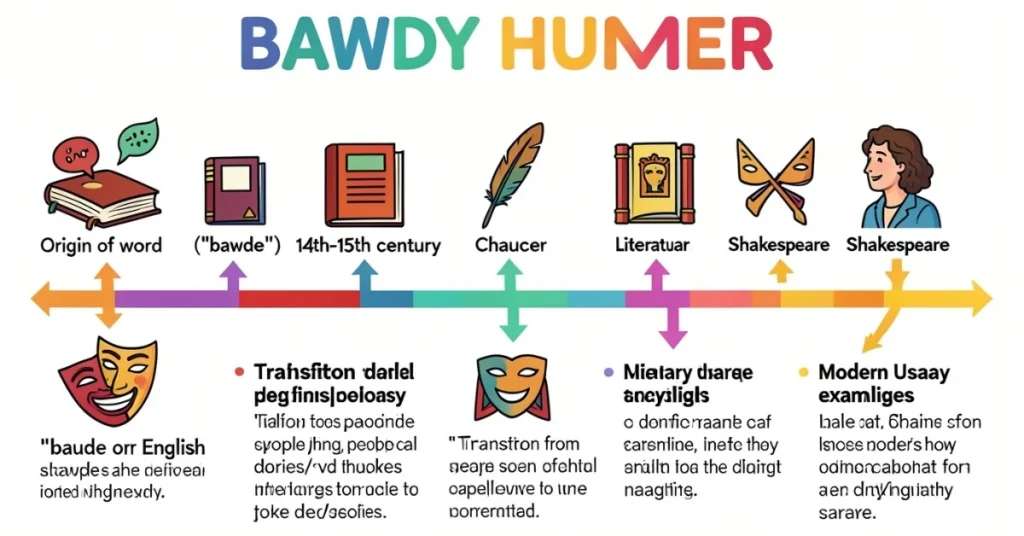
By the 14th and 15th centuries, bawdy humor became common in books and public performances. Writers used it to entertain people and keep them interested. For example, Geoffrey Chaucer used bawdy humor in The Canterbury Tales to tell stories about love, marriage, and relationships in a funny and clever way.
Later, William Shakespeare added bawdy lines in Romeo and Juliet. He used playful innuendos that made audiences laugh while keeping the language poetic. Because of this, bawdy has a long and rich history in literature.
Literature and Theater
Bawdy humor has always played a role in literature and theater. It entertains audiences, provides comic relief, and adds depth to storytelling.
Literary Examples:
- The Canterbury Tales – Chaucer wrote funny and slightly naughty stories about love, marriage, and relationships. These stories made readers laugh while giving clever ideas about people and society.
- Romeo and Juliet – Shakespeare used jokes and clever wordplay with hidden, playful meanings. Audiences at the time found these lines funny and entertaining.
Theater:
In plays, bawdy jokes lighten serious scenes and show clever wordplay. Today, modern theater still uses this humor. Stand-up comedy, sitcoms, and funny sketches often include playful jokes to entertain audiences, just like Chaucer and Shakespeare did.
Humor
Bawdy humor combines wit with slight indecency. Its main feature is cleverness, not crudeness. Often, it uses double entendre, where a word or phrase has two meanings: one innocent, one suggestive.
Features of Bawdy Humor:
- Playful and mischievous
- Clever or witty
- Slightly naughty but not offensive
- Often historical or literary
For example, Shakespeare’s lines sometimes included sexual references, but audiences appreciated the wit more than the content. In modern comedy, bawdy jokes still rely on clever wordplay rather than being overtly vulgar.
Modern Uses of Bawdy
Bawdy is not just for old books and plays. People use it today in many ways:
| Context | Example |
|---|---|
| Stand-up comedy | Comedians tell slightly naughty jokes without being offensive |
| Movies and TV | Romantic comedies or sitcoms often include playful innuendo |
| Adult jokes | Slightly suggestive jokes among mature audiences |
| Casual conversation | Cheeky remarks and playful teasing among friends |
| Social media & podcasts | Memes, short videos, and witty content |
This shows bawdy is still fun, clever, and entertaining without being crude.
Bawdy vs Similar Words
| Word | Meaning | Tone | Example Use |
|---|---|---|---|
| Bawdy | Playful, slightly naughty | Light, witty | Cheeky jokes in literature or plays |
| Ribald | Humorous and risqué (literary) | Witty | Classic plays or poems |
| Risqué | Suggestive, flirty | Elegant | Stylish humor in movies |
| Raunchy | More explicit or sexual | Bold | Adult jokes or comedy routines |
| Lewd | Crude, explicit | Harsh | Offensive sexual jokes |
| Vulgar | Blunt, tasteless | Strong | Profanity or lowbrow humor |
Understanding these differences helps describe humor clearly.
Synonyms and Related Words
- Raunchy – more explicit than bawdy
- Suggestive – hints at sexual content without being direct
- Indecent – violates social or moral standards
- Naughty – playful and mischievous
- Coarse – blunt or crude language
Using synonyms correctly prevents mislabeling humor as offensive.
Examples of Bawdy in Sentences
- Casual: “That joke you told was funny but a little bawdy.”
- Literature: “The stories in The Canterbury Tales contained bawdy references to love and marriage.”
- Theater: “Shakespeare’s Romeo and Juliet included bawdy humor hidden in clever dialogue.”
- Comedy: “The comedian’s routine was full of bawdy jokes, making the audience laugh and blush.”
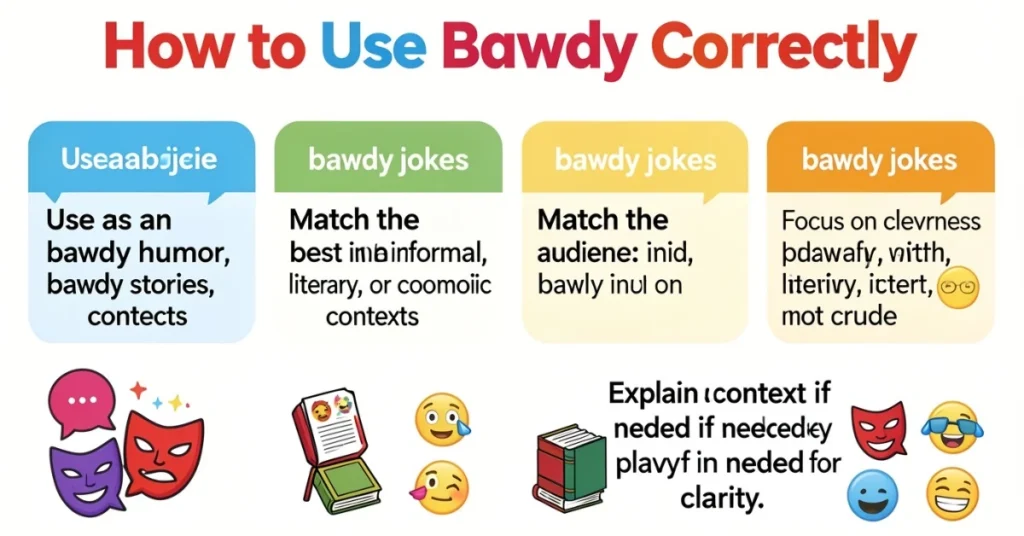
How to Use Bawdy Correctly
- Always use bawdy as an adjective: bawdy humor, bawdy stories, bawdy jokes
- Pair it with context words to clarify meaning
- Consider audience and setting to avoid misunderstanding
- Focus on wit rather than crude content
Correct Example:
- “The comedian’s routine was full of bawdy humor, making the audience laugh and blush.”
- “Chaucer included bawdy jokes about love and marriage in The Canterbury Tales.”
Incorrect Example:
- Using bawdy to describe vulgar, offensive content without cleverness
- Using bawdy in serious professional writing without context
Humor Works
Bawdy humor works by mixing playfulness with slight naughtiness. Usually, it relies on double meanings or clever wordplay. One phrase might sound innocent at first but has a hidden, cheeky meaning that makes people laugh.
Examples:
- In The Canterbury Tales, Chaucer used playful words about love and marriage to entertain while offering social commentary
- In Romeo and Juliet, Shakespeare used witty dialogue with hidden meanings that audiences found hilarious
- Today, stand-up comedians and sitcoms often use subtle, clever bawdy jokes
Examples of Bawdy in Everyday Life
| Place / Context | How Bawdy Appears |
|---|---|
| Movies & TV | Romantic comedies, sitcoms, or animated shows with cheeky jokes |
| Comedy Clubs | Comedians use playful, slightly naughty jokes |
| Social Media | Memes, short videos, and funny posts with double meanings |
| Casual Conversation | Friends joking in a playful, cheeky way |
| Podcasts & Streaming | Hosts include witty, adult humor |
Bawdy remains clever, fun, and entertaining across different platforms.
FAQs
- What does bawdy mean in simple terms? Humor that is playful, slightly naughty, and clever
- Is bawdy a bad word? No. It is usually witty and lighthearted, but context matters
- What is bawdy humor? Clever jokes, playful innuendos, or mischievous stories
- Can bawdy be used in formal writing? Only in literature analysis or casual commentary
- Example of a bawdy joke? Shakespeare’s innuendos in Romeo and Juliet
- Difference between bawdy and lewd? Bawdy is clever and playful; lewd is crude and explicit
- Where is bawdy used today? Movies, TV shows, stand-up comedy, adult jokes, casual conversations
Conclusion
In short, bawdy is playful, slightly naughty humor that has entertained people for centuries. From The Canterbury Tales to Romeo and Juliet, bawdy mixes cleverness with fun.
Today, it appears in comedy, movies, TV, social media, and casual conversations. Understanding bawdy helps people enjoy humor, recognize wordplay, and use it in the right context.
Overall, bawdy adds laughter, wit, and lighthearted fun to stories, performances, and everyday life.
Click Here To Read About:What Does Dolce Mean

Hi, I’m Geoffrey Chaucer. I explore the stories and meanings behind words, turning ideas into clear, insightful writing. Through every article I craft, I aim to spark curiosity, share knowledge, and help readers uncover practical, meaningful truths in everyday life.