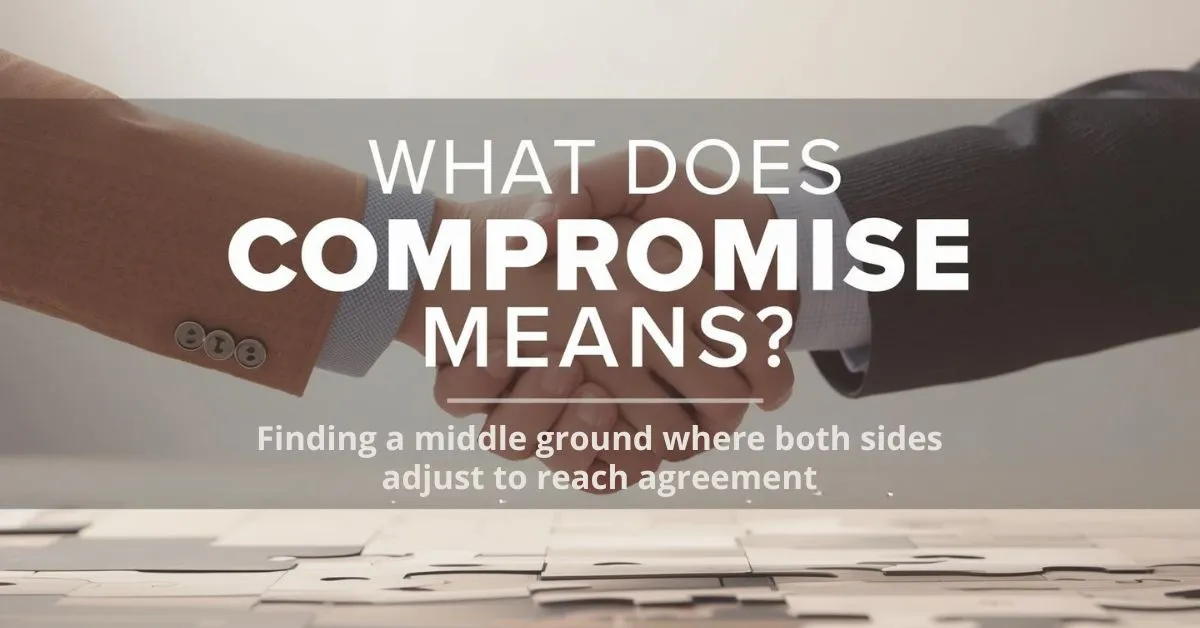
Compromise is the ability to find a middle ground when people disagree. It’s not about giving up or losing everything. It’s about making small changes that help everyone. Compromise is key. It helps resolve conflicts. It keeps relationships strong. Plus, it leads to decisions that benefit everyone.
It is an important skill in relationships, business, politics, law, education, and technology. Two friends planning a trip might agree on a plan. They each give up something small to find harmony.
Practicing compromise builds empathy, communication, and problem-solving skills. This strengthens relationships and promotes balanced decision-making.
This guide covers:
- The meaning of compromise.
- Types of compromise
- Real-life examples
- Psychological and cultural views
- Practical steps to take
- Legal and business applications
- Tips for teaching kids to negotiate fairly
Understanding Compromise
Reaching an agreement often involves two or more people adjusting their views to find a solution that works for everyone.
👉 Meeting halfway is the essence of this process.
This approach helps prevent disagreements and ensures fairness in daily life. Understanding how to find middle ground allows people to make decisions calmly and encourages smoother cooperation in relationships, at work, in politics, education, and technology.
Benefits of reaching agreements:
- Personal Growth: Develops patience, empathy, and flexibility
- Better Relationships: Reduces tension and builds trust
- Professional Success: Supports teamwork and effective negotiations
- Society & Culture: Many laws, treaties, and agreements arise from mutual adjustment
Example: Two roommates argue over chores. They split tasks evenly and alternate weekly to maintain fairness.
Synonyms: middle ground, settlement, agreement, concession, trade-off
Key difference from surrender: Both sides adjust to reach a solution; it is not about one party giving up entirely.
Decision-Making and Finding Middle Ground
Reaching an agreement is a powerful tool for making balanced choices. It prevents conflicts in everyday situations, like choosing a restaurant with friends or selecting a vacation spot with family. By considering everyone’s preferences and adjusting slightly, decisions become fairer and less stressful.
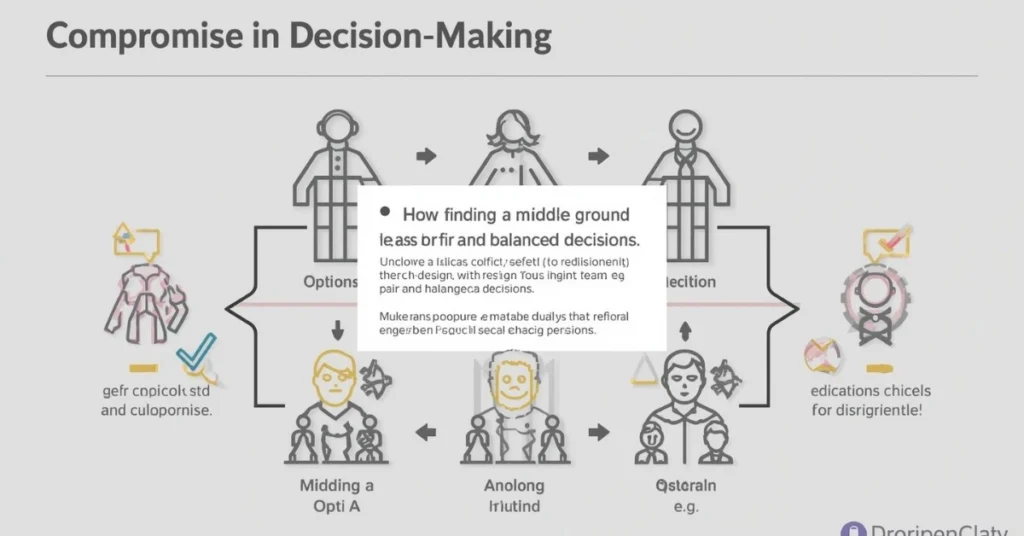
Example: A team cannot agree on a project timeline. They negotiate and tweak both proposals a bit. This way, they create a plan that works for everyone and keeps the project on schedule.
Practicing compromise in daily choices helps people balance their priorities. It also teaches respect for others’ views and can stop conflicts before they grow.
Common Types of Compromise
1️⃣ Relationships
Couples, friends, and family often adjust preferences to maintain harmony.
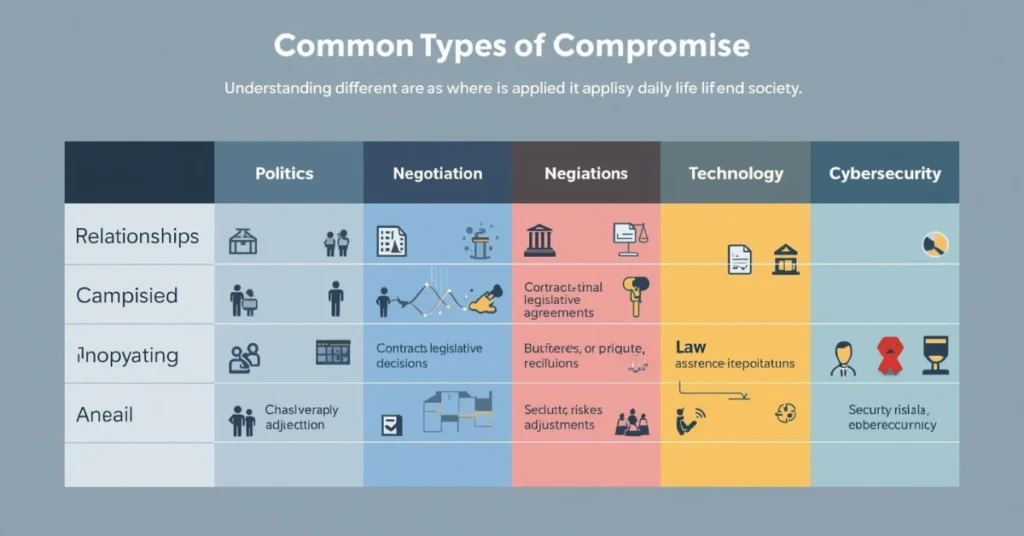
Example: A couple wants to watch different movies. They select one both enjoy, giving a little to satisfy both.
2️⃣ Politics
Political compromise occurs when opposing parties adjust demands to reach agreements.
Example: United States Congress negotiates multiple provisions before passing a bill.
Relevance: political negotiation, historical agreements
3️⃣ Business and Negotiation
Companies adjust contracts or terms to avoid disputes.
Example: A client requests a lower price. The company offers a partial discount with conditions, ensuring fairness.
| Scenario | Conflict | Compromise |
|---|---|---|
| Contract Price | Seller $500 vs Buyer $400 | Agree on $450 |
| Work Schedule | Flexible vs Coverage | Adjust schedule slightly |
| Project Idea | Team disagrees | Merge concepts |
4️⃣ Law
Legal compromise resolves disputes without litigation.
Example: Two companies settle lawsuits for mutually agreed amounts, saving time and resources.
Relevance: COE, VA certificate of eligibility
5️⃣ Cybersecurity / Technology
In technology, compromise often refers to security breaches.
Example: A hacker compromises a user account, exposing sensitive information.
Entities like Microsoft provide guidance to prevent system compromise.
The Psychology of Compromise
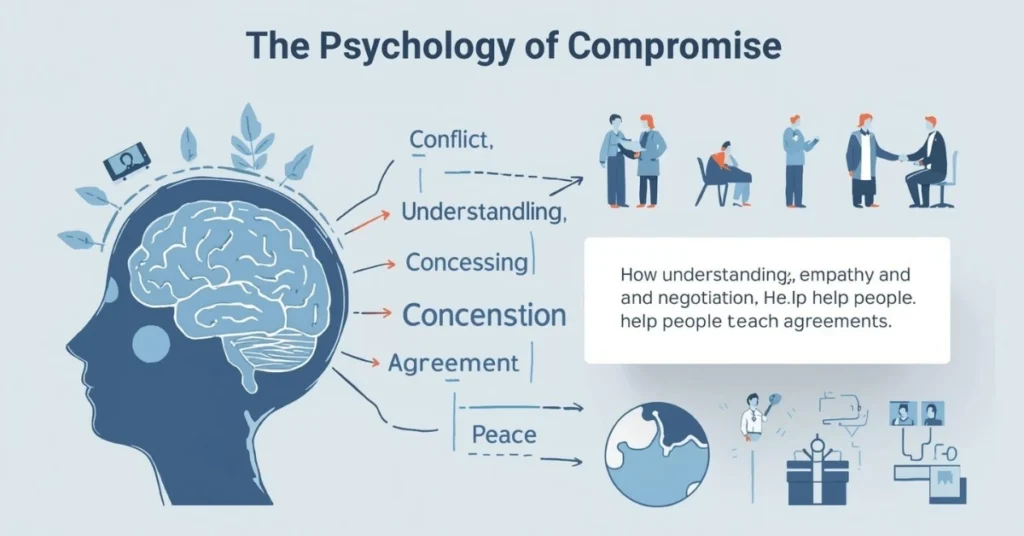
Humans seek middle ground to reduce conflict, as it fosters harmony. Compromise reduces stress, fosters empathy, and encourages negotiation.
Diagram description: Conflict → Understanding → Concession → Agreement → Peace
Compromise in Education
Students practice compromise in group projects, debates, and teamwork.
Example: Combining different project ideas satisfies all members while improving collaboration.
Relevance: social studies, teamwork
Compromise Across Cultures
- Collectivist societies focus on group harmony.
- Individualist cultures balance personal benefit and fairness.
- Strategies vary depending on cultural values and historical context.
Steps to Effective Compromise
- Define the problem with clarity.
- Listen to all sides.
- Find common ground.
- Offer reasonable concessions.
- Agree on a fair solution.
- Follow up to ensure implementation.
| Step | Action | Goal |
|---|---|---|
| Identify the problem | Understand conflict | Clarify the issue |
| Listen | Show empathy | Understand all perspectives |
| Find middle ground | Balance needs | Reach a fair solution |
| Concede | Give something small | Make a reasonable adjustment |
| Finish | Reach agreement | Finalize the compromise |
| Follow-up | Ensure the solution works | Confirm implementation |
Tips for Teaching Kids to Compromise
- Encourage turn-taking
- Praise cooperation
- Role-play negotiation scenarios.
- Teach the consequences of stubbornness versus flexibility.
Synonyms and Antonyms
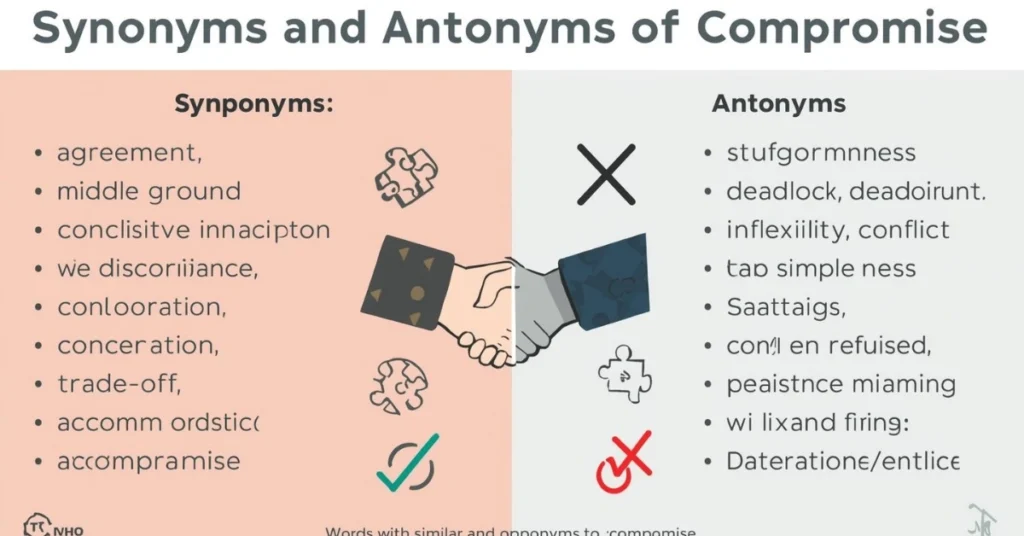
Synonyms: agreement, settlement, middle ground, concession, trade-off, accommodation. Opposites: stubbornness, deadlock, refusal, inflexibility, conflict.
Common Misunderstandings
- Compromise ≠ Weakness
- Compromise ≠ Losing
- Outcomes may not be completely equal.
- Applies to all ages.
When Not to Compromise
- Personal values or morals
- Safety or well-being
- Ethical or legal boundaries
- Unfair situations that occur multiple times
Real-Life Examples
- Roommates share chores.
- Couples adjust their vacation plans.
- Students combine project ideas.
- Businesses negotiate contracts.
Historical Perspective
- The US Constitution compromises balance state and federal power.
- Treaties, peace agreements, and business mergers often rely on compromise.
Legal Perspective
- Settlements, international negotiations, and corporate dispute resolutions illustrate legal compromises.
The Long-Term Benefits: Building Trust and Respect
Compromise isn’t a quick fix. It builds trust, respect, and stronger relationships over time.
Examples:
| Benefit | Immediate Outcome | Long-Term Outcome |
|---|---|---|
| Peace | Reduced tension | Stronger relationships, high trust and loyalty |
| Cooperation | Smoother workflow | Long-term respect and credibility |
| Satisfaction | Quick resolution | Flexibility in adjustments |
| Better problem-solving | Improved outcomes | Enhanced decision-making and results |
Compromise in Technology
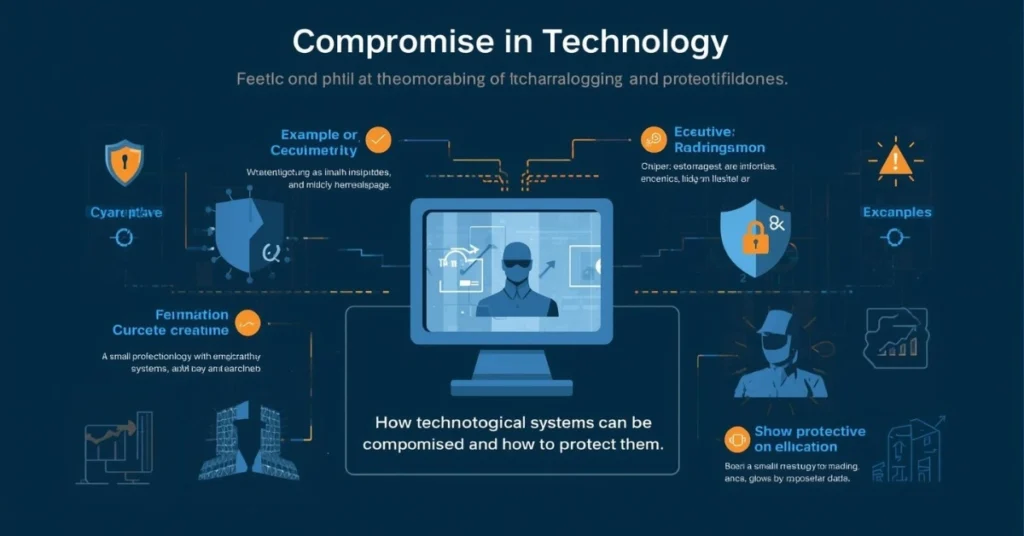
- Example: System compromised due to a hacker attack
- Accounts, software, or networks may require mitigation and risk management.
FAQ Section
| Question | Answer |
|---|---|
| Q1: What is compromise in love? | Adjusting desires to meet a partner’s needs. |
| Q2: Can compromise be negative? | Yes, if someone sacrifices safety, fairness, or values. |
| Q3: What does compromise mean in the Bible? | Giving up minor preferences while following moral guidance. |
| Q4: What does compromise mean in Spanish? | “Compromiso” – mutual agreement or promise. |
| Q5: What does compromise mean in Bridgerton? | Social negotiation and etiquette agreements. |
| Q6: What is compromise in business? | Adjusting terms, prices, or agreements to avoid conflicts. |
| Q7: What is compromise in government? | Negotiated agreements between parties to pass laws. |
| Q8: What is a compromise on Instagram? | Someone may have exposed or breached an account or data. |
| Q9: What is a compromise on a VA Certificate of Eligibility? | Adjustment or settlement of official records or accounts. |
Conclusion
Compromise is finding a fair middle ground where both sides adjust for mutual benefit. It is vital in relationships, business, politics, law, education, and cybersecurity. Knowing what does compromise mean in simple terms, in a relationship, or in government strengthens understanding, reduces conflict, and promotes harmony.
By applying compromise wisely, individuals can:
- Make balanced decisions
- Build trust
- Achieve personal and professional success
Click here to read more about : what does porque mean

I am Clara Lexis, a writer driven by clarity, depth, and authenticity. My focus is on transforming ideas into meaningful content that is both informative and engaging. I write with intention to communicate clearly, thoughtfully, and with purpose.