Have you ever noticed the word dolce and wondered about its significance? Perhaps you encountered it on a coffee menu, in a musical score, on a fashion label, or during conversations about life. At its core, this Italian term literally means “sweet”, yet this simple translation barely captures its richness. In fact, it is a versatile word that conveys emotional, cultural, and symbolic meanings. Therefore, it can describe flavors, personality traits, sounds, desserts, lifestyle choices, and even elegance.
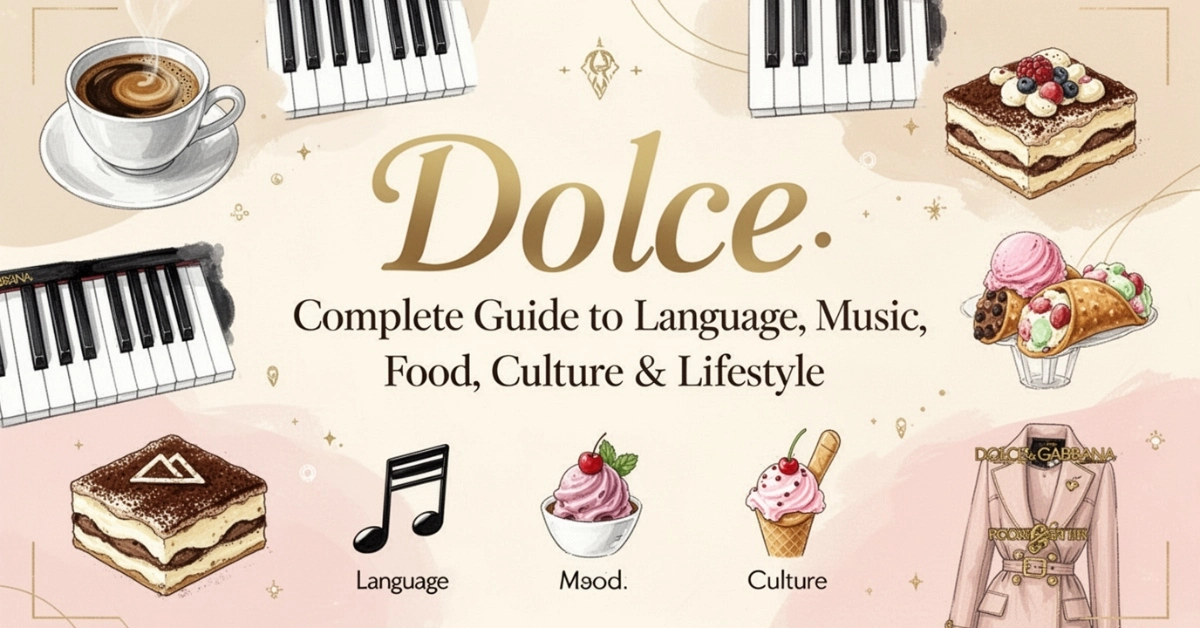
This guide explores its different contexts. You will learn how it appears in language, music, and cuisine. Additionally, it covers its presence in fashion and branding, including Dolce & Gabbana. Cultural expressions like la dolce vita will also be explained. Finally, we’ll examine its applications in coffee, cafés, and daily experiences. By the end, the depth and versatility of this term will become clear through examples, practical tips, and stories.
Basic Definition of Dolce
First of all, dolce is an Italian word with roots in Latin (dulcis), meaning “sweet.” However, in Italian, it goes beyond taste. Additionally, it can describe gentleness, softness, pleasantness, and charm.
Examples:
- Caffè dolce → sweet coffee
- Voce dolce → gentle voice
- Sei molto dolce → you are very kind
In terms of grammar and usage:
- Singular: dolce (same for masculine and feminine nouns)
- Plural: dolci
Thus, the word is often used to convey emotional warmth. Calling someone dolce praises both their character and approach to life. It emphasizes kindness, softness, and subtle charm, making it highly versatile in conversation.
Origin and Etymology
The term comes from Latin dulcis, historically meaning “pleasant, agreeable, or sweet.” Over time, it evolved into Italian while retaining both literal and emotional connotations.
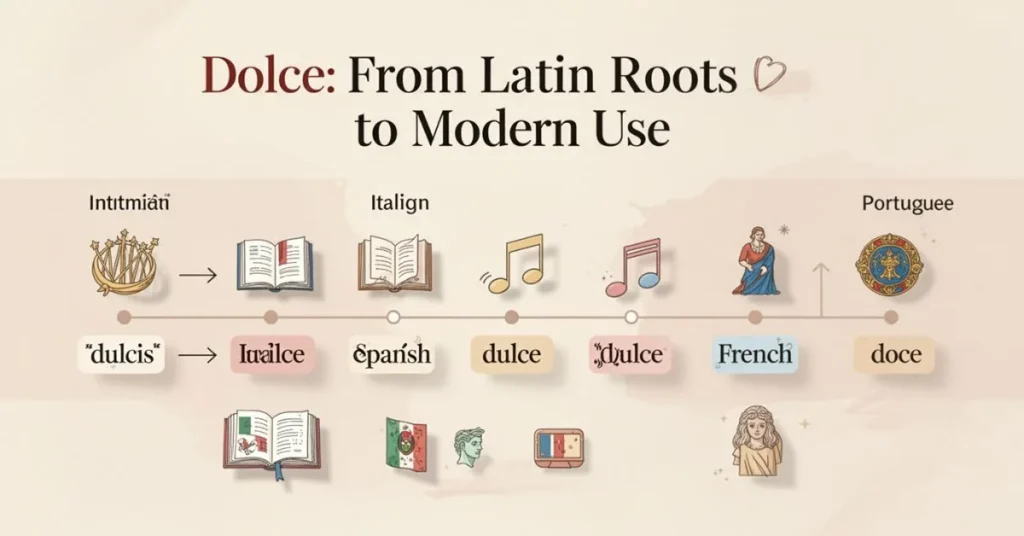
Language Evolution:
- Italian: dolce
- Spanish: dulce
- French: doux
- Portuguese: doce
It was frequently used in medieval Italian poetry to describe beauty, love, and harmony. Therefore, its strong emotional undertones remain evident in modern Italian speech, music, and cultural expressions.
Dolce in the Italian Language
In everyday Italian, this word describes people, experiences, and objects.
Examples:
- Sei dolce → you are gentle and kind
- Una dolce sera → a lovely evening
- Dolce amore → sweet love
Additionally, the plural form, dolci, is used when referring to multiple objects, sounds, or people.
Key Points:
- Describes taste: sweet food or drinks
- Describes personality: kindness and gentleness
- Describes experiences: pleasant or soft atmospheres
Using it in conversation adds warmth and emotional depth, making expressions more inviting.
Dolce in Music
In music, the word emphasizes emotional expression rather than tempo. Musicians interpret it as an instruction to play softly, tenderly, and sweetly.
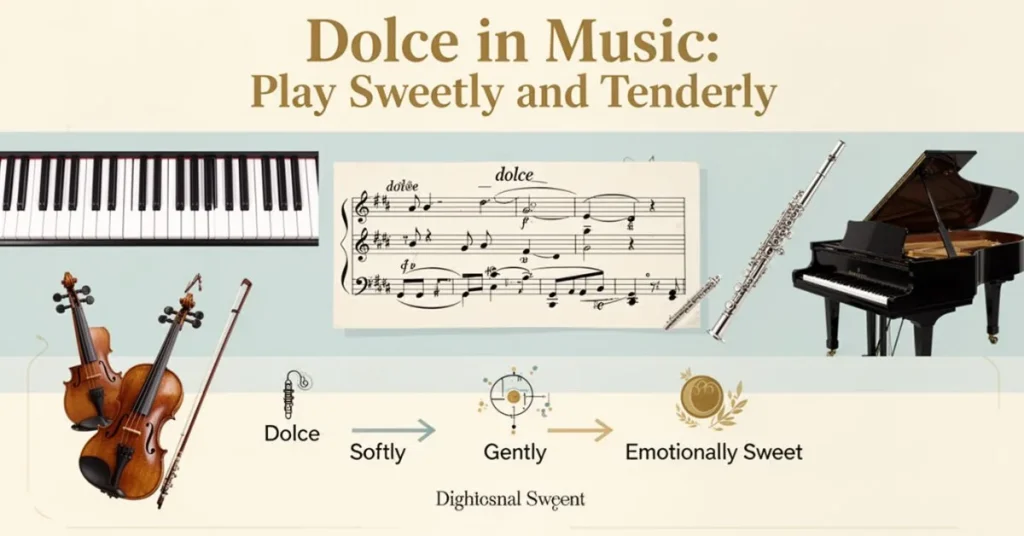
Contexts:
- Piano: light and smooth touch
- Orchestra: gentle, lyrical passages
- Musical notation: often written above or beside notes
It often combines with terms like legato (smooth) or piano (soft) to enhance emotional tone. Importantly, it does not mean slow; rather, it indicates tenderness and expressiveness, even in moderately fast sections.
How to Pronounce Dolce
Correct pronunciation ensures clear understanding in conversation, music, or coffee orders.
Tips:
- Syllables: dol + ce
- Stress: DOL-cheh
- Avoid saying “doll-see”
Examples:
- Sei dolce → gentle and kind
- Caffè dolce latte → sweet latte
- Music marking: play tenderly
| Context | Pronunciation | Example |
|---|---|---|
| Italian conversation | DOL-cheh | Sei dolce |
| Music | DOL-cheh | Piano marking dolce |
| Coffee / Café | DOL-cheh | Caffè dolce latte |
Mastering pronunciation ensures respect for the term and effective communication across contexts.
Dolce in Italian Cuisine
In food, the word primarily refers to desserts and sweet dishes. In Italy, a meal’s final course is usually the sweet course.
Popular Examples:
- Tiramisu → creamy, coffee-flavored dessert
- Panna cotta → smooth cream pudding
- Cannoli → crisp pastry filled with ricotta cream
- Gelato → Italian-style ice cream, denser than regular ice cream
Dolce dishes reflect Italian hospitality and tradition. They highlight the joy of life’s small indulgences, connecting taste with emotion.
Dolce in Fashion and Branding
The word is globally recognized in luxury fashion through Dolce & Gabbana.
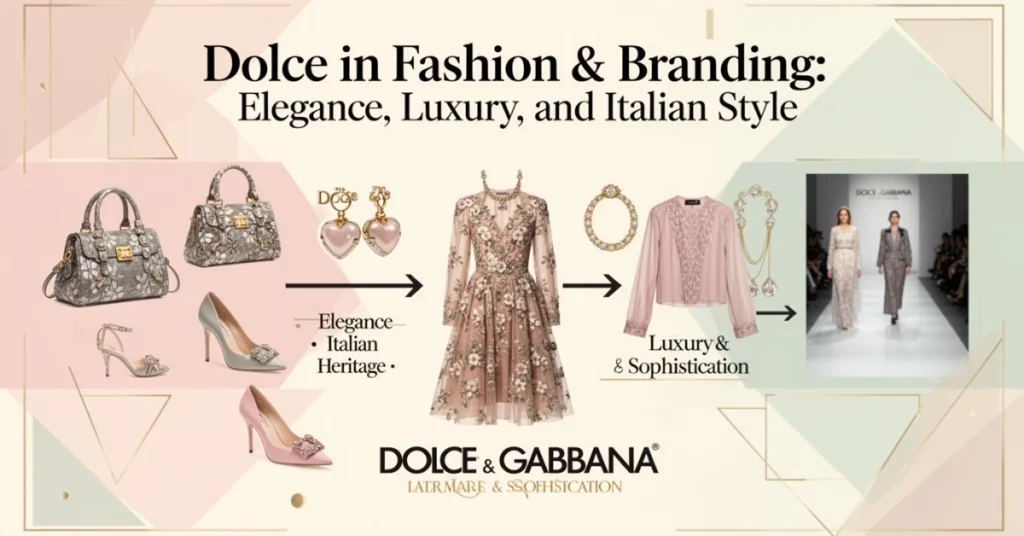
It conveys:
- Elegance and sophistication
- Italian heritage and cultural pride
- Charm and refined emotional appeal
Luxury brands, restaurants, and cafés often use it in marketing to evoke indulgence, sweetness, and high-quality experiences, making it a symbol of premium style.
La Dolce Vita – The Sweet Life
The phrase la dolce vita means “the sweet life.”
- Popularized by the 1960 film La Dolce Vita
- Refers to living fully, enjoying beauty, comfort, and pleasure
- Represents simple joys like good food, evening walks, and time with friends
This demonstrates that the term embodies a lifestyle and emotional state, not just taste.
Dolce vs Dulce
Dolce is Italian; dulce is Spanish. Both translate to “sweet,” yet usage differs.
| Language | Word | Meaning | Usage | Pronunciation |
|---|---|---|---|---|
| Italian | Dolce | Sweet, gentle, soft | Personality, music, food, culture | DOL-cheh |
| Spanish | Dulce | Sweet | Mostly literal, taste and desserts | DOOL-seh |
| French | Doux | Soft, sweet | Personality, objects, feelings | DOO |
| Portuguese | Doce | Sweet | Flavor, food | DOH-seh |
Understanding these nuances is important for travelers and language learners.
Dolce in Everyday Culture and Lifestyle
Beyond language and food, the term appears in culture and life.
Examples:
- Dolce far niente → the sweetness of doing nothing
- Dolce amore → affectionate love
- Gentle, tender experiences can be described as dolce moments
It connects emotion, culture, and lifestyle, symbolizing harmony, kindness, and pleasure.
Emotional Impact in Music
It is more than a technical term; it creates a tender, calming effect on listeners and encourages performers to express emotion subtly. Combined with dynamics like soft (piano) and smooth (legato), it enhances musical depth, often described as “singing with the heart.”
Coffee and Café Culture
In beverages, it refers to sweetened or flavored drinks.
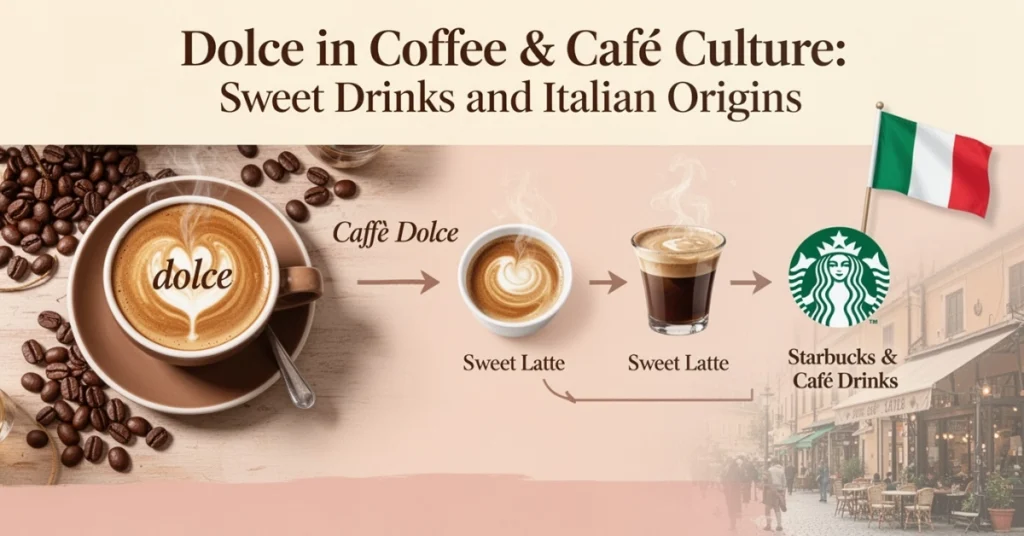
- Caffè dolce latte → latte with added sweetness
- Cafés often use syrups labeled dolce to reflect Italian origins
Ordering such drinks adds subtle sweetness and cultural authenticity.
Frequently Asked Questions (FAQ)
- What does it mean in English? → Sweet, gentle, soft, pleasant
- How is it used in Italian? → Sweet, soft, pleasant; applied to taste, personality, and culture
- How is it used in music? → Play softly, tenderly, and with emotional expression
- How is it used in piano? → Gentle and soft playing
- How is it used in food? → Desserts and sweet dishes
- How is it used in coffee? → Sweetened or flavored drinks
- How do you pronounce it? → DOL-cheh
- Can it describe emotions? → Yes, conveys kindness and gentleness
- What does la dolce vita mean? → The sweet life, enjoying pleasures gracefully
Summary of Dolce
Dolce is a multifaceted word bridging language, music, food, fashion, and culture. Specifically, it represents:
- Language: Sweet taste, gentle personality, soft expressions
- Music: Emotional tenderness, softness, and lyrical phrasing
- Food: Italian desserts and shared culinary experiences
- Fashion: Elegance, luxury, and sophistication (Dolce & Gabbana)
- Culture: La dolce vita, lifestyle, and appreciation of simple pleasures
- Spiritual/Symbolic: Kindness, harmony, patience, emotional sweetness
Hence, dolce is more than a word; it is an attitude that encourages savoring life and appreciating every moment.
Click Here To Read More About : what does soluble mean

Hi, I’m Geoffrey Chaucer. I explore the stories and meanings behind words, turning ideas into clear, insightful writing. Through every article I craft, I aim to spark curiosity, share knowledge, and help readers uncover practical, meaningful truths in everyday life.