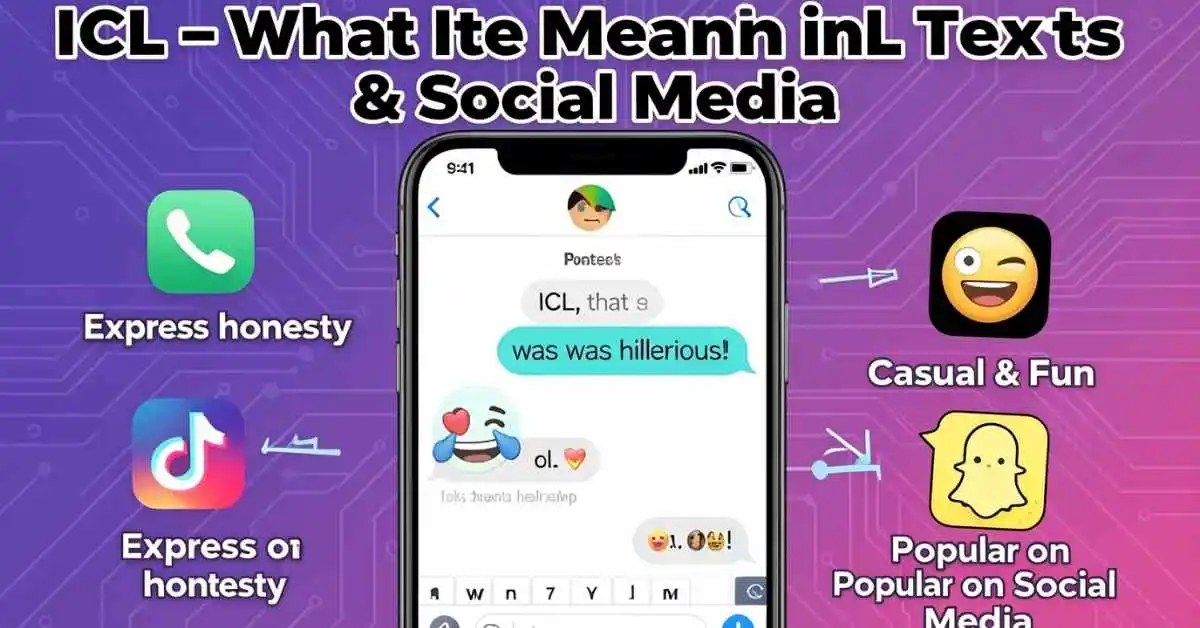
In the fast-moving world of texting and social media, abbreviations have become essential for quick and effective communication. One abbreviation that has grown increasingly popular is ICL, which many people see in chats, comments, and posts but may not fully understand. ICL stands for “I Can’t Lie.” Essentially, it is used to express honesty, emphasize genuine opinions, or highlight a truth in a casual, friendly way. Since online conversations often move rapidly, this abbreviation has become popular among people who want to share thoughts quickly without typing long sentences.
Furthermore, ICL is commonly used on platforms such as TikTok, Snapchat, and Instagram, where users frequently pair it with emojis, GIFs, or hashtags to make their messages more expressive. By using ICL appropriately, individuals can make their comments or texts relatable, authentic, and engaging.
This article provides a complete guide to ICL, including its meaning, practical examples, origins, comparison with other slang terms, platform-specific usage, and tips for correct application, making it useful for anyone who wants to communicate effectively in digital spaces.
Quick Answer: What Does ICL Mean?
| Term | Full Form | Meaning | Common Usage |
|---|---|---|---|
| ICL | I Can’t Lie | Expressing honesty or genuine opinion | Text messages, social media comments |
ICL is a concise way to indicate that someone is being truthful. For instance, when someone writes, “ICL, that video made me laugh so hard!”, they emphasize that they cannot lie about their reaction. This phrase keeps communication friendly, casual, and direct, which is ideal for fast-paced online platforms.
The Full Meaning and Tone of ICL
ICL is an abbreviation for “I Can’t Lie”, and it is both informal and conversational. Unlike formal expressions of honesty, such as “to be honest,” ICL conveys truthfulness while keeping the tone lighthearted and approachable.
For example:
- “ICL, this recipe is the best I’ve ever tried!”
- “ICL, I didn’t expect the game to be this challenging.”
Moreover, compared to other abbreviations like NGL or TBH, ICL is slightly more playful and casual, making it a favorite in everyday digital interactions.
How ICL Is Used in Text Messages and Social Media
ICL is highly versatile and appears frequently in texting and online platforms. It is commonly used to:
- Express honest opinions quickly
- React to surprising or amusing events
- Add authenticity to social media captions or comments
Texting Examples:
- Friend 1: “Did you like the new show?”
- Friend 2: “ICL, it was amazing!”
Social Media Examples:
- TikTok comment: “ICL 😂 this challenge made me laugh all day!”
- Instagram caption: “ICL, this tutorial actually helped me a lot!”
By incorporating ICL naturally, messages remain short, clear, and relatable, which explains its widespread use across multiple platforms.
Comparison with Other Slang Terms
| Slang | Full Form | Meaning | Tone | Common Usage |
|---|---|---|---|---|
| ICL | I Can’t Lie | Honest admission | Casual, playful | Texts, comments |
| NGL | Not Gonna Lie | Expressing honesty | Playful | Social media, private chats |
| TBH | To Be Honest | Sharing truthful opinion | Neutral, straightforward | Texting, social posts |
Key Differences:
- ICL is more lighthearted and conversational.
- NGL is playful and often introduces an opinion.
- TBH is neutral and suitable for slightly formal casual contexts.
Examples of ICL in Real Conversations
Casual Texting:
- “ICL, I didn’t expect that movie to be this good.”
- “ICL, this game is harder than I thought.”
Social Media Comments:
- “ICL 😂 this dance trend is hilarious!”
- “ICL, I actually love this new song!”
Group Chats:
- Person A: “Who’s joining the weekend trip?”
- Person B: “ICL, I’m totally in! Can’t wait.”
Clearly, ICL works in private chats, group messages, and public posts, making it versatile and easy to use.
Origins and Popularity of ICL
ICL originated in early internet communities as a way to convey honesty quickly. Platforms like TikTok, Snapchat, and Instagram played a significant role in popularizing it. Young audiences especially adopted ICL because it allowed expressive, authentic communication without typing long sentences.
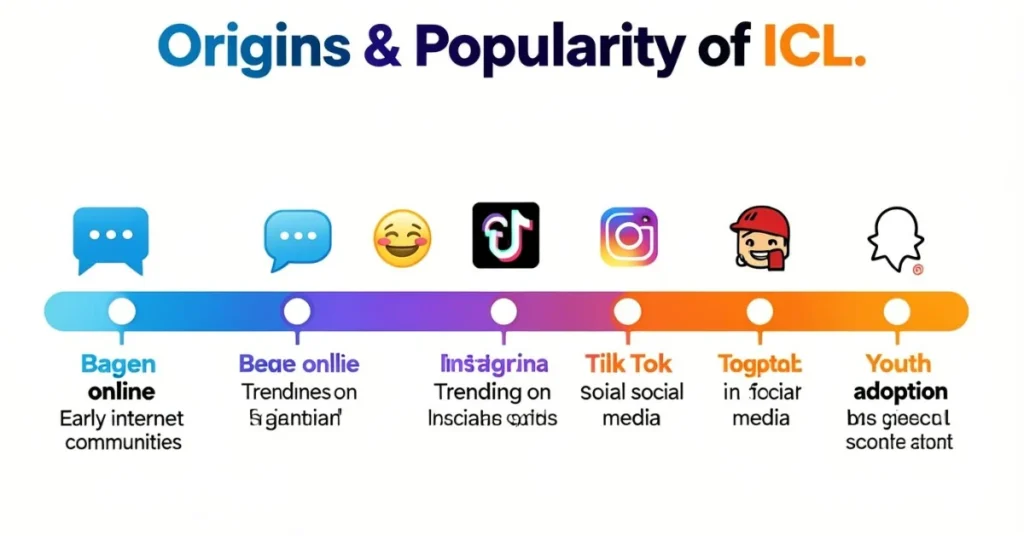
Additionally, ICL’s popularity is tied to online trends, memes, and digital culture, which value brevity, clarity, and emotional connection. By using ICL, users can participate in viral trends while maintaining a personal and honest voice.
When to Use ICL
- Casual texting with friends
- Social media comments and captions
- Reactions to surprising or funny content
- Adding authenticity to messages
Example: “ICL, I didn’t expect the concert to be that good!”
When Not to Use ICL
ICL is informal slang and should be avoided in:
- Professional emails
- Academic writing
- Formal business communications
Using ICL in these contexts may reduce credibility or appear unprofessional.
Why Slang Like ICL Is Popular
- Brevity: Saves time in fast-moving digital chats
- Authenticity: Makes messages relatable and trustworthy
- Expressiveness: Works with emojis, gifs, and hashtags
- Cultural Relevance: Reflects online trends and social identity
Platforms like TikTok amplify these trends because short, catchy slang resonates with audiences and encourages engagement.
ICL in Different Social Media Platforms
| Platform | How ICL Is Used | Example |
|---|---|---|
| TikTok | Comments on funny or surprising videos, often with emojis | “ICL 😂 this trend is too funny!” |
| Captions or comments showing authenticity | “ICL, this tutorial helped me a lot!” | |
| Snapchat | Private chats or casual snaps | “ICL, I’m so tired today 😂” |
| Twitter/X | Mostly humorous tweets or memes | “ICL, this joke is perfect!” |
Understanding platform-specific usage helps you adapt your messages to suit different audiences.
Common Mistakes When Using ICL
- Using ICL in formal or professional messages
- Overusing ICL in a single conversation, reducing impact
- Confusing ICL with NGL or TBH without understanding tone differences
- Using it without context, leaving readers unsure of meaning
Avoiding these mistakes keeps your messages clear, effective, and engaging.
How ICL Enhances Online Engagement
| Engagement Factor | How ICL Helps | Example |
|---|---|---|
| Comments | Sparks honest reactions | “ICL, I laughed so hard at this video 😂” |
| Shares | Encourages relatable content | “ICL, everyone needs to see this!” |
| Likes | Shows authenticity | Post with ICL appears genuine and relatable |
| Followers | Builds connection | Consistent ICL usage makes content feel personal |
Strategically using ICL can boost visibility, relatability, and interaction across digital platforms.
Top Alternatives and Synonyms for ICL
- NGL (Not Gonna Lie): Similar meaning, more playful
- TBH (To Be Honest): Slightly more neutral
- Fr (For Real): Emphasizes truth in casual messages
- Honestly: Slightly formal alternative
- No Cap: Youth-oriented slang signaling truth
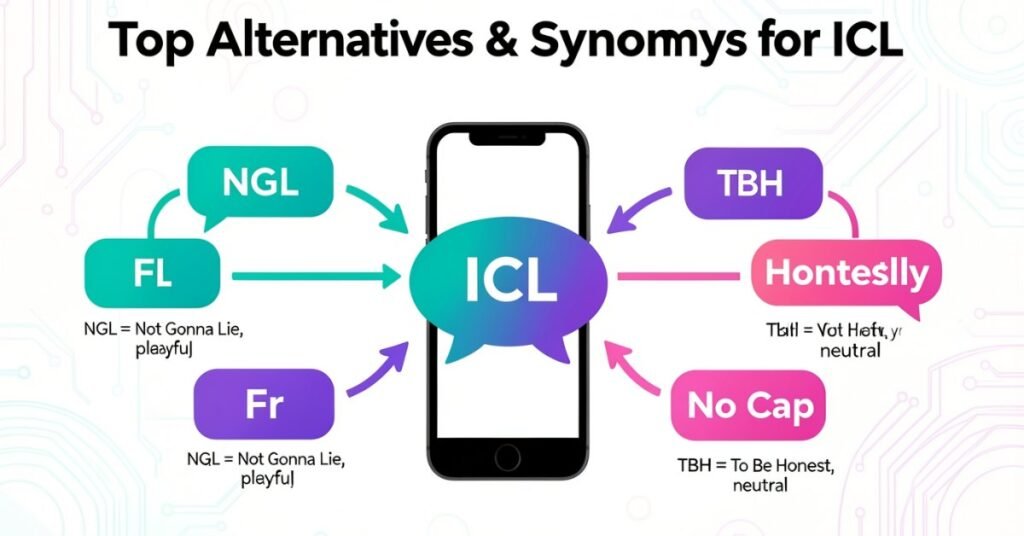
Using these alternatives keeps your language fresh, varied, and engaging.
FAQ Section
Q1: What does ICL mean in texting?
A: ICL stands for “I Can’t Lie”, used to emphasize honesty.
Q2: Is ICL the same as NGL?
A: Both express honesty. ICL is more casual; NGL is playful.
Q3: Where is ICL commonly used?
A: On TikTok, Instagram, Snapchat, and in text messages.
Q4: Can I use ICL in professional communication?
A: No. It is informal slang; use full phrases in formal contexts.
Q5: How do you use ICL in a sentence?
A: “ICL, that movie was amazing!” or “ICL 😂 this challenge is hilarious!”
Conclusion
ICL is a short, friendly abbreviation that expresses honesty clearly and effectively. It works perfectly in texting, social media, and casual chats. By understanding how and when to use it, while avoiding formal contexts, users can communicate authentically, clearly, and engagingly. Whether posting online or texting friends, ICL adds a personal, relatable touch that resonates with today’s digital culture.
Click Here To Read About :what does icl mean slang

I am Clara Lexis, a writer driven by clarity, depth, and authenticity. My focus is on transforming ideas into meaningful content that is both informative and engaging. I write with intention to communicate clearly, thoughtfully, and with purpose.