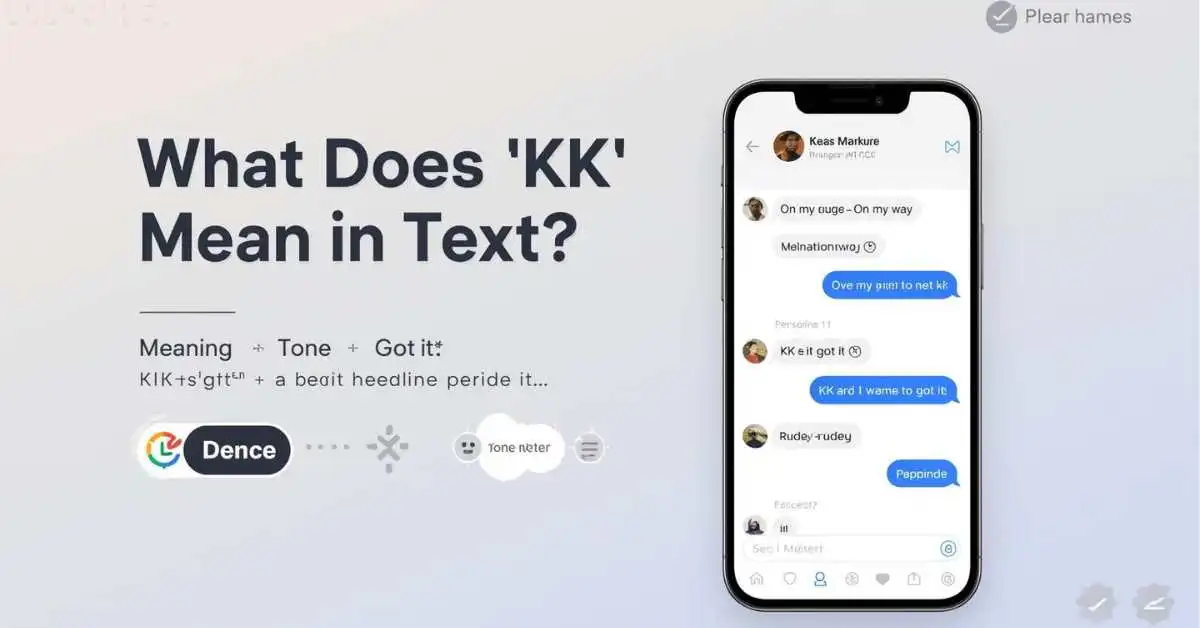
If you have ever sent a quick reply and received “KK”, you may have paused and wondered what it really means. Does it signal friendliness? Is it neutral? Or could it feel cold depending on the context? Many people search what does kk mean in text because even short responses carry subtle meanings in digital conversations.
Simply put, KK means “okay.” It is an informal way to confirm, acknowledge, or agree in a text message. People often use it in chat platforms, group conversations, and gaming discussions. Despite being brief, KK has gained popularity because it balances speed with clarity.
Understanding what does kk mean in text message, what does kk mean in text from a girl, or what does kk mean in text messaging is essential to avoid miscommunication. This guide explores everything about KK, its tone, origin, proper use, and differences from similar expressions like OK or K.
What Does KK Mean in Texting?
At its simplest, KK is a shorthand for “okay.” In digital communication, it acts as a fast confirmation without the need to type a longer response.
For instance:
- “I’ll pick you up at 7 PM.”
- “KK.”
Here, KK is neutral and conveys agreement. In text messaging culture, it allows users to respond quickly without overthinking tone.
KK often indicates:
- ✅ Confirmation
- ✅ Agreement
- ✅ Acknowledgment
- ✅ Message received
Why use KK instead of OK or K? KK feels slightly friendlier than K, which can seem abrupt. Unlike OK, it is shorter, making it ideal for fast conversations on social platforms or mobile messaging apps.
The Origin of KK
The abbreviation KK evolved from:
- OK → Standard confirmation used for decades
- K → Shortened to a single letter for speed
- KK → Doubled letter for a softer, friendlier tone
In early SMS messaging, character limits and slow typing encouraged people to shorten words. Doubling letters like KK made replies appear warmer and less abrupt. Over time, it became part of online texting culture.
Platforms such as WhatsApp, Facebook Messenger, Instagram, and Discord helped spread KK globally due to their fast-paced chat environments.
KK vs OK vs K: Understanding the Differences
| Abbreviation | Tone | Formality | Best Use |
|---|---|---|---|
| OK | Neutral | Semi-formal | Emails, casual or semi-professional chats |
| K | Abrupt, sometimes dry | Informal | Quick responses, usually between close friends |
| KK | Friendly, casual | Informal | Messaging apps, social media, gaming chats |
Explanation:
- K feels abrupt because it is just a single letter.
- KK softens the reply by doubling the letter.
- OK is the most formal and neutral, appropriate for professional or semi-formal contexts.
Where Is “KK” Commonly Used?
KK appears widely across digital platforms, especially where fast replies are expected.
Popular Platforms:
- Facebook Messenger
- Snapchat
- Discord
Common Uses:
- Texting friends and family → Quick confirmations
- Social media chats → Fast replies to comments or messages
- Online gaming → Confirming moves or strategies
- Group chats → Avoiding long message threads
What Does KK Mean in Text From a Girl or a Guy?
When asking what does kk mean in text from a girl or what does kk mean in text from a guy, the meaning remains the same: it simply means “okay.”
However, interpretation can vary depending on:
- Conversation context
- Relationship dynamics
- Use of emojis or additional words
Examples:
- Casual message:
- “Movie at 8?” → “KK 😊” → Friendly acknowledgment
- Serious topic:
- “I need to talk about something.” → “KK” → Could feel distant
The main takeaway: KK is neutral; the surrounding conversation shapes its tone.
Is “KK” Rude?
Typically, KK is not rude. It is informal but polite in most contexts.
- Friendly chat: “KK” feels normal
- Serious conversation: “KK” can feel short or uninterested
Adding an emoji or a short phrase softens the tone:
- “KK 😊”
- “KK, see you then”
Misunderstandings usually occur when a short reply follows a long or emotional message. Context always matters.
KK Usage Frequency Across Messaging Platforms
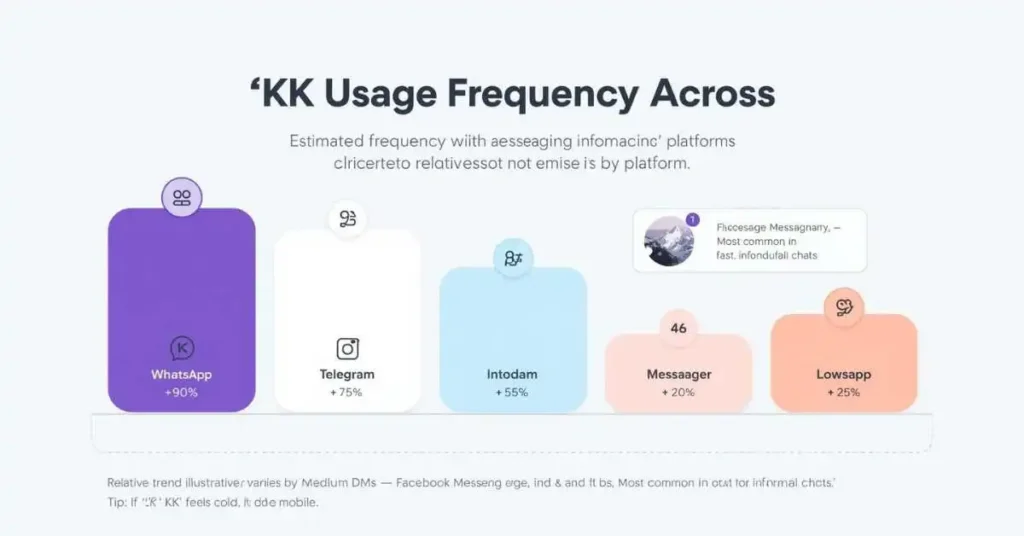
A table comparing the frequency and style of KK on different platforms.
| Platform | Typical Use | Tone | Frequency |
|---|---|---|---|
| Everyday chats | Casual, friendly | High | |
| DMs and comments | Light, informal | Medium | |
| Snapchat | Quick replies | Fun, playful | High |
| Discord | Gaming or group chats | Casual, efficient | Very High |
| Facebook Messenger | Social and family chats | Neutral | Medium |
Is KK Appropriate for Professional Use?
KK is not recommended in professional communication. Workplace platforms such as Slack and Microsoft Teams require clear, polite responses.
Professional alternatives:
- “Understood”
- “Confirmed”
- “Sounds good”
- “I will take care of it”
KK remains ideal for informal texting but should be avoided in professional or formal contexts.
Common Misunderstandings About KK
- Passive-aggressive? → No, it is generally neutral.
- Confusing K and KK → K may feel abrupt; KK softens tone.
- Overthinking tone in relationships → Usually reflects speed, not emotion.
- Generational differences → Younger people use KK more freely; older users may prefer OK.
Related Texting Slang Terms
Understanding KK is easier when compared to other slang:
- LOL → Laugh Out Loud
- BRB → Be Right Back
- OMG → Oh My God
- TTYL → Talk To You Later
- TBH → To Be Honest
- IMO → In My Opinion
These terms are informal, fast, and widely accepted on modern platforms like Instagram and Snapchat.
How KK Reflects Digital Communication Culture
Explain how KK is part of modern texting habits, online slang, and messaging shortcuts. Discuss why brevity is valued, how speed affects tone, and the role of emojis and repetition in softening messages.
KK in Emotional vs. Neutral Conversations
Explain how context affects interpretation. Include examples: short KK in an emotional conversation may feel dismissive, while in a neutral or casual chat it feels normal. Add tips to adjust KK usage depending on conversation type.
Evolution of KK and Online Text Abbreviations
A historical table showing the evolution of digital shorthand.
| Abbreviation | First Seen | Evolution | Modern Use |
|---|---|---|---|
| OK | 1839 | Standard agreement | Any conversation |
| K | 1990s | SMS shorthand | Short reply, abrupt tone |
| KK | 2000s | Doubling K for friendlier tone | Fast chats, social media, gaming |
| LOL | 1980s | Internet humor | Messaging, informal chats |
| BRB | 1990s | Internet shorthand | Quick departures in chats |
This table highlights KK’s development compared to other popular abbreviations.
KK Across Cultures and Languages
Explore how KK is understood in different countries and online cultures. Some regions may prefer OK or full words, while others embrace KK fully. Include notes on emoji usage or localized variations of KK in texting.
FAQs About KK
Q1: What does KK mean in text messages?
A: KK means “okay,” used for quick acknowledgment or confirmation.
Q2: Is KK rude?
A: No, tone depends on context. Usually friendly or neutral.
Q3: What does KK mean in text from a girl?
A: It still means “okay”; context and emojis affect tone.
Q4: What does KK mean in text from a guy?
A: Same meaning: “okay.” Short replies are common and usually neutral.
Q5: Is KK appropriate in professional messages?
A: No, use “confirmed” or “understood” instead.
Conclusion
In summary, KK means “okay” in texting, messaging apps, and chat platforms. It is fast, informal, and widely used for confirming, acknowledging, or agreeing. Tone depends on context, but KK is generally friendly and neutral.
When using KK:
- Keep it for casual conversations
- Avoid in professional settings
- Use emojis or extra words to soften tone if needed
- Consider context before interpreting emotion
By understanding what does kk mean in text, what does kk mean in text messaging, and what does kk mean in text from a girl or a guy, you can communicate confidently and avoid misinterpretations.
Click Here To Read About:what does bawdy mean

I am Clara Lexis, a writer driven by clarity, depth, and authenticity. My focus is on transforming ideas into meaningful content that is both informative and engaging. I write with intention to communicate clearly, thoughtfully, and with purpose.