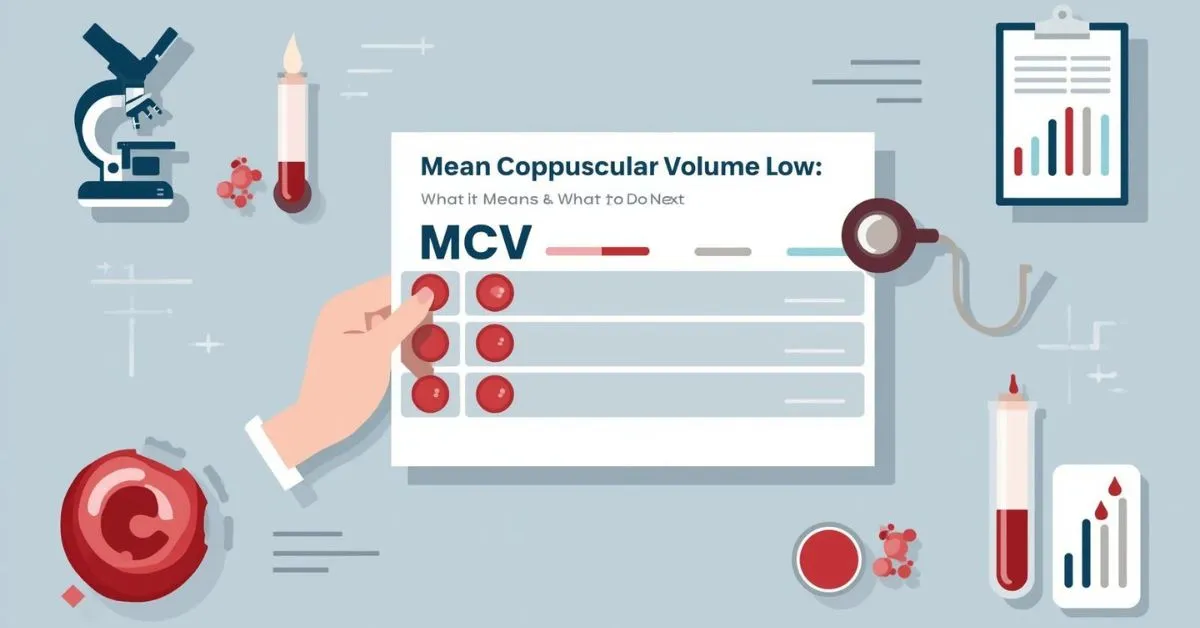
Mean corpuscular volume low means your red blood cells are smaller than normal, a finding called microcytosis. In adults, this usually means an MCV below 80 femtoliters (fL). The most common causes are iron deficiency and thalassemia trait, but chronic inflammation, lead toxicity, and sideroblastic anemia can also cause a low MCV.
A low MCV result can look scary on a CBC, but it is not a diagnosis by itself. It is one clue in a bigger picture. Doctors usually interpret it alongside your hemoglobin, ferritin, iron studies, symptoms, menstrual history, digestive symptoms, family history, and sometimes hemoglobin electrophoresis. That is why the smartest next step is not guessing from one number. It is understanding what pattern the rest of your blood work shows.
What MCV actually measures
MCV stands for mean corpuscular volume. It measures the average size of your red blood cells and is usually reported as part of a complete blood count, or CBC. Doctors use MCV to help sort anemia into broad groups: microcytic when red blood cells are too small, normocytic when they are normal in size, and macrocytic when they are larger than normal.
When your mean corpuscular volume is low, the key question is not just “Is my MCV low?” The better question is, “Why are my red blood cells small?” In adults, microcytosis is generally defined as an MCV below 80 fL, but normal ranges vary in children and teens, so age matters too.
What a low MCV usually means
For most adults, a low MCV points first toward iron deficiency or thalassemia trait. Those are the two causes doctors usually think about first because they are common and they fit the pattern of small red blood cells. Iron deficiency often happens because the body does not have enough iron to make hemoglobin normally. Thalassemia trait is different: it is usually inherited and affects how hemoglobin is made.
A low MCV can also appear with anemia of chronic disease, lead toxicity, and sideroblastic anemia. These are less common, but they matter when the usual explanations do not fit the rest of the lab pattern or the patient history.
The most common cause: iron deficiency
Iron deficiency is the most common cause of microcytosis and a very common cause of anemia overall. In adults, iron deficiency is usually caused by blood loss, especially from heavy menstrual bleeding or the gastrointestinal tract. It can also happen because of poor absorption, such as in celiac disease, after certain stomach surgeries, or when the diet does not provide enough iron.
This is important because if low MCV is caused by iron deficiency, treating the number alone is not enough. Doctors also need to ask why iron is low in the first place. In adults, especially men and postmenopausal women, gastrointestinal bleeding is a major concern and may need further evaluation.
Another major cause: thalassemia trait
If mean corpuscular volume is low but ferritin is normal, doctors often start thinking about thalassemia trait or another hemoglobinopathy. This is especially true when low MCV is persistent, there is a family history of thalassemia, or the pattern does not look like classic iron deficiency. NHS Genomics notes that microcytic anemia with normal ferritin may point to an inherited hemoglobin disorder, and in that setting iron supplements may not be necessary or helpful.
That is one of the biggest reasons low MCV should not be self-treated with iron automatically. A person with thalassemia trait may have small red blood cells for years and feel well, but the explanation is inherited rather than nutritional. Hemoglobin electrophoresis is often part of the workup when this pattern shows up.
Low MCV but normal hemoglobin
One of the most searched lab-result questions is low MCV but normal hemoglobin. This can happen. It may show up early in iron deficiency, before hemoglobin drops enough to be labeled anemia. It can also happen in thalassemia trait, where red blood cells are small but the hemoglobin may be normal or only mildly low.
This is why low MCV should be treated as a pattern to explain, not a result to panic over. If hemoglobin is normal, the next steps still matter, especially if the low MCV is persistent or if symptoms are developing.
Low MCV but normal ferritin
A low MCV with normal ferritin is one of the most confusing lab combinations. Ferritin is often the first test doctors order when microcytosis is found, because low ferritin strongly suggests iron deficiency. But ferritin has a limitation: it is also an acute-phase reactant, which means it can look normal or high in people with inflammation or infection, even if iron deficiency is still present.
So a “normal ferritin” does not always end the story. If inflammation is present, doctors often look at the full iron panel instead of relying on ferritin alone. But if ferritin is normal and the rest of the iron pattern does not suggest deficiency, thalassemia trait becomes more likely.
Symptoms that may go with low MCV
Low MCV itself does not cause symptoms. Symptoms come from the condition behind it, especially if anemia develops. Many people with mild iron deficiency or early microcytosis have no symptoms at all. When symptoms do happen, they often include fatigue, weakness, dizziness, pale skin, shortness of breath, cold hands and feet, palpitations, or chest pain.
A practical way to think about symptoms is this:
- No symptoms or very mild symptoms: routine follow-up is usually reasonable.
- Fatigue, dizziness, pale skin, or shortness of breath with activity: follow up soon with your clinician and review the full CBC and iron studies.
- Chest pain, severe shortness of breath, fainting, or rapid worsening symptoms: seek urgent medical care.
What doctors usually check next
This is the part many patients want most after seeing mean corpuscular volume low on a lab report.
Step 1: Confirm the CBC pattern
Doctors usually review the full CBC, not just MCV. They look at hemoglobin, hematocrit, red blood cell count, and often RDW, plus symptoms and history. A low MCV with anemia is different from low MCV without anemia.
Step 2: Check ferritin first
AAFP recommends serum ferritin as the first lab test in the evaluation of microcytosis. Low ferritin strongly supports iron deficiency.
Step 3: If ferritin is not clearly low, order iron studies
Doctors may then check serum iron, transferrin saturation, and total iron-binding capacity. AAFP notes that low iron with decreased TIBC can suggest anemia of chronic disease, while a different pattern may support iron deficiency.
Step 4: Consider hemoglobin electrophoresis
If iron deficiency is not clear and low MCV persists, hemoglobin electrophoresis may be used to look for beta-thalassemia trait and other hemoglobin disorders.
Step 5: Look for the source of iron loss
If iron deficiency is confirmed, the next step is finding the cause. In adults, blood loss is the main issue doctors look for, especially from the digestive tract or from heavy menstrual bleeding.
Low MCV causes compared
| Pattern | What it may suggest | Common next step |
|---|---|---|
| Low MCV + low ferritin | Iron deficiency is likely | Find the cause of iron loss and treat iron deficiency |
| Low MCV + normal ferritin | Thalassemia trait or another hemoglobinopathy becomes more likely, though inflammation can blur ferritin results | Consider iron studies and hemoglobin electrophoresis |
| Low MCV + low iron + low/normal TIBC | Anemia of chronic disease is possible | Evaluate chronic illness or inflammation alongside anemia workup |
| Low MCV + unusual exposure history | Lead toxicity or other less common causes may need consideration | Use history and targeted testing |
Real-life examples
Example 1: Heavy periods and fatigue
A person with heavy periods, fatigue, low hemoglobin, low MCV, and low ferritin often fits the classic picture of iron deficiency anemia. In this case, treatment usually involves iron replacement and finding a way to reduce ongoing blood loss if possible.
Example 2: Low MCV for years but normal ferritin
A person who feels mostly well, has had low MCV on repeated CBCs, normal ferritin, and a family history of thalassemia may be more likely to have thalassemia trait than iron deficiency. That is why inherited causes matter in the workup.
Example 3: Chronic inflammatory disease
A person with chronic inflammatory illness, low MCV, and iron studies that do not fit classic iron deficiency may instead have anemia of chronic disease or mixed anemia. In that setting, ferritin can be harder to interpret because inflammation may raise it.
Common mistakes to avoid
Assuming low MCV always means iron deficiency
Iron deficiency is common, but it is not the only cause. Thalassemia trait is also common in many populations, and less common causes still exist.
Starting iron without confirming the pattern
Iron supplements may help when iron deficiency is truly present, but they may be unnecessary when microcytosis is due to thalassemia trait or another non-iron cause.
Treating ferritin as perfect
Ferritin is very useful, but it is not perfect in inflammation. A normal ferritin does not always rule out iron deficiency if inflammatory conditions are present.
Ignoring the cause of iron loss
If iron deficiency is confirmed, the most important question becomes why. In adults, especially men and postmenopausal women, blood loss from the gastrointestinal tract needs attention.
Practical takeaways
If your report says mean corpuscular volume low, the best next move is simple. Look at whether hemoglobin is also low, ask whether ferritin has been checked, and review whether there are clues for blood loss, inflammation, or family history of thalassemia. A low MCV result is most useful when it leads to the right follow-up testing.
If you also have fatigue, pale skin, dizziness, shortness of breath, or chest symptoms, do not ignore them. Those symptoms can help show whether the lab result is starting to affect your health in a more immediate way.
FAQ
What does mean corpuscular volume low mean?
It means your red blood cells are smaller than normal. Doctors call this microcytosis. In adults, it usually means an MCV below 80 fL.
Does low MCV always mean iron deficiency?
No. Iron deficiency is common, but low MCV can also be caused by thalassemia trait, anemia of chronic disease, lead toxicity, or sideroblastic anemia.
Can you have low MCV with normal hemoglobin?
Yes. This can happen early in iron deficiency or with inherited conditions such as thalassemia trait.
What test usually comes next after a low MCV?
Ferritin is often the first follow-up test. If ferritin is not clearly low, doctors often order serum iron, transferrin saturation, TIBC, and sometimes hemoglobin electrophoresis.
What does low MCV with normal ferritin mean?
It can suggest thalassemia trait or another hemoglobinopathy, but ferritin can also look normal in inflammatory states because it is an acute-phase reactant.
Should I take iron if my MCV is low?
Not automatically. Iron is helpful when iron deficiency is confirmed, but it may not help if low MCV is due to thalassemia trait or another cause.
When should I worry about low MCV?
Follow up promptly if you have symptoms such as fatigue, dizziness, shortness of breath, palpitations, or pale skin. Seek urgent care for chest pain, severe shortness of breath, fainting, or rapidly worsening symptoms.
Can low MCV be serious?
It can be, depending on the cause. Sometimes it reflects mild iron deficiency. In other cases, it may point to ongoing blood loss or an inherited blood disorder that needs proper evaluation.
Conclusion
A mean corpuscular volume low result usually means your red blood cells are smaller than normal. The two most common explanations are iron deficiency and thalassemia trait, but chronic disease, lead toxicity, and sideroblastic anemia can also cause microcytosis. The strongest next step is not guessing from one number. It is reviewing the full CBC, checking ferritin and iron studies, and looking at your symptoms and history.
If you are looking at a CBC right now, think of low MCV as a starting point, not the answer. Once the pattern is clear, the result becomes much easier to understand and much easier to act on.
Click Here To Read More About : what does text structure mean

Hi, I’m Geoffrey Chaucer. I explore the stories and meanings behind words, turning ideas into clear, insightful writing. Through every article I craft, I aim to spark curiosity, share knowledge, and help readers uncover practical, meaningful truths in everyday life.