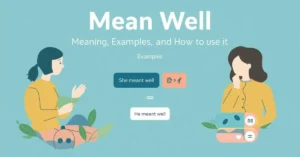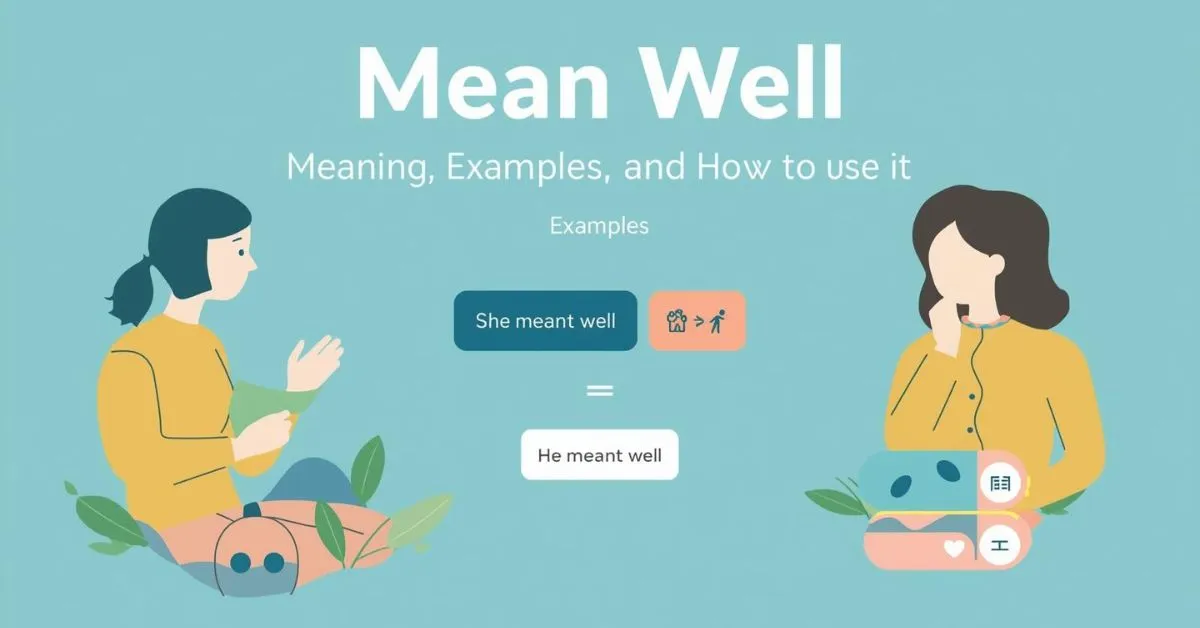
The phrase mean well is a common expression in English. People use it when someone has good intentions, even if the result is not perfect. For example, a friend might give advice that does not help much. Still, you may say they mean well because they want to help.
Understanding phrases like mean well is important for better communication. In language studies such as Linguistics, intention plays a big role in how people understand words and actions. This article explains the definition, origin, examples, synonyms, and real-life use of the phrase. You will also learn how this expression helps people show empathy and understanding.
What Does Mean Well Mean?
Quick Definition
Mean well means to have good intentions when doing something.
Sometimes the action does not work out. But the person wanted to help or do something kind.
According to Merriam-Webster, the phrase describes someone who tries to do good even if the result is not successful.
Simple Breakdown of the Phrase
| Word | Meaning |
|---|---|
| Mean | to intend or plan |
| Well | in a good or kind way |
| Mean well | to have good intentions |
Pronunciation
Mean well: /miːn wel/
Part of Speech
Verb phrase (idiomatic expression)
Mean Well as an English Idiom
What Is an Idiom?
An idiom is a phrase with a meaning that is different from the literal words.
For example:
- “Break the ice”
- “Piece of cake”
- “Mean well”
These expressions are part of everyday English and are studied in fields like Linguistics.
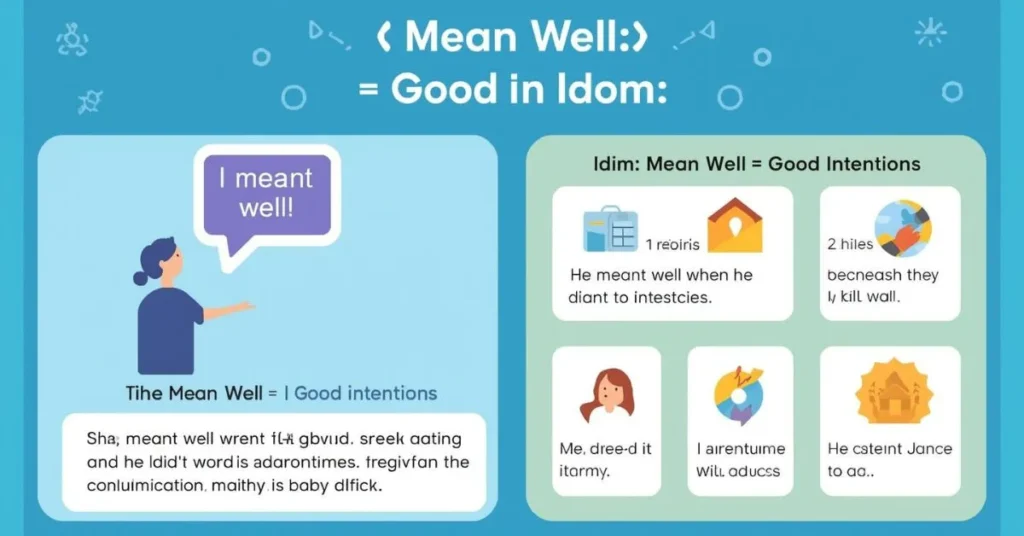
Why Mean Well Is an Idiom
The phrase does not mean simply “mean something good.”
Instead, it describes a person’s intention or motivation.
Example:
“She meant well when she tried to help.”
The focus is on the intention, not the result.
The Origin of the Phrase Mean Well
Early Meaning of the Word “Mean”
The word mean comes from Old English mænan, which means to intend or plan.
This meaning has stayed the same for centuries.
Historical Use
The phrase appears in many English texts and everyday speech across countries like:
- the United States
- the United Kingdom
- Canada
- Australia
Major dictionaries like the Oxford English Dictionary record the phrase as a common English expression.
Examples of Mean Well in Daily Life
Understanding examples helps make the meaning clear.
Family Situations
Parents often try to help their children.
Example:
“My parents meant well when they pushed me to study more.”
They wanted success for their child.
Workplace Situations
Sometimes coworkers offer advice.
Example:
“My coworker meant well when he tried to fix the report.”
Even if the result was not perfect, the intention was good.
Friendships
Friends often try to help each other.
Example:
“She meant well when she introduced me to her friend.”
She wanted something positive.
Mean Well vs Good Intentions
The phrase mean well is closely related to the idea of good intentions.
Key Difference
| Phrase | Meaning |
|---|---|
| Mean well | Someone intends to do good |
| Good intentions | The motivation behind an action |
In ethics and Philosophy, intention is often used to judge actions.
For example:
Someone who breaks a glass while helping meant well, even if the result was bad.
Why Intentions Matter in Human Behavior
In fields like Psychology, experts study the difference between intention and outcome.
Intention vs Outcome
Sometimes people try to help but make mistakes.
Example:
- A friend gives advice that does not work.
- A coworker changes something that causes problems.
Even then, people may say the person meant well.
Attribution Theory
Psychologists use attribution theory to explain how people judge actions.
People often ask:
- Did the person want to help?
- Was the result good or bad?
When the intention is good, people are more forgiving.
Common Situations Where People Mean Well
Many everyday situations involve good intentions.
Giving Advice
Someone may give advice to help.
Example:
“I know you mean well, but I will handle this myself.”
Offering Help
People often offer help even if it is not needed.
Example:
“My neighbor meant well when he tried to repair my fence.”
Protecting Someone
Parents sometimes act strictly to protect their children.
Example:
“My mom meant well when she set strict rules.”
When Good Intentions Cause Problems
Even good intentions can lead to problems.
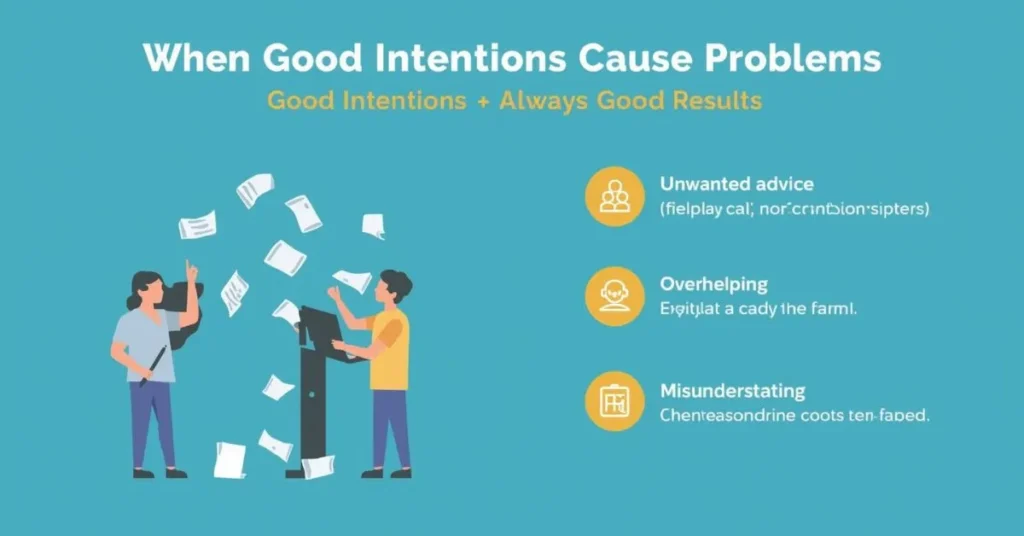
Unwanted Advice
Sometimes advice is not needed.
Example:
A friend may tell you what to do with your career.
Overhelping
Helping too much can prevent someone from learning.
Example:
A parent solving every problem for a child.
Misunderstanding Needs
A person may offer help when someone actually wants independence.
These situations show the difference between intent and impact.
Synonyms and Similar Phrases
Several phrases have a similar meaning.
Common Synonyms
- well-intentioned
- good motives
- kind-hearted
- trying to help
Related Idioms
- good intentions
- from the heart
- no harm meant
These expressions describe people who want to do something good.
How to Use Mean Well in a Sentence
Here are some easy sentence examples.
Example Sentences
- “He meant well when he gave advice.”
- “She meant well, but the plan failed.”
- “I know you mean well, and I appreciate it.”
These sentences show how the phrase is used in daily conversation.
Using the IRA Framework to Handle Good Intentions
The IRA framework helps people respond to situations where someone means well but makes mistakes.
Interpret
First, understand the intention.
Ask yourself:
- Did they want to help?
- Were they trying to be kind?
React
Respond calmly.
Example:
“I know you meant well.”
This shows appreciation for the effort.
Adjust
Explain what would work better next time.
Example:
“Thank you, but I prefer to do it myself.”
This keeps communication positive.
Why Understanding Mean Well Improves Communication
Recognizing good intentions helps people build stronger relationships.
Benefits
- reduces conflict
- improves empathy
- encourages kindness
- builds trust
People feel respected when their intentions are understood.
Frequently Asked Questions
What does mean well mean?
Mean well means someone has good intentions when doing something, even if the result is not perfect.
Is mean well an idiom?
Yes. Mean well is an idiomatic expression used in everyday English to describe positive intentions.
Can someone mean well but still cause problems?
Yes. A person may try to help but make a mistake or misunderstand the situation.
What is a synonym for mean well?
Common synonyms include:
- well-intentioned
- kind-hearted
- having good motives
Why do people say “they mean well”?
People say this to recognize good intentions and avoid judging someone too harshly.
Conclusion
The phrase mean well is a simple but powerful part of everyday English. It describes a person who wants to help or do something good, even if the outcome is not perfect.
Understanding this expression improves communication and empathy. It reminds us that intentions matter, even when mistakes happen. Recognizing when someone means well helps people stay patient, kind, and respectful in relationships.
By learning the meaning, examples, and real-life use of this phrase, you can better understand how language expresses human intentions and emotions.
Click Here To Read More About : what does hoax mean

I am Clara Lexis, a writer driven by clarity, depth, and authenticity. My focus is on transforming ideas into meaningful content that is both informative and engaging. I write with intention to communicate clearly, thoughtfully, and with purpose.