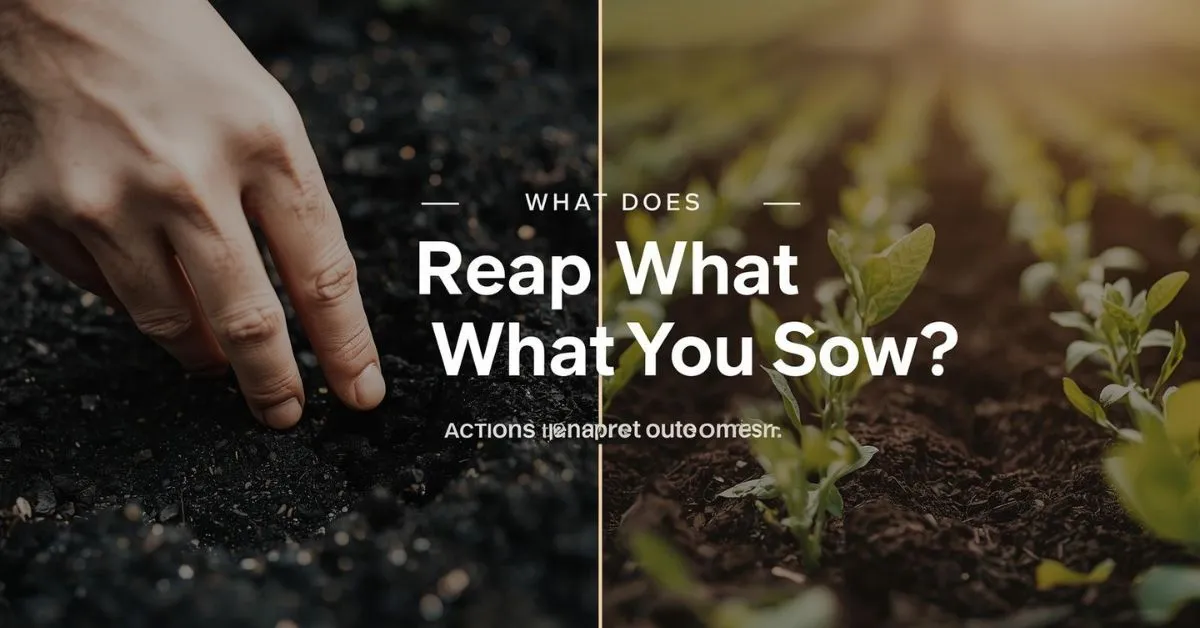
“Reap what you sow” means your actions lead to matching results later. In simple words, the choices you make, the effort you give, and the way you treat others often shape what comes back to you. It is usually used as a warning, but it can also describe positive outcomes.
You may hear this phrase in conversations about behavior, relationships, work, parenting, money, or faith. It is common because the idea is simple: what you put in often affects what you get out.
Once you understand the farming image behind it, the phrase becomes easy to understand and use.
Reap What You Sow Meaning in Simple Words
In plain English, “reap what you sow” means actions have consequences.
If someone lies, harms others, or makes careless choices, the phrase suggests those actions may lead to bad results later. If someone works hard, stays kind, or builds good habits, it can also mean those actions may lead to good results.
A very simple way to say it is:
What you do now helps create what happens next.
That is the heart of the phrase.
Is “Reap What You Sow” Positive or Negative?
Many people think this phrase is always negative, but that is not completely true.
It is often used negatively as a warning. For example, someone who treats people badly may later lose trust and support. In that sense, the phrase points to the consequences of bad behavior.
But it can also be positive. Someone who studies consistently, helps others, or stays disciplined may later enjoy the benefits of those choices. In that case, they are also “reaping what they sowed.”
So the phrase is broader than punishment. It is really about cause and effect in human behavior.
What Do “Reap” and “Sow” Literally Mean?
The phrase comes from farming.
- Sow means to plant seeds in the ground.
- Reap means to gather the crop when it is ready.
The literal image is simple: if you plant corn, you harvest corn. If you plant nothing, you should not expect a crop. If you neglect the field, the result may be poor.
That farming image is used figuratively in everyday English. Your actions are like seeds, and your later results are like the harvest.
Why This Phrase Matters
This phrase stays popular because it explains something people experience all the time: choices are rarely isolated. They usually create patterns, and those patterns shape outcomes.
That applies to many parts of life:
- relationships
- work and school
- habits and self-discipline
- money decisions
- reputation
- parenting
- character
People use this phrase because it turns a big life lesson into a short, memorable idea.
Where Does “Reap What You Sow” Come From?
The phrase is strongly linked to the Bible, especially Galatians 6:7, which expresses the idea that a person reaps what they sow. Because of that, many people first encounter it in a religious or moral context.
Over time, though, the phrase became common in everyday English. Today, people use it in ordinary conversations whether they are speaking religiously or not.
That is why the phrase works in two ways at once:
- as a biblical phrase
- as a general English proverb about actions and consequences
You may also see related wording such as:
- as you sow, so shall you reap
- you reap what you sow
These versions point to the same core idea.
Is It an Idiom, a Proverb, or a Bible Phrase?
It can reasonably be described in all three ways, depending on context.
As a proverb
It expresses a general truth or life lesson: actions lead to consequences.
As an idiomatic expression
Its meaning is not only about literal farming. It is understood figuratively.
As a Bible phrase
It has a strong biblical association and is often quoted in moral or spiritual discussions.
For most everyday readers, the most useful label is probably proverb because the phrase teaches a broad principle.
How People Use “Reap What You Sow” Today
People use the phrase in many ordinary situations.
In relationships
If someone is consistently rude, selfish, or dishonest, others may stop trusting them. People may say that person is reaping what they sowed.
In work or school
If someone prepares well, stays consistent, and keeps improving, they may later benefit from that effort.
In reputation
The way people treat others often shapes how others respond to them over time.
In money habits
Careless spending, poor planning, or risky choices can create future stress. Good habits can create future stability.
In parenting and advice
Parents, teachers, and mentors often use the phrase to teach responsibility.
Real-Life Examples
Here are a few realistic examples that make the meaning clearer.
- A student ignores assignments for months, then fails the final exam.
- A manager treats employees with respect, and the team becomes loyal and productive.
- Someone keeps gossiping, then feels shocked when nobody trusts them.
- A person saves money carefully for years and later benefits from that discipline.
- An athlete trains consistently and eventually sees the results of steady effort.
Each example shows the same principle: earlier actions shape later outcomes.
Example Sentences
These examples show how the phrase is used naturally in writing and speech:
- “He cheated people for years and finally reaped what he sowed.”
- “She stayed focused, worked hard, and is now reaping what she sowed.”
- “If you keep treating friends badly, you will reap what you sow.”
- “The company ignored customer complaints and eventually reaped what it sowed.”
The phrase often appears in serious or reflective situations, but it can also be used casually.
Reap What You Sow vs Karma
People often compare “reap what you sow” with karma, but they are not exactly the same.
| Phrase | Basic Idea | Main Difference |
|---|---|---|
| Reap what you sow | Your actions lead to matching results | Common English proverb with strong biblical roots |
| Karma | Actions affect future outcomes | Comes from a different religious and philosophical tradition |
| Actions have consequences | Choices produce results | More direct and less figurative |
| What goes around comes around | Behavior returns to you | More casual and often social in tone |
In casual conversation, people may use these phrases similarly. But if you want precision, “reap what you sow” and karma are related ideas, not exact synonyms.
Sow vs Sew: A Common Mistake
A very common mistake is writing “reap what you sew.”
That is incorrect.
- Sow = plant seeds
- Sew = stitch fabric with thread
The correct phrase is always:
reap what you sow
This matters because many readers hear the phrase before they ever see it written down.
Common Misconceptions
It only means bad things happen to bad people
Not exactly. It can also describe good results from good effort, wise choices, and kind behavior.
It means consequences always happen quickly
No. The farming metaphor suggests time, growth, and delay. Results may come later, not immediately.
It guarantees perfect fairness in life
No. The phrase expresses a common truth about consequences, but it is not a promise that life always feels fair or immediate.
It is only a religious phrase
It has a biblical connection, but it is also widely used in secular everyday English.
What Most Articles Miss About This Topic
Most articles define the phrase in one line and stop there. The deeper meaning is not just “bad actions lead to punishment.” The fuller idea is that choices create patterns, and those patterns often shape what happens later.
That is why the phrase matters so much. It is not only about blame. It is also about:
- habits
- character
- discipline
- responsibility
- delayed consequences
- long-term outcomes
Another thing many articles miss is tone. In real conversation, saying “you reap what you sow” can sound wise, supportive, cold, judgmental, or even harsh depending on the situation. The meaning may stay the same, but the emotional effect changes.
A final point many pages skip is that the phrase works best as a practical lesson, not a rigid formula. It helps people think about responsibility and consequences, but it does not explain every outcome in life in a perfect or mechanical way.
Quick Reference Table
| Question | Quick Answer |
|---|---|
| What does “reap what you sow” mean? | Your actions lead to matching results later |
| Is it positive or negative? | Usually negative, but it can also be positive |
| Is it from the Bible? | Yes, it is strongly associated with a biblical verse |
| Is it an idiom or a proverb? | It can be described as both, though proverb is often the clearest label |
| Is it “sow” or “sew”? | Sow |
FAQs
What does “reap what you sow” mean in one sentence?
It means the things you do now often shape the results you experience later.
Is “reap what you sow” always negative?
No. It is often used negatively, but it can also describe positive results from good choices and hard work.
Is “reap what you sow” from the Bible?
Yes. The phrase is strongly linked to the Bible, especially Galatians 6:7.
Is “reap what you sow” an idiom?
Yes, it can be called an idiomatic expression, though it also works as a proverb because it teaches a general life lesson.
What is the difference between “reap what you sow” and karma?
They are similar in everyday use, but they come from different traditions and are not exactly the same.
Is it “reap what you sow” or “reap what you sew”?
The correct phrase is reap what you sow.
How do you use “reap what you sow” in a sentence?
You can use it when talking about the results of someone’s actions, such as: “If you keep lying to people, you will reap what you sow.”
Conclusion
“Reap what you sow” means your actions lead to related results over time. It is a simple phrase, but it carries a strong lesson about responsibility, habits, choices, and consequences. Once you understand the farming metaphor behind it, the meaning becomes clear: what you plant through your actions often shapes what you later face.
Used well, the phrase can describe both warning and wisdom. It reminds people that what they do today often matters more than they think.
Click Below To Read About:
What Does Text Structure Mean? Types, Examples, How to Identify It
What Does Cacophony Mean? Definition, Pronunciation, Examples
What Does the OG Mean? Slang, Texting, “The OG,” Examples

I am Clara Lexis, a writer driven by clarity, depth, and authenticity. My focus is on transforming ideas into meaningful content that is both informative and engaging. I write with intention to communicate clearly, thoughtfully, and with purpose.