The sequence >ļæ½tļæ½ is a visually complex combination of symbols and extended Latin letters. It is not part of any official emoji system. Instead, it belongs to decorative Unicode text, which is used for visual styling rather than forming words or conveying spoken language meaning.
This type of string is used primarily as a visual identity marker. It appears in online usernames, gaming tags, social media profiles, stylized bios, and digital art contexts. Meaning does not come from grammar or dictionary definitions. Instead, interpretation comes from visual impression, design style, and digital culture trends.
Understanding this symbol string involves examining typography, Unicode encoding, cognitive perception, digital sociology, platform behavior, and search engine interpretation.
Definition of the String
>ļæ½tļæ½ is a non-linguistic Unicode symbol combination. It does not translate into any spoken language or dictionary meaning. Its primary functions are:
- Decorative text styling
- Visual differentiation
- Digital identity personalization
The string emphasizes aesthetics over communication. Each character was likely chosen for visual impact, rhythm, and unique appearance.
Character-Level Structural Breakdown
| Character | Unicode Category | Visual Function |
|---|---|---|
> | Mathematical symbol | Directional, sharp accent |
ļ | Latin extended letter | Stylization, rare visual form |
æ | Ligature letter | Blended shape, fused letters |
½ | Fraction symbol | Visual break, asymmetry |
t | Standard Latin letter | Structural anchor |
The design alternates between angular and curved forms, creating contrast and rhythm that resembles modern digital design patterns.
Visual Design Pattern
The structure of >ļæ½tļæ½ produces an uneven visual flow:
Angular → Curved → Dense → Fragmented → Stable → Stylized → Fragmented
This pattern mirrors glitch aesthetics, which rely on irregularity and distortion for visual interest. The combination of sharp, blended, and unusual glyphs makes the string visually compelling and unique.
Why It Is Not an Emoji
Emoji standards require:
- Universal pictographic meaning
- Inclusion in Unicode emoji categories
- Recognizable graphical representation
This string fails all criteria. It does not have a universal meaning or standardized pictographic design, so it is strictly decorative Unicode text.
Historical Development of Decorative Text
Decorative text usage evolved in stages:
ASCII Art: Early computer users created images and designs using keyboard characters.
Forum and Chat Culture: Users applied unique characters to stylize usernames or signatures.
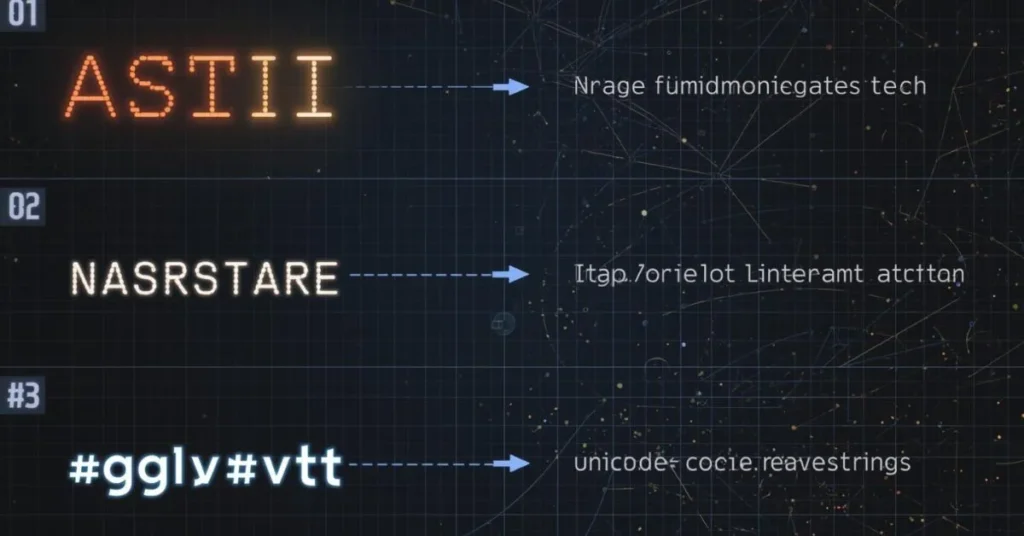
Unicode Expansion: Extended Latin letters, ligatures, and symbols allowed more elaborate, visually distinct text patterns like >ļæ½tļæ½.
Symbolic Interpretations
Although the string has no fixed meaning, visual symbolism can be inferred:
| Character | Possible Visual Idea |
|---|---|
> | Forward motion, progression |
½ | Incompleteness, asymmetry |
æ | Fusion, blending of forms |
ļ | Decoration, stylistic ornament |
t | Stability, structural anchor |
These interpretations arise from visual metaphor, not formal language.
Typography as Visual Identity
In modern digital environments, text is treated as both information and design. Symbol strings function like logos or graphic marks rather than sentences.
Key Design Features:
- High contrast shapes
- Compact spacing
- Mixed geometry (angular vs curved)
- Visual rhythm that attracts attention
This approach enhances digital recognition and memorability.
Unicode Encoding System (Detailed)
Each character in the string has a unique Unicode code point, which allows it to display consistently across supported devices.
Examples:
| Character | Unicode Code Point |
|---|---|
> | U+003E |
ļ | U+013C |
æ | U+00E6 |
½ | U+00BD |
t | U+0074 |
Key Points:
- Unicode defines numbers for characters, not appearance.
- Fonts control the visual display.
- UTF-8 encoding ensures cross-platform compatibility.
Without proper Unicode encoding, symbol strings can appear broken or garbled.
Font Rendering Variability
Display may differ depending on:
- Device font libraries
- Operating system typography engines
- Platform-specific rendering rules
Fallback fonts may replace unsupported glyphs, changing the visual effect.
Digital Identity and Personalization
Decorative strings help establish unique digital identities, especially in environments where usernames are common.
Common Applications:
- Gamer tags
- Profile names
- Social media bios
- Chat handles
Using such strings adds visual distinction in crowded digital spaces.
Psychological Attention Effects
Unusual visual forms intercept normal reading patterns, drawing the eye and increasing memorability.
Cognitive Benefits:
- Captures attention quickly
- Encourages curiosity
- Enhances visual recognition
Connection to Digital Aesthetic Trends
The string reflects modern internet visual culture, including:
- Glitch art
- Cyberpunk design
- Futuristic typography
- Vaporwave and retro digital aesthetics
These trends rely on symbolic and visual distortion for creative impact.
Readability Trade-Off
Decorative strings like >ļæ½tļæ½ prioritize visual uniqueness over legibility. High stylization reduces clarity, making it unsuitable for standard communication but ideal for identity and decoration.
Technical System Limitations
Some platforms impose restrictions on symbols, including:
- Only ASCII letters and numbers
- Limits on extended Unicode ranges
- Filtering of special characters
These restrictions can prevent decorative strings from displaying correctly everywhere.
Search Behavior Patterns
Unusual symbol strings generate curiosity, leading to search queries such as:
- “What does
>ļæ½tļæ½mean?” - “Unicode decorative text meaning”
- “Is this an emoji?”
SEO content explaining these strings helps users and search engines understand the symbols.
Semiotic Framework
In semiotics, the string acts as a signifier without fixed signified meaning. Interpretation is open-ended and depends on visual perception rather than context.
Information Density
The string condenses multiple visual cues into a short sequence, functioning like a miniature graphic emblem. Each character contributes to overall aesthetics, rhythm, and uniqueness.
Accessibility Considerations
Assistive technologies may struggle with decorative Unicode strings. To improve accessibility:
- Provide descriptive labels
- Avoid using decorative text alone for functional content
- Include plain-text alternatives
Example: “Stylized Unicode symbol string used for decorative digital identity.”
Metadata Structuring for SEO
Proper metadata improves search engine understanding:
- Title Tag: Clarifies topic
- Meta Description: Explains decorative nature
- Schema Markup: Classifies as Article/TechArticle
- UTF-8 Encoding: Preserves symbols
This ensures indexing accuracy and prevents broken characters in search results.
Semantic Keyword Relevance
Keyword clusters enhance topical authority:
Primary: Unicode symbol meaning, decorative text
Secondary: Stylized characters, aesthetic Unicode strings
Contextual: Digital typography, visual identity text
Schema Markup Role
Using structured data such as:
ArticleTechArticleFAQPage
helps search engines understand and display content about decorative symbol strings accurately.
Future Trends
Decorative Unicode strings are expected to increase in digital use:
- Gaming usernames
- Social media branding
- Digital art and aesthetic design
- Virtual reality identity systems
The blending of text and visual design will expand with evolving platforms.
Frequently Asked Questions
Is >ļæ½tļæ½ an emoji?
No. It is a combination of Unicode characters used for decorative purposes.
Does it have a real language meaning?
No dictionary or spoken meaning exists.
Why is this string used online?
It creates visual uniqueness in usernames, profiles, and digital design.
Can it express emotions like emojis?
No; meaning is derived from visual perception, not emotion.
What category does it belong to?
Decorative Unicode typography.
Why does it look different on devices?
Font support, operating systems, and rendering engines affect appearance.
Is it encrypted or secret code?
No; it is plain Unicode text.
Can it be used in all usernames?
Not always; some platforms restrict special characters.
Does it relate to glitch or cyber aesthetics?
Yes, its irregularity matches modern digital visual trends.
How should it be described for accessibility?
Example: “Stylized Unicode symbol string used for decorative digital identity.”
Conclusion:
The string >ļæ½tļæ½ is decorative Unicode text used for visual identity, digital style, and aesthetic impact. It is not language, word, or emoji. Its significance lies in its distinctiveness, memorability, and modern digital culture expression, making it a powerful tool for online identity and stylistic presentation.
Read More About : What Does Reconcile Mean? Complete Guide with Examples

I am Clara Lexis, a writer driven by clarity, depth, and authenticity. My focus is on transforming ideas into meaningful content that is both informative and engaging. I write with intention to communicate clearly, thoughtfully, and with purpose.