Have you ever wondered what “they not like us” really signifies? You might have seen it in rap lyrics, TikTok videos, or social media captions. This popular slang represents a sense of confidence, individuality, and pride within a group.
In simple terms, it expresses that the speaker’s group is unique, different, and sometimes unmatched by outsiders. The phrase can also indicate loyalty, identity, or authenticity among friends, fans, or communities.
While some use it playfully, others adopt it to show strength or superiority in a lighthearted way. Understanding what “they not like us” refers to helps you interpret its tone, cultural context, and emotional impact.
In this article, we will learn the simple meaning, how people think about it, how it is used in pop culture, and easy ways to use it in daily talks.
What Does They Not Like Us Mean?
In simple terms, they not like us highlights a difference between the speaker’s group and others. “They” refers to outsiders, and “us” refers to the speaker’s group friends, fans, community, or culture. The phrase communicates that the group stands out in style, ability, or attitude.
It is informal grammar, short for “They are not like us.” This structure adds attitude and makes the phrase sound confident, catchy, and memorable. Depending on context, it can be playful, competitive, or even exclusive.
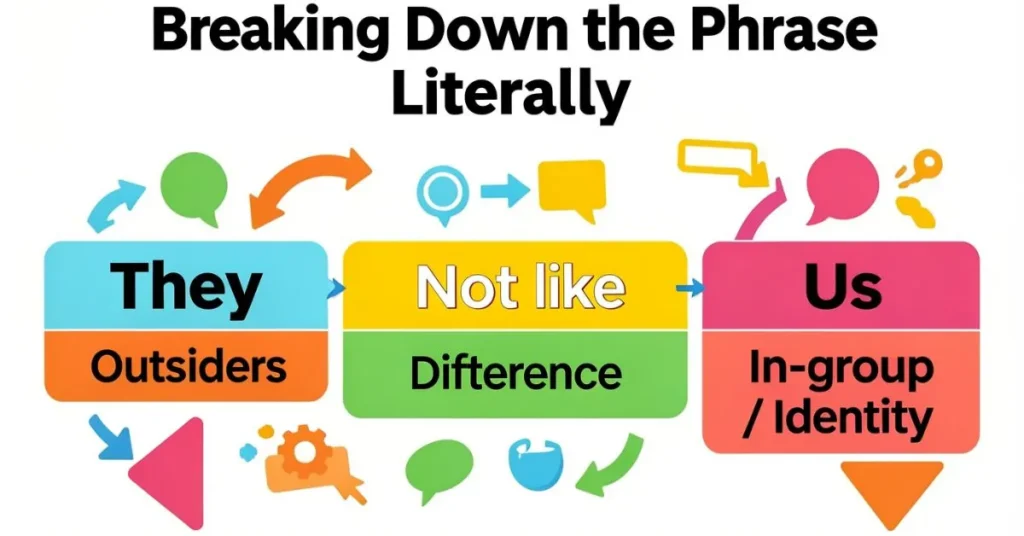
Breaking Down the they not like us Literally
Let’s examine they not like us word by word:
- “They” outsiders or people outside the group.
- “Not like” indicates a difference or separation.
- “Us” the in-group, representing identity and unity.
Leaving out the word “are” makes the phrase sound smoother and more fun. Because of this, it has a strong rhythm and feeling. So, people like to use it in rap songs, social media posts, and everyday talk.
Emotional Meaning Behind the Phrase
Beyond words, they not like us expresses several emotions:
- Confidence shows pride in abilities or identity.
- Superiority implies the group is ahead or unmatched.
- Authenticity signals that the group is “real” while outsiders may seem fake.
- Exclusivity strengthens in-group identity and loyalty.
These emotions make the phrase versatile, powerful, and highly relatable.
Cultural and Social Significance
They not like us is deeply rooted in hip-hop and urban culture. In rap lyrics, slang, and street language, it emphasizes identity, pride, and self-expression. Socially, it shows an “us and them” idea. It helps people in a group feel close. At the same time, it shows they are different from others.
Social media has boosted its popularity. People use they not like us on TikTok, Instagram, and Twitter. They put it in captions, videos, and comments. This helps trends spread fast and makes people feel part of a group.
Examples in Music and Pop Culture
In rap and hip-hop, artists use they not like us to show skill, success, or originality. Fans repeat it online, creating memes, captions, and trends.
For example:
- TikTok users post videos celebrating achievements and add they not like us as a caption.
- Athletes may use it after a victory to signal confidence.
- Fashion influencers use it to highlight unique style.
These examples show how the phrase communicates pride and individuality.
Where People Commonly Use It
People use they not like us in different contexts:
- Social media posts: Captions, comments, or viral videos
- Sports and competitions: Celebrating wins or skills
- Fashion and lifestyle: Highlighting originality or trends
- Casual conversations: Friendly brag or inside joke
Context changes the meaning: playful, competitive, or exclusive.
Tone Variations
The tone of they not like us affects its meaning:
- Friendly: “We’re unique”
- Competitive: “They cannot match us”
- Cultural: Shows identity and authenticity
- Harsh: Can feel exclusive or disrespectful
Always read the room to communicate the intended meaning.
Positive or Negative?
They not like us can be positive, negative, or neutral:
- Positive: Confidence, pride, uniqueness
- Negative: Arrogance, exclusivity, or insult
- Neutral: Simply points out difference
Tone, context, and audience are key to interpretation.
Psychological Meaning
Psychologically, they not like us reflects human social behavior:
- In-group vs. out-group: Humans naturally form groups
- Social comparison: Highlights superiority and uniqueness
- Authenticity: Reinforces group identity and shared values
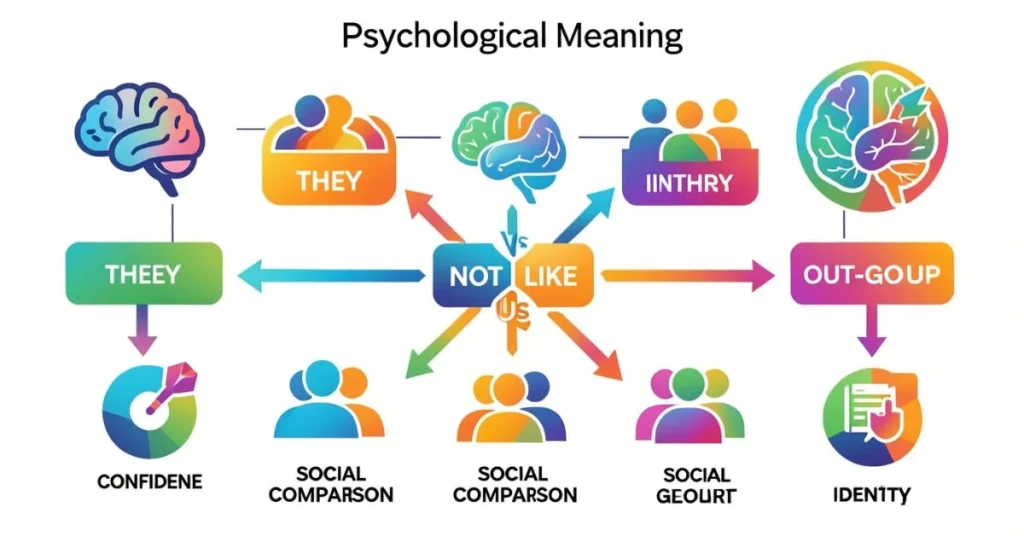
It is emotionally powerful because it conveys identity, belonging, and confidence in just four words.
Similar Slang Phrases
Other phrases with similar meanings include:
- We built different – emphasizes uniqueness
- We not the same – highlights difference
- Cut from a different cloth – shows individuality
- They can’t relate – outsiders don’t understand
- Not in our league – signals superiority
These phrases appear in music, social media, and youth culture alongside they not like us.
When Not to Use the Phrase
Avoid they not like us in:
- Professional settings – emails, meetings, presentations
- Sensitive conversations – could offend or exclude
- Serious discussions – tone may be misread
Consider audience and context to use it effectively.
Comparison With Other Slang Expressions
They not like us differs from similar phrases:
- We built different – self-affirming, positive
- They can’t relate – focuses on outsiders’ lack of understanding
- Not in our league – emphasizes superiority
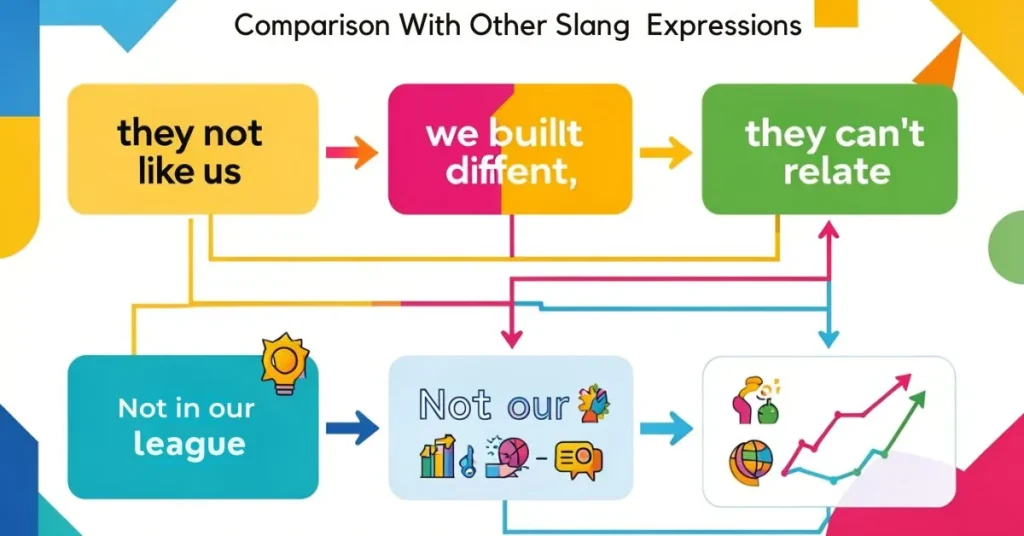
Unlike other phrases, they not like us combines group identity, pride, and emotional expression in one short statement.
Why the they not like us Went Viral
The phrase went viral because of:
- Social media: Easy to share, memorable, and catchy
- Music: Popularized in rap lyrics and hip-hop culture
- Identity signaling: Shows pride, uniqueness, and belonging
- Versatility: Playful, competitive, or expressive tone
Its viral nature makes it part of everyday language for young audiences worldwide.
Practical Tips for Using They Not Like Us
- Use it in captions, songs, or casual conversations.
- Avoid formal or professional contexts.
- Be mindful of tone to prevent misinterpretation.
- Pair it with hashtags or trends on social media for engagement.
- Use similar slang phrases to add variety while keeping meaning clear.
The History and Origin of They Not Like Us
Understanding they not like us also means looking at its history. This phrase became popular in hip-hop and rap culture during the 2000s and later spread through social media.
Artists used it in lyrics to show confidence, pride, and individuality. Over time, it entered everyday language as a short, memorable way to express group identity and uniqueness. Today, it’s common across TikTok, Instagram, and Twitter, showing how music and digital culture influence modern slang.
Common Mistakes When Using the Phrase
Even though they not like us is popular, people often misuse it:
- Using it in formal settings like work emails or presentations
- Misinterpreting tone, making it sound dismissive or arrogant
- Overusing it, which can make it feel repetitive or boastful
- Ignoring audience context, leading to misunderstandings
By avoiding these mistakes, you can use they not like us effectively and maintain its playful or confident meaning.
SEO & Related Words Section
For search engines, they not like us connects to:
- Slang terms: urban slang, internet slang, youth slang
- Cultural identity: in-group vs out-group, social belonging
- Pop culture: rap lyrics, viral phrases, influencer language
- Emotion: confidence, pride, authenticity, superiority
Including these terms naturally strengthens SEO and authority.
FAQs About They Not Like Us
Q1: Is it slang?
Yes, informal and modern.
Q2: Is it an insult?
Depends on tone and context.
Q3: Where did it come from?
Hip-hop, rap, and social media.
Q4: Can it be positive?
Yes, conveys confidence or uniqueness.
Q5: Is it grammatically correct?
Informal, but adds style and attitude.
Q6: How to use it?
In captions, songs, or friendly conversation; avoid formal settings.
Conclusion
In short, they not like us is a powerful modern slang phrase that expresses identity, confidence, and group pride. It highlights difference, celebrates uniqueness, and spreads widely through music and social media. Tone, context, and audience are key to understanding its meaning. You can learn the simple, emotional, cultural, and history meaning of “they not like us.” Then you can use they not like us in talks, posts, and fun content with confidence.
Click here to read about: what does it mean to take the lord’s name in vain

Hi, I’m Geoffrey Chaucer. I explore the stories and meanings behind words, turning ideas into clear, insightful writing. Through every article I craft, I aim to spark curiosity, share knowledge, and help readers uncover practical, meaningful truths in everyday life.