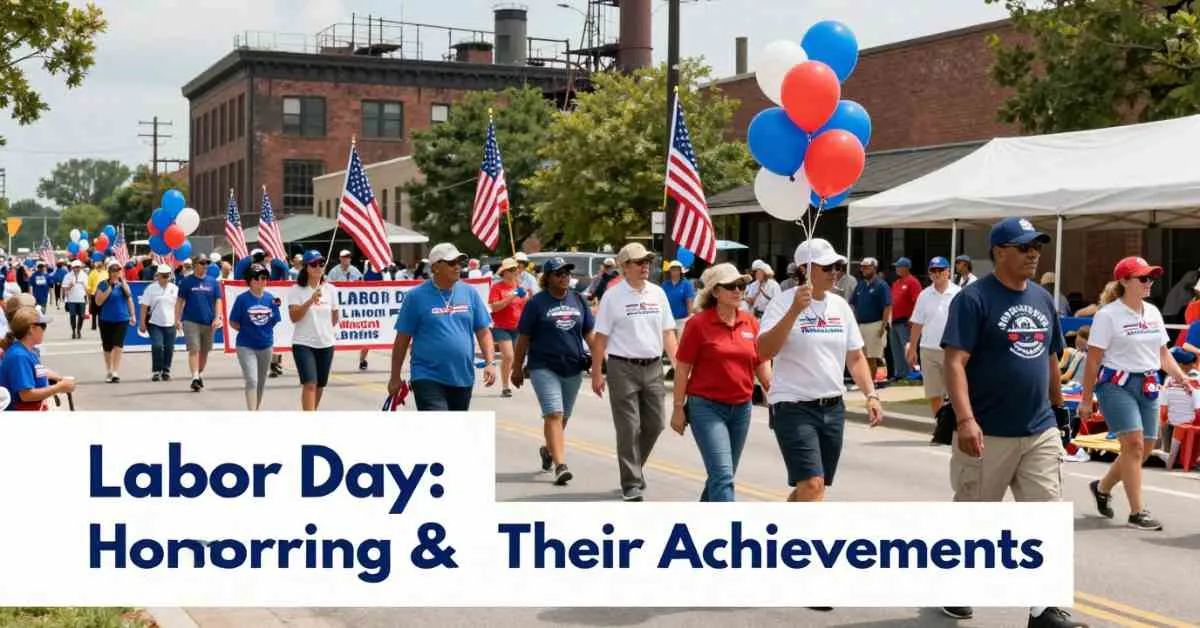
Labor Day is a special public holiday that honors workers and employees for their hard work and contributions. It is celebrated in the United States and Canada every year on the first Monday of September, giving people a chance to relax and reflect. But what does Labor Day really mean? Why do we celebrate it?
The holiday began in the late 1800s during the Industrial Revolution, when working conditions were harsh and unsafe. Labor unions and workers fought for fair wages, shorter working hours, and safer workplaces. Over time, their efforts led to the official recognition of Labor Day in 1894 (USA).
Today, we celebrate Labor Day to thank workers for their hard work. We also honor workers’ rights and enjoy parades, festivals, and time with family.
History of Labor Day
The history of Labor Day starts in the late 19th century, when workers across industries faced long hours and poor working conditions. During this time, labor unions began union organizing to demand better treatment. Workers held strikes and marches to fight for fair pay and safety.
In 1882, New York City hosted the first official Labor Day parade. Government leaders and city officials helped the celebration. They saw how important workers are for the country. The movement spread quickly, and by 1894, the U.S. Congress made Labor Day a federal holiday.
Labor Day also reminds us of the Industrial Revolution, when machines changed the way people worked. Workers worked hard and made many important contributions. Their efforts helped create the labor rights we have today. Now, Labor Day is a time to remember history and honor workers. People celebrate with community events, parades, and festivals.
Why Do We Celebrate Labor Day?
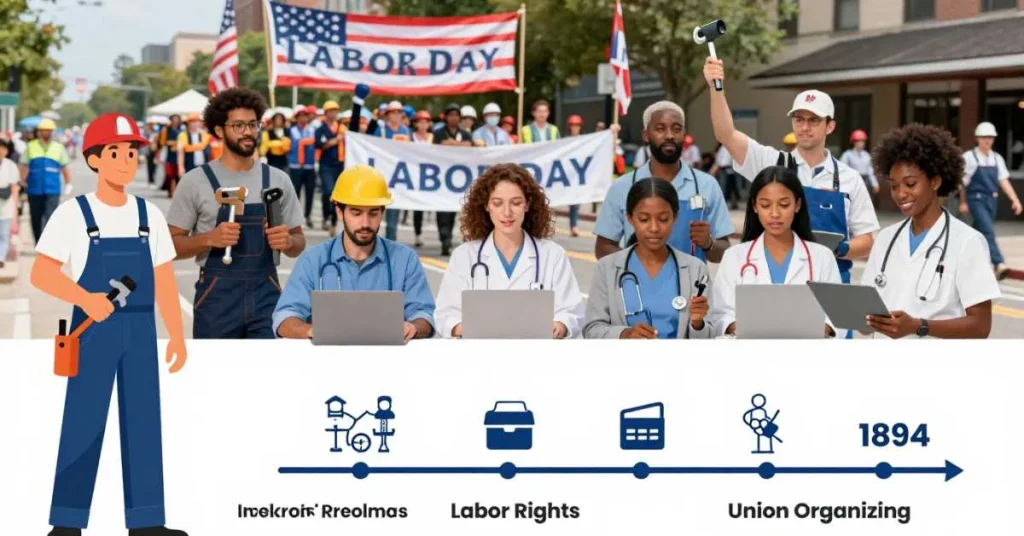
We celebrate Labor Day to honor the hard work of employees and the success of the labor movement. It shows how important workers’ hard work is. It also explains why fair rules and labor rights matter. Labor unions help make workplaces safe and fair.
The holiday also encourages people to appreciate the workforce and the impact of labor on society. Communities hold parades, festivals, and public events, while workplaces may recognize employee contributions. It reminds us that workers are the backbone of every country.
In short, Labor Day celebrates employment, labor rights, and community, making it both a historical and cultural event.
When is Labor Day Celebrated?
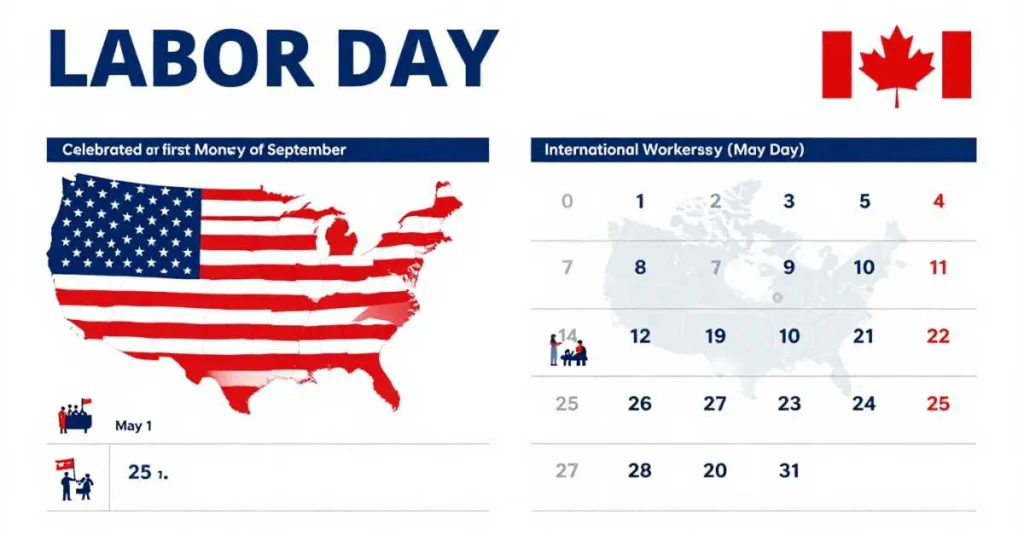
In the United States and Canada, Labor Day is celebrated on the first Monday of September. Schools, offices, and many businesses close, giving everyone a long weekend.
Globally, many countries celebrate International Workers’ Day, also called May Day, on May 1. This day emphasizes workers’ rights, fair pay, and safe work conditions. Countries like Germany, France, China, and the United Kingdom have parades and rallies to honor workers. This shows that workers are important all over the world.
No matter the date, the holiday always celebrates workers’ achievements and contributions. It connects historical labor struggles to today’s workplace standards and global labor holidays.
How People Celebrate Labor Day
Labor Day celebrations combine history and fun. In many cities, parades and festivals feature labor unions, workers, and community groups. Families enjoy barbecues, picnics, beach trips, and sports events, making it a relaxing day off.
Retailers often hold Labor Day sales, while workplaces may recognize employee achievements. Schools and community centers host cultural events and concerts, celebrating the workforce and its contributions.
Even as a fun holiday, it reminds everyone of the importance of labor rights and the historical struggles of workers. Labor Day is a special day. People enjoy parades, festivals, and time with family. It is a day to honor workers and have fun.
Labor Day Around the World
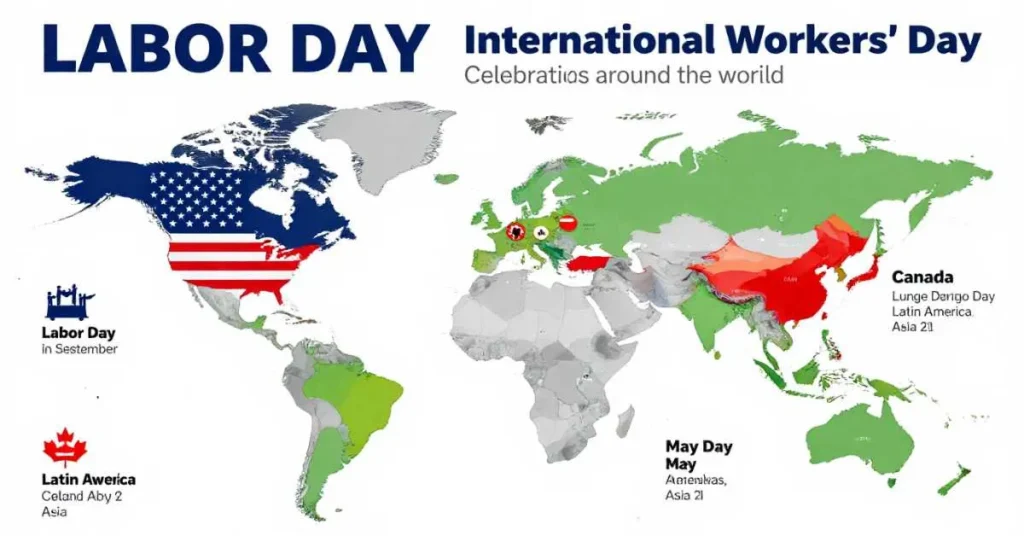
While Labor Day in North America falls in September, other countries observe International Workers’ Day on May 1. This global holiday focuses on labor rights, fair wages, and safe working conditions.
- In Europe, countries like Germany and France hold rallies and parades, highlighting the role of labor unions.
- In Latin America, May Day emphasizes wage equality and workplace safety.
- In Japan, people celebrate the holiday with community festivals. They have fun and show thanks to workers.
Some countries, like Australia, have Labor Day on different days in different regions. People still celebrate to honor workers’ achievements. These holidays show that workers are important everywhere and that labor rights matter.
Labor Unions and Workers’ Rights
Labor unions are very important to Labor Day. They started a long time ago during the Industrial Revolution. Unions helped workers ask for fair pay, shorter work hours, and safer jobs.
Leaders like Samuel Gompers, founder of the American Federation of Labor, helped shape the labor movement. Their advocacy led to the official federal recognition of Labor Day in 1894.
Today, unions continue to protect employment rights, negotiate benefits, and ensure safe work conditions. Labor Day reminds us that fair treatment and workers’ achievements are critical for a thriving society.
Interesting Facts About Labor Day
- The first Labor Day parade was in 1882 in New York City.
- Labor Day became a federal holiday in 1894 after efforts by labor unions and government leaders.
- Many countries celebrate International Workers’ Day (May Day) on May 1.
- Labor Day is featured in films, music, and literature, symbolizing work, community, and achievements.
- The holiday is about history, fun, and saying thank you to workers. People enjoy parades, picnics, festivals, and family time.
FAQs About Labor Day
1. What is the meaning of Labor Day?
It honors workers and all employees. It celebrates their rights and shows how much work they do.
2. When is Labor Day celebrated?
In the U.S. and Canada, it falls on the first Monday of September. Globally, many celebrate May Day on May 1.
3. Who created Labor Day?
The holiday came from the labor movement and the advocacy of labor unions and leaders like Samuel Gompers.
4. Why do we celebrate Labor Day?
To honor workers’ achievements, contributions, and labor rights, while remembering historical labor struggles.
5. How do people celebrate Labor Day?
Through parades, festivals, family picnics, sporting events, and workplace recognition of employee achievements.
6. Fun fact: Did you know the first Labor Day parade had tens of thousands of workers marching through New York City streets in 1882?
Conclusion
Labor Day is a holiday that honors workers and employees. It celebrates the hard work of the workforce. The holiday started during the Industrial Revolution and became a federal holiday in 1894. It recognizes workers’ achievements and promotes fair pay and safe jobs.
Around the world, other holidays like International Workers’ Day, or May Day, also honor workers. Today, Labor Day is celebrated with parades, festivals, fun activities, and community events. It reminds us of past struggles and the value of work today.
You can celebrate Labor Day by thanking the workers in your life. Join a local parade or event, or simply think about the importance of fair work and the contributions of the workforce.
Click Here To Read About: What Does Azure Mean? Color, Culture and Technology

Hi, I’m Geoffrey Chaucer. I explore the stories and meanings behind words, turning ideas into clear, insightful writing. Through every article I craft, I aim to spark curiosity, share knowledge, and help readers uncover practical, meaningful truths in everyday life.