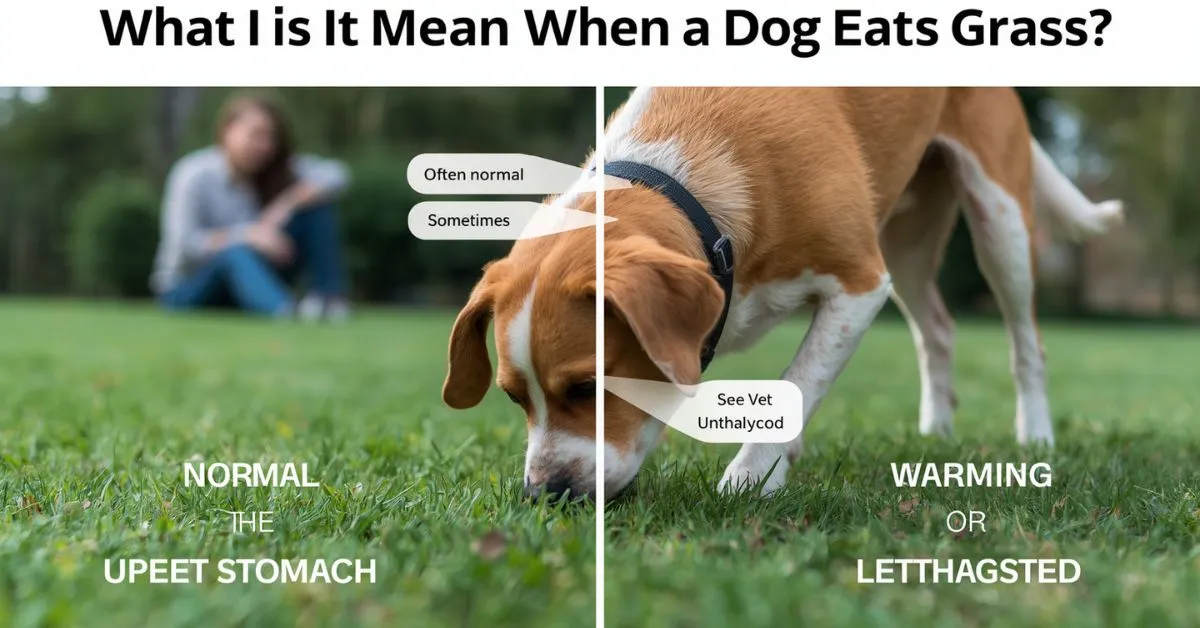
When a dog eats grass, it usually does not mean anything serious. Many dogs do it as a normal behavior, possibly because they like the texture, want extra roughage, feel mildly nauseated, or are bored.
It becomes more concerning when the behavior is sudden, frantic, frequent, or paired with vomiting, diarrhea, lethargy, pain, or possible exposure to pesticides, herbicides, or fertilizer.
If you have ever watched your dog stop mid-walk and start chewing grass like it is a snack, you are not alone. This is one of the most common behavior questions dog owners ask. The reason it is confusing is simple: grass-eating can be completely normal in one dog and a warning sign in another.
The difference depends on the pattern, the symptoms that come with it, and where the grass came from. This guide gives a faster, clearer answer than a basic definition page by showing what grass-eating usually means, when it is harmless, when it points to nausea or digestive upset, and when it is time to call the veterinarian.
Quick answer: should you worry?
Here is the simplest way to read the situation:
| Situation | What it usually means | What to do |
|---|---|---|
| Eats a little grass, acts normal, no vomiting | Often normal canine behavior | Monitor |
| Eats grass once, vomits once, then acts normal | May be mild stomach irritation or an isolated episode | Watch closely |
| Repeated grass-eating plus repeated vomiting | Possible digestive problem, toxin, irritation, or obstruction | Call your vet |
| Eats grass from a treated lawn | Possible chemical exposure | Contact your vet promptly |
| Frantically gulps grass, retches, seems painful, weak, or bloated | More serious concern | Seek urgent veterinary care |
That quick triage matches the broad veterinary guidance from VCA, AKC, Cornell, and ASPCA: occasional grazing can be normal, but repeated vomiting, pain, lethargy, toxin exposure, or unproductive retching should not be ignored.
Is it normal for dogs to eat grass?
Yes, often it is. VCA notes that most dogs that eat grass are not sick beforehand and do not vomit afterward. In the data VCA cites, fewer than 25% vomit after eating grass and only about 10% show signs of illness before eating it.
AKC reports a similar pattern, which is why the old idea that dogs eat grass only to make themselves throw up is too simplistic.
That matters because many owners panic as soon as they see grass-eating. In reality, casual nibbling can fall under normal canine behavior.
Some dogs simply like the taste, the smell, or the act of grazing. Others seem to treat it like scavenging or exploratory behavior, which fits what veterinary sources describe as normal or near-normal in many dogs.
Why dogs eat grass
There is no single proven reason, but the strongest explanations tend to fall into a few practical categories.
1. Normal behavior or instinct
Some dogs appear to eat grass for no medical reason at all. They may like the texture, the taste, or the act of chewing. AKC and VCA both note that for many dogs this is simply a common behavior rather than a clear sign of illness.
2. Mild nausea or an upset stomach
Some dogs do seem to go for grass when they feel queasy. Merck notes that acute gastritis can happen after irritating substances are eaten and that vomit may contain grass, bile, froth, or blood. AKC also notes that some dogs with an empty stomach may gulp grass and then vomit yellow bile.
3. Fiber or roughage
VCA explains that dogs need roughage in their diets and that grass is a source of fiber. AKC also points to fiber as one reason some dogs may seek out grass, especially if they seem to do it regularly. That does not prove every dog has a dietary deficiency, but it does make roughage one reasonable explanation.
4. Boredom, habit, or attention-seeking
Grass-eating can also become a learned routine. A dog left alone in the yard, under-stimulated on walks, or prone to scavenging may turn grazing into a habit. Veterinary and pet-health sources commonly list boredom and behavioral reinforcement among the likely reasons.
5. Pica or compulsive ingestive behavior
If the behavior is intense, repetitive, or extends beyond grass to dirt, rocks, mulch, fabric, or other non-food items, it may fit into pica or abnormal ingestive behavior.
Merck describes pica as eating nonfood items and notes that it can be part of abnormal or compulsive behavior, though dogs also investigate with their mouths normally.
What it means in common real-life scenarios
Dog eats grass but acts completely normal
This is usually the least concerning version. If your dog chews a little untreated grass, keeps normal energy, has a normal appetite, and does not keep vomiting, the behavior may simply be a harmless habit.
Dog eats grass and throws up once
A single vomit episode after eating grass can be an isolated incident. Cornell says infrequent vomiting after eating grass is likely an isolated event. It is worth watching, but it is not automatically an emergency if your dog quickly returns to normal.
Dog eats grass and vomits yellow bile
This pattern can happen when the stomach is empty and bile irritates it. AKC specifically notes that some dogs may gulp grass and bring up yellow bile. It can still be mild, but repeated episodes deserve a veterinary discussion.
Dog frantically eats grass
Frantic grazing is more concerning than casual nibbling. When a dog suddenly rushes to eat a lot of grass, especially if lip-licking, drooling, retching, vomiting, or restlessness follow, nausea, stomach irritation, or another gastrointestinal problem moves higher on the list. Vomiting in dogs can be preceded by nausea, drooling, and retching, according to Merck.
Dog eats grass every day
Daily grass-eating is not always dangerous, but it is worth noticing. Repeated behavior can point to habit, diet questions, boredom, pica, or ongoing digestive discomfort. If it is becoming a pattern, it is reasonable to review diet, enrichment, parasite prevention, and symptoms with your veterinarian.
When eating grass is actually risky
The grass itself is not always the main danger. Often the problem is what is on the grass or mixed into the yard.
Pesticides, herbicides, and fertilizer
This is one of the biggest real risks. PetMD warns that grass treated with pesticide can poison dogs. ASPCA notes that fertilizers irritate the gastrointestinal tract and, in larger amounts, can cause severe vomiting, diarrhea, weakness, uncoordinated walking, tremors, and other neurologic signs. Some fertilizer products also contain insecticides or other additives that raise the danger.
Toxic plants in the lawn or garden
A dog rarely eats “just grass.” Yards often contain weeds, decorative plants, or garden products. If your dog grazes freely, the concern may be a toxic plant, mulch, compost, or treated patch rather than plain grass. ASPCA and AKC both emphasize lawn and garden safety for pets.
Parasites and contamination
Outdoor grass can be contaminated with animal waste and parasite eggs. Veterinary sources note that grass-eating can expose dogs to intestinal parasites in contaminated environments, which is one reason monthly parasite prevention and good yard hygiene matter.
Too much plant material
Large amounts of grass can irritate the stomach or, in unusual cases, contribute to blockage. VCA-linked sources and veterinary hospitals note that excessive ingestion can become a gastrointestinal problem. Obstruction becomes more concerning if your dog keeps retching, cannot keep food down, has abdominal pain, or stops eating.
When to call the vet
Call your veterinarian promptly if grass-eating comes with repeated vomiting, diarrhea, lethargy, weakness, blood in vomit or stool, decreased appetite, belly pain, fever, or signs of dehydration. Cornell specifically advises calling the vet if you notice lethargy, vomiting lasting more than 24 hours, a painful belly, fever, or blood in the vomit.
Emergency signs
Go to urgent or emergency veterinary care right away if your dog has repeated unproductive retching, a swollen abdomen, severe weakness, tremors, seizures, collapse, or suspected poison exposure. Cornell and ASPCA both point owners toward urgent help when poisoning or severe GI symptoms are possible.
Puppies need extra caution
Puppies deserve a lower threshold for concern. Vomiting and diarrhea in a puppy can become serious quickly, and infectious causes such as parvovirus may need to be ruled out depending on age and vaccination status. That is one reason grass-eating plus vomiting is more concerning in a young dog than in an otherwise healthy adult.
What to do right now if your dog eats grass
1. Check the pattern
Ask yourself: was this a few blades or frantic gulping? Did vomiting happen once or multiple times? Is your dog still playful and drinking water? The pattern tells you more than the behavior alone.
2. Think about the lawn
Was the yard recently treated with fertilizer, herbicide, or pesticide? Was the dog at a public park or near landscaping chemicals? If yes, move this out of the “probably normal” category and call your vet or poison support.
3. Monitor for 24 hours
Watch appetite, water intake, stool, energy, abdominal comfort, and repeated vomiting. Cornell notes that isolated vomiting may settle, but unresolved or repeated vomiting should be taken seriously because dehydration and electrolyte problems can follow.
4. Do not force home treatment blindly
Do not induce vomiting unless a veterinarian specifically tells you to. That advice is especially important if chemicals, plants, or fertilizer may be involved.
24-hour observation checklist
This gives the page extra practical value and helps owners decide whether the behavior is passing or progressing.
Write down:
- time grass-eating happened
- how much grass was eaten
- whether the grass came from a treated lawn
- vomiting: none, once, or repeated
- vomit appearance: food, foam, yellow bile, blood
- stool changes or diarrhea
- appetite and water intake
- energy level
- signs of drooling, lip-licking, restlessness, abdominal pain, or weakness
A simple log like this can help your veterinarian identify whether the issue looks like mild gastritis, dietary irritation, parasite exposure, pica, toxin exposure, or something more urgent.
How to reduce grass-eating safely
Feed on a consistent schedule, especially if your dog tends to eat grass on an empty stomach. Review the diet with your vet if the behavior is frequent, since fiber and roughage may matter in some dogs.
Add more enrichment, walks, sniffing, training, and supervised outdoor time if boredom seems part of the pattern. And teach “leave it” for walks and yards where you cannot trust the grass or surrounding plants. These are the most practical, low-risk ways to reduce the behavior without overreacting.
Common mistakes to avoid
The biggest mistake is assuming every dog that eats grass is sick. The second biggest mistake is assuming it is always harmless.
Both are wrong. Occasional grazing in a normal dog is usually less concerning, but repeated vomiting, lethargy, diarrhea, belly pain, dehydration, poison exposure, and ongoing retching are not “wait and see forever” situations. Another common mistake is letting dogs graze on any lawn without thinking about pesticides, herbicides, fertilizer, compost, or toxic plants.
FAQs
1. Is it normal when a dog eats grass?
Yes, often it is normal. Many dogs eat grass occasionally without having any serious health problem.
2. Why does my dog eat grass and then throw up?
Some dogs may eat grass when they feel mildly nauseated or have an upset stomach. A single episode may not be serious, but repeated vomiting should be checked by a vet.
3. Does eating grass mean my dog is sick?
Not always. Grass-eating alone does not automatically mean illness. It becomes more concerning when it happens with other symptoms like vomiting, diarrhea, weakness, or pain.
4. Should I stop my dog from eating grass?
It is best to stop your dog from eating grass if the lawn may be treated with fertilizer, herbicides, or pesticides, or if the behavior is excessive and followed by vomiting.
5. Why does my dog frantically eat grass?
Frantic grass-eating can sometimes point to nausea, digestive discomfort, or another stomach issue. This pattern is more concerning than casual nibbling.
6. Can dogs eat grass safely?
Plain, untreated grass is usually less concerning in small amounts, but grass can still carry parasites, chemicals, or toxic plant material. That is why supervision matters.
7. When should I worry about my dog eating grass?
You should worry more if your dog keeps vomiting, has diarrhea, seems lethargic, refuses food, shows belly pain, or eats grass from a treated or unknown area.
8. What should I do if my dog eats grass every day?
Daily grass-eating is worth paying attention to. It may be linked to habit, boredom, diet, or digestive discomfort, so it is a good idea to discuss it with your veterinarian if it keeps happening.
Conclusion
So, what does it mean when a dog eats grass? Most often, it means one of a few ordinary things: normal canine behavior, curiosity, fiber-seeking, mild nausea, or boredom. It does not automatically mean your dog is sick. But it can mean something more when the behavior is sudden, frantic, repetitive, or paired with vomiting, diarrhea, bile, lethargy, appetite loss, abdominal pain, or possible exposure to treated grass. The safest approach is simple: do not panic over casual grazing, but do take the full picture seriously.
Click Here To Read More About : what does integrate mean

Hi, I’m Geoffrey Chaucer. I explore the stories and meanings behind words, turning ideas into clear, insightful writing. Through every article I craft, I aim to spark curiosity, share knowledge, and help readers uncover practical, meaningful truths in everyday life.