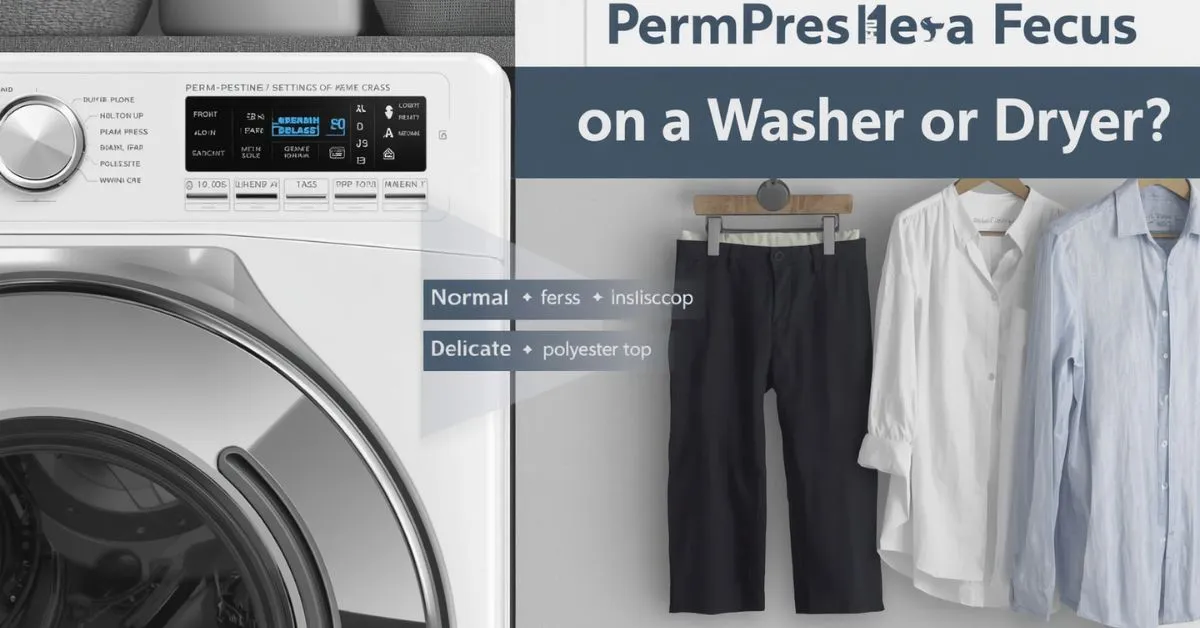
Perm press means a washer or dryer setting designed to reduce wrinkles while being gentler on clothes than a normal cycle.
In washers, it usually uses warm water, a cooler rinse, gentler agitation, and a slower final spin. In dryers, it usually uses medium heat and a cool-down period to help keep fabrics from creasing.
If you have seen “perm press” on a laundry machine and were not sure whether it meant delicate, low heat, or something else, you are not alone. It is one of the most misunderstood laundry settings because the name sounds technical, old-fashioned, and vague.
In simple terms, perm press is the middle-ground cycle for clothes that need a decent clean but also need protection from wrinkles, heat stress, and rough spinning.
What does perm press mean?
“Perm press” is short for permanent press. The term can refer to both a fabric-care idea and a machine setting.
Originally, “permanent press” described wrinkle-resistant or easy-care clothing, often made with synthetic fibers or fabric finishes that helped garments hold their shape and wrinkle less. On a washer or dryer, it refers to the cycle meant to care for those kinds of clothes.
That dual meaning is why people get confused. Sometimes they are asking about a care label or clothing type. Other times they are asking about the actual washer or dryer cycle. A strong article needs to explain both, clearly and separately.
What does perm press mean on a washer?
Perm press means a washer or dryer setting made to reduce wrinkles and clean clothes more gently than a normal cycle. It is usually best for polyester blends, office wear, dresses, and other wrinkle-prone clothes that are not delicate enough to need the delicate cycle.
On a washer, perm press usually means a cycle that cleans clothes with warm water, then switches to a cooler or cold rinse, while also using gentler agitation and a slower final spin than a normal cycle.
The reason is practical: wet clothes wrinkle more easily when they are twisted, pressed together, and spun aggressively. A gentler cycle helps reduce that.
That makes perm press useful for clothes that are not fragile enough for delicate, but that you do not want treated like towels, jeans, or sturdy everyday cottons. It is especially useful when appearance matters and you want fewer wrinkles straight from the wash.
What the washer cycle is trying to do
The perm press washer cycle is designed to balance three things:
- get clothes clean
- reduce wrinkling
- lower wear from rough spinning and friction
Strong competing pages often explain the setting, but they do not always explain the logic behind it. The setting is not “magic wrinkle removal.” It simply reduces the conditions that create wrinkles in the first place.
What does perm press mean on a dryer?
On a dryer, perm press typically means medium heat instead of the hottest setting, along with a cool-down period near the end.
That cool-down matters because hot clothes can crease badly if they stop tumbling while still very warm. Letting the load cool gradually helps fabrics settle more smoothly.
Some brands use similar names such as Wrinkle Control, Wrinkle Reduction, or Casual. The exact wording depends on the brand and model, but the idea is similar: dry clothes in a way that lowers the chance of wrinkles setting deeply into the fabric.
What does permanent press mean on a clothing label?
On a clothing label or in laundry-symbol language, permanent press usually refers to wrinkle-resistant, easy-care clothing that is meant to be washed with more care than heavy everyday laundry but not as gently as fragile delicates.
Tide’s laundry-symbol guide notes that permanent-press clothing is commonly associated with synthetic fibers like polyester and uses a symbol showing a tub with a single line underneath.
So if you see “permanent press” in relation to a garment, think of it as a clue that the item is likely intended to resist wrinkles and may do best on the matching laundry cycle. Still, the garment’s care label always wins if it gives more specific instructions.
Perm press vs normal vs delicate
The easiest way to understand perm press is to place it between the other two common settings.
| Cycle | Best for | Usual settings | Main goal |
|---|---|---|---|
| Normal | Sturdy everyday clothes, towels, sheets, cottons, mixed average-soil loads | Stronger wash action and higher spin | Thorough everyday cleaning |
| Perm Press | Wrinkle-prone everyday clothes, synthetic blends, office wear, dresses, shirts, trousers | Warm wash, cooler rinse, gentler agitation, slower spin, medium dryer heat, cool-down | Reduce wrinkles while still cleaning well |
| Delicate | Silk, lace, lingerie, cashmere, fragile or embellished items | Lower agitation, lower spin, cooler temperatures, gentler drying | Protect fragile fabrics |
In plain English:
normal is stronger, delicate is gentlest, and perm press is the middle option for wrinkle-prone clothes that still need a real wash.
What clothes should go on perm press?
Perm press is usually a smart choice for:
- polyester and polyester blends
- nylon, rayon, and acrylic
- blouses and button-up shirts
- dresses and skirts
- lightweight trousers or slacks
- office wear or professional attire
- clothes that wrinkle easily but are not true delicates
These items often benefit from gentler handling and wrinkle reduction more than they benefit from the stronger spin and agitation of a normal cycle.
What clothes should not go on perm press?
Perm press is not the best choice for everything.
Use more caution with:
- silk
- lace
- lingerie
- wool sweaters
- cashmere
- heavily embellished garments
- items labeled hand wash, delicate, or air dry only
It is also not the ideal setting for bulky heavy loads that need stronger washing action, or for very sturdy items like towels and sheets that are usually better suited to normal.
Quick guide: which cycle should you choose?
| If the item is… | Best cycle | Why |
|---|---|---|
| A polyester blouse | Perm press | Helps clean while reducing wrinkles |
| A dress shirt you want to iron less | Perm press | Gentler wash and wrinkle-focused drying help it come out smoother |
| A cotton towel | Normal | It can handle stronger wash action and higher spin |
| A silk camisole | Delicate | Too fragile for perm press |
| A wool sweater | Delicate or label-specific care | Heat and motion can damage it |
| Wrinkle-resistant work trousers | Perm press | Good balance of cleaning and wrinkle control |
Is perm press a low-heat setting?
Not exactly. In dryers, perm press is usually medium heat, not the lowest heat available.
In washers, it usually means warm water and lower spin speeds rather than the hottest or most aggressive cleaning setup. That is why it is gentler than normal, but not as gentle as delicate.
Does perm press shrink clothes?
It can help lower the risk compared with harsher cycles because it generally uses lower heat and gentler spin behavior than more aggressive settings.
But it is not a guarantee against shrinkage. Fabric type, garment construction, and the care label still matter most.
If the item is heat-sensitive, delicate, or specifically labeled for special care, follow the label instead of assuming perm press is automatically safe.
Common mistakes people make with perm press
Thinking perm press is the same as delicate
It is not. Delicate is still the gentlest common machine cycle. Perm press is for somewhat delicate or wrinkle-prone clothes, not the most fragile fabrics.
Assuming it removes all wrinkles
Perm press reduces wrinkling, but it cannot fully prevent wrinkles if you overload the machine or leave clothes sitting in the washer or dryer after the cycle ends. Prompt removal still matters.
Ignoring alternate names
Some machines do not literally say “perm press.” They may use labels like Casual, Wrinkle Control, or Wrinkle Reduction instead.
Treating it as the default for everything
Perm press is useful, but it is not a universal cycle. Care-label instructions should still guide your final choice.
What Most Articles Miss About This Topic
Most articles tell you that perm press helps reduce wrinkles, then stop there. What they often miss is that the setting makes the most sense when you understand where it sits between normal and delicate.
It is not a heavy-duty cleaning cycle. It is not the safest possible cycle for fragile fabrics either. It is the practical middle choice for clothes you want to come out looking presentable without harsher washing or drying. That is why it works so well for polyester blends, office wear, dresses, and wrinkle-prone everyday garments.
Another thing many pages explain poorly is the difference between the fabric meaning and the machine-setting meaning.
Permanent press can describe easy-care, wrinkle-resistant clothing, but on your appliance it refers to the cycle meant to care for those fabrics. Once you separate those two meanings, the term becomes much easier to understand.
FAQs
What does perm press mean on a washing machine?
It usually means warm water, a cooler rinse, gentler agitation, and a slower final spin to help reduce wrinkles while still cleaning everyday clothes.
What does perm press mean on a dryer?
It usually means medium heat and a cool-down period so clothes are less likely to come out hot and creased.
Is perm press the same as wrinkle control?
Often, yes or very close. Some brands use Wrinkle Control, Wrinkle Reduction, or Casual as similar cycle names.
Should I use perm press for polyester?
Often yes. Polyester and other synthetic blends are among the most common fabrics recommended for permanent press.
Is perm press better than normal?
Not for everything. Perm press is better for wrinkle-prone clothes, while normal is better for sturdy everyday laundry that can handle more spin and agitation.
Conclusion
Perm press means a washer or dryer setting designed to reduce wrinkles and treat clothes more gently than a normal cycle. It is usually best for synthetic blends, office wear, dresses, shirts, and other garments that wrinkle easily but are not truly delicate.
If you remember one thing, remember this: perm press is the middle-ground cycle between normal and delicate. For the best results, always check the care label first and remove clothes promptly when the cycle ends.
Read Also These Posts:
Weighted Mean Formula: How to Calculate It + Easy Examples
What Does a High Hematocrit Mean on a Blood Test?
What Does Waived Mean in the NFL? Simple Explanation

I am Clara Lexis, a writer driven by clarity, depth, and authenticity. My focus is on transforming ideas into meaningful content that is both informative and engaging. I write with intention to communicate clearly, thoughtfully, and with purpose.