Saute means to cook food quickly in a hot pan with a small amount of oil, butter, or another fat. In recipes, it usually means cooking food uncovered while stirring or turning it until it becomes soft, fragrant, lightly browned, or fully cooked.
Quick Meaning
| Question | Simple Answer |
|---|---|
| Meaning | Cook quickly in a hot pan with a little fat |
| Traditional spelling | Sauté |
| Common online spelling | Saute |
| Pronunciation | saw-TAY |
| Heat level | Usually medium-high |
| Lid | Usually off |
| Best for | Onions, garlic, vegetables, mushrooms, shrimp, chicken pieces, tofu |
| Not the same as | Boiling, steaming, deep-frying, or slow cooking |
You may see the word written as sauté or saute. The accented spelling is traditional, while the unaccented spelling is common in online recipes. In most cooking instructions, both forms mean the same thing.
In plain language, the recipe is telling you to heat a pan, add a little fat, add the food, and cook it fairly quickly. The goal is usually to soften the ingredient, bring out flavor, and sometimes create light browning.
For example, when a recipe says to cook onions this way, it usually means the onions should become soft, fragrant, and slightly sweet before the next ingredient is added.
What the Word Means in Cooking
In cooking, this method uses a shallow pan, direct heat, and a small amount of fat. The food is usually cut into small or thin pieces so it cooks evenly.
Recipes often use this step at the beginning of a dish because it builds flavor. Onions, garlic, carrots, celery, peppers, and mushrooms are common examples.
For instance:
- Onions may be cooked before tomato sauce is added.
- Garlic may be warmed briefly before greens go into the pan.
- Mushrooms may be browned before cream, broth, or wine is added.
- Small chicken pieces may be cooked before simmering in sauce.
- Vegetables may be prepared this way before being mixed into rice, noodles, pasta, or eggs.
As a result, the finished dish often tastes richer than it would if the same ingredients were boiled or steamed.
Is It Saute or Sauté?
Sauté is the traditional spelling. Saute is the same word without the accent mark.
Both spellings are widely understood. You might see:
- Sauté the onions.
- Saute the vegetables.
- Sautéed mushrooms.
- Sauteed chicken.
The word comes from French. The French verb sauter means “to jump,” which connects to the way food can move in a hot pan when stirred or tossed.
However, you do not need to flip food in the air like a chef on television. A spoon, spatula, or pair of tongs works perfectly well.
How Do You Pronounce Sauté?
Sauté is pronounced “saw-TAY.”
The word can appear in different forms depending on the sentence.
| Form | Example | Meaning |
|---|---|---|
| Verb | Sauté the mushrooms. | Cook them quickly in a little fat |
| Noun | A mushroom sauté | A dish made with this method |
| Adjective | Sauté pan | A pan used for this style of cooking |
| Past tense | Sautéed onions | Onions cooked in a hot pan with a little fat |
Understanding these forms can make recipes, menus, and cooking guides much easier to read.
What a Recipe Is Really Asking You to Do
Recipes often use short instructions. Because of that, it helps to know what the visual cues mean.
| Recipe Phrase | What It Usually Means |
|---|---|
| Cook until soft | The food should lose its raw firmness |
| Cook until translucent | Onions or shallots should look slightly see-through |
| Cook until fragrant | The ingredient should release a clear aroma |
| Cook until golden | The surface should turn light brown |
| Cook until browned | The food should develop deeper color and flavor |
| Cook for 2 minutes | Keep it moving enough to prevent burning |
| Cook over medium-high heat | Use enough heat to sizzle without scorching |
Timing is helpful, but visual and smell-based cues are usually more reliable. Garlic, for example, may become fragrant in less than a minute. Mushrooms, on the other hand, need more time because they release moisture before they brown.
How to Do It Step by Step
This cooking method is simple, but small details matter. Heat, pan size, moisture, and movement all affect the final result.
1. Cut food into even pieces
Food cooks more evenly when the pieces are similar in size.
Good shapes include:
- Thin slices
- Small cubes
- Strips
- Bite-size pieces
- Small florets
Large pieces may brown on the outside before the inside is ready. For fast pan cooking, smaller cuts usually work better.
2. Dry wet ingredients first
Moisture makes browning harder.
If vegetables, mushrooms, shrimp, chicken, or tofu are very wet, pat them dry before adding them to the pan. Otherwise, they may steam in their own liquid instead of browning.
This step is especially useful for mushrooms, tofu, shrimp, and frozen vegetables.
3. Preheat the pan
Place the pan over medium-high heat and let it warm before adding the food.
A hot pan helps ingredients sizzle right away. That quick sizzle matters because it helps surface moisture evaporate. Once moisture leaves the surface, browning becomes easier.
If the pan is too cool, food may turn pale, limp, or watery.
4. Add a small amount of fat
Use just enough oil, butter, or another fat to lightly coat the cooking surface.
You do not need a deep layer of oil. Unlike deep-frying, this method uses only a small amount of fat. The fat helps transfer heat, prevent sticking, and carry flavor.
Common choices include:
- Olive oil
- Vegetable oil
- Canola oil
- Avocado oil
- Grapeseed oil
- Butter
- Ghee
- A mix of butter and oil
Butter adds flavor, but it can brown quickly. For higher heat, many cooks use oil or combine oil with butter.
5. Add food in one layer
This is one of the most important rules.
If the pan is crowded, the food releases more moisture than the pan can evaporate. Instead of browning, the ingredients steam.
For better results, spread everything out. When there is too much food, cook it in batches.
6. Stir, toss, or turn as needed
Move the food enough so it cooks evenly.
Still, constant stirring is not always helpful. Some ingredients need brief contact with the hot pan before they develop color. Mushrooms, tofu, and chicken pieces often brown better when left alone for short periods.
7. Stop at the right cue
Different foods finish at different points.
Garlic should smell fragrant. Onions may become translucent or golden. Mushrooms should release moisture and brown. Shrimp should turn pink and opaque. Chicken should be cooked through safely.
In short, watch the food instead of relying only on the clock.
How to Know the Pan Is Hot Enough
The pan is usually ready when:
- Oil looks loose and slightly shimmering.
- Food sizzles when it touches the surface.
- Butter melts and foams without turning dark immediately.
- A small test piece begins cooking right away.
On the other hand, the pan may be too cool if:
- Food sits silently in the oil.
- Vegetables release water and turn pale.
- Mushrooms become gray and wet.
- Ingredients absorb oil before they brown.
Meanwhile, the pan may be too hot if:
- Oil smokes heavily.
- Garlic burns within seconds.
- Butter turns dark brown or black quickly.
- Food scorches before the inside cooks.
Adjusting heat is part of good stovetop cooking. If the food is burning, lower the heat. If it is sitting in liquid, increase the heat slightly or use a wider pan.
How Long Common Ingredients Usually Take
Timing depends on pan size, heat level, food size, and quantity. Even so, these general cues can help.
| Ingredient | What to Look For | Approximate Time |
|---|---|---|
| Garlic | Fragrant, not dark brown | 30 seconds to 1 minute |
| Ginger | Fragrant and slightly softened | 30 seconds to 1 minute |
| Onions | Soft or translucent | 5 to 8 minutes |
| Golden onions | Lightly browned edges | 8 to 12 minutes |
| Mushrooms | Moisture cooked off, browned | 7 to 10 minutes |
| Spinach | Wilted | 1 to 3 minutes |
| Bell peppers | Slightly softened, still colorful | 4 to 7 minutes |
| Zucchini | Tender with light browning | 4 to 6 minutes |
| Shrimp | Pink and opaque | 2 to 4 minutes |
| Tofu cubes | Lightly browned outside | 6 to 10 minutes |
| Small chicken pieces | Browned and cooked through | Varies by size |
For chicken, pork, seafood, and other animal proteins, timing should only be a guide. Safe doneness depends on piece size and proper internal temperature.
Foods That Work Well
This method works best with ingredients that cook quickly or can be cut small enough to cook quickly.
Vegetables
Good options include onions, bell peppers, mushrooms, zucchini, asparagus, green beans, spinach, broccoli florets, snap peas, and snow peas.
Vegetables can be cooked until crisp-tender, soft, lightly browned, or deeply browned depending on the dish.
Aromatics
Aromatics create a flavor base. Common examples include garlic, onion, shallots, ginger, celery, carrots, and leeks.
Many soups, sauces, rice dishes, pasta sauces, and skillet meals begin with aromatics because they add depth early in the cooking process.
Meat and seafood
Smaller or thinner pieces of protein work best. Shrimp, scallops, fish pieces, chicken strips, thin beef slices, and pork cutlets are all good examples.
Large cuts usually need another cooking method or a finishing step.
Plant-based proteins
Tofu, tempeh, seitan, chickpeas, and plant-based crumbles can also work well.
For tofu, press and dry it first. This helps the outside brown instead of turning soft and wet.
Why This Cooking Method Adds Flavor
This technique does more than heat food. It changes flavor and texture.
First, surface moisture evaporates. Then, the food can begin to brown. Browning adds deeper flavor, better aroma, and a more appealing texture.
That is why onions, mushrooms, peppers, shrimp, and chicken often taste more savory when cooked in a hot pan instead of boiled in liquid.
What is fond?
Fond is the brown layer or small browned bits that stick to the bottom of the pan after cooking meat, mushrooms, onions, or vegetables.
Fond is not the same as burnt food. If it is brown and smells savory, it can be useful. If it is black and smells bitter, it has gone too far.
What is deglazing?
Deglazing means adding a small amount of liquid to the hot pan to loosen the browned bits.
You can deglaze with water, broth, wine, lemon juice, vinegar, or stock. As the liquid loosens the fond, it can become the base of a quick sauce.
Comparison With Other Cooking Methods
Several cooking terms sound similar. However, each one has a different goal.
| Method | Fat Amount | Heat | Movement | Main Result |
|---|---|---|---|---|
| Quick pan cooking | Small amount | Medium-high to high | Stir or turn as needed | Fast cooking, light browning |
| Pan-frying | More fat | Medium to medium-high | Turn occasionally | Crust on larger pieces |
| Deep-frying | Large amount | Hot oil | Food submerged | Crisp exterior |
| Stir-frying | Small amount | Very high | Frequent movement | Fast, crisp-tender food |
| Searing | Small amount | Very high | Minimal movement | Deep browned crust |
| Sweating | Small amount | Low to medium | Gentle stirring | Soft food with little browning |
| Steaming | No fat required | Moist heat | Little movement | Soft food cooked by vapor |
Compared with frying, this method uses much less fat. If the food is submerged in oil, it is not the same technique.
Stir-frying is similar, but it usually uses higher heat and more constant movement. Searing, by contrast, focuses on creating a deep crust. Sweating is gentler and aims to soften food without much browning.
Steaming is completely different because it uses moist heat. If vegetables turn watery in the pan, they may be steaming instead of browning.
Should You Use the Lid?
Usually, no.
A lid traps steam. Steam can soften food, but it also prevents browning. Since this technique often aims to build flavor through surface contact and moisture evaporation, the lid usually stays off.
There are exceptions, though. You might briefly cover the pan if a firm vegetable needs help softening. After that, remove the lid so extra moisture can evaporate.
For example:
- Keep the lid off for mushrooms.
- Leave it off for garlic.
- Use no lid for golden onions.
- Cover briefly for thick vegetables if needed.
- Remove the lid again to finish with better texture.
Best Pans to Use
You do not need a special pan. Still, the pan should be wide enough to hold the food without crowding.
A stainless steel skillet is useful for browning and developing fond. Food may stick if the pan is not hot enough or if it is moved too early.
A cast iron skillet holds heat well and creates strong browning. It works especially well for mushrooms, tofu, meat, and hearty vegetables.
A nonstick skillet is helpful for delicate foods and lower-fat cooking. However, it may not brown food as deeply as stainless steel or cast iron.
A sauté pan usually has straight sides and a wide base. It helps keep food in the pan while stirring.
A regular wide frying pan also works well for most home kitchens. In many cases, width matters more than the exact pan name.
Best Oils and Fats
The right fat depends on heat level and flavor.
| Fat | Good For | Notes |
|---|---|---|
| Olive oil | Vegetables, onions, garlic | Flavorful and versatile |
| Avocado oil | Higher-heat cooking | Neutral flavor |
| Canola or vegetable oil | General use | Neutral and affordable |
| Grapeseed oil | Quick high-heat cooking | Neutral flavor |
| Butter | Onions, mushrooms, eggs | Adds flavor but browns quickly |
| Ghee | Higher-heat butter flavor | Less likely to burn than regular butter |
| Oil + butter | Flavor plus better heat control | Good for mushrooms, onions, seafood |
If the fat smokes heavily, reduce the heat or choose a fat better suited to higher temperatures.
Common Mistakes to Avoid
Using too much oil is a common issue. Only a small amount of fat is needed. If food sits in a deep layer of oil, the method becomes closer to shallow frying.
Crowding the pan causes another problem. Too much food lowers the temperature and traps moisture, which leads to soggy results.
Starting with a cold pan can also hurt texture. Preheating helps food cook more evenly and brown sooner.
Constant stirring may seem helpful, but it can prevent browning. Let some foods sit briefly before turning them.
Garlic needs special care because it burns quickly. Add it later when cooking longer ingredients such as onions, carrots, peppers, or mushrooms.
Finally, avoid adding liquid too soon. Water, broth, wine, lemon juice, or sauce can stop browning. Add liquid after the food has had time to cook against the hot pan.
Real Recipe Examples
“Cook the onions until translucent”
The onions should soften and look slightly see-through. They should not be deeply browned yet.
“Cook garlic until fragrant”
The garlic should release a strong aroma. This usually takes less than a minute. If it turns dark brown, it may taste bitter.
“Cook mushrooms until browned”
The mushrooms should release moisture first. After that moisture evaporates, they should begin to brown around the edges.
“Cook vegetables until crisp-tender”
The vegetables should be warm and slightly softened while still keeping some bite.
“Brown chicken pieces”
The outside should develop color. Depending on the recipe, the chicken may finish cooking in the pan or later in a sauce.
What Most Articles Miss About This Topic
Most explanations define the word correctly, but they often skip the practical reason the technique works.
The key is not only heat. Moisture control matters just as much.
Food naturally releases water as it cooks. If the pan is wide and hot enough, that water evaporates. Then the surface can brown.
If the pan is crowded or too cool, the water collects. As a result, the food steams.
That is why two people can follow the same recipe instruction and get very different results. One person gets browned, flavorful mushrooms. Another gets pale, rubbery, watery mushrooms.
The difference is usually not skill. More often, it is pan space, heat, dryness, and patience.
Another missed point is movement. Many people think this method requires constant tossing. It does not. You can use a wooden spoon, silicone spatula, or tongs. In fact, letting food sit briefly can help it brown.
So, the goal is not dramatic pan flipping. The goal is hot surface contact, a little fat, and enough space for moisture to escape.
FAQs
What does saute mean?
It means cooking food quickly in a hot pan with a small amount of oil, butter, or another fat.
Is saute the same as sauté?
Yes. Sauté is the traditional accented spelling. Saute is the common unaccented spelling.
How do you pronounce sauté?
It is usually pronounced saw-TAY.
Does it mean fry?
It is related to frying, but it uses only a small amount of fat. Deep-frying uses enough oil to fully cover the food.
What does it mean for onions?
It means cooking onions in a little oil or butter until they soften, turn translucent, become golden, or brown.
What does it mean for garlic?
It means cooking garlic briefly in hot fat until fragrant. Garlic can turn bitter if it burns.
Should the lid be on or off?
Usually off. A lid traps steam, which can prevent browning.
Can you use butter?
Yes. Butter adds flavor, but it can brown quickly. For higher heat, use oil or a mix of oil and butter.
Can you do it without oil?
Traditional versions use fat. Cooking with water or broth is closer to steaming or water-cooking.
Why are my vegetables soggy?
They may be crowded, too wet, covered too long, or cooked in a pan that is not hot enough.
Do you need a special pan?
No. A wide skillet, frying pan, stainless steel pan, cast iron skillet, or nonstick pan can work.
What heat level is best?
Medium-high heat is common, although delicate ingredients such as garlic need gentler heat.
Final Takeaway
When a recipe uses this instruction, think:
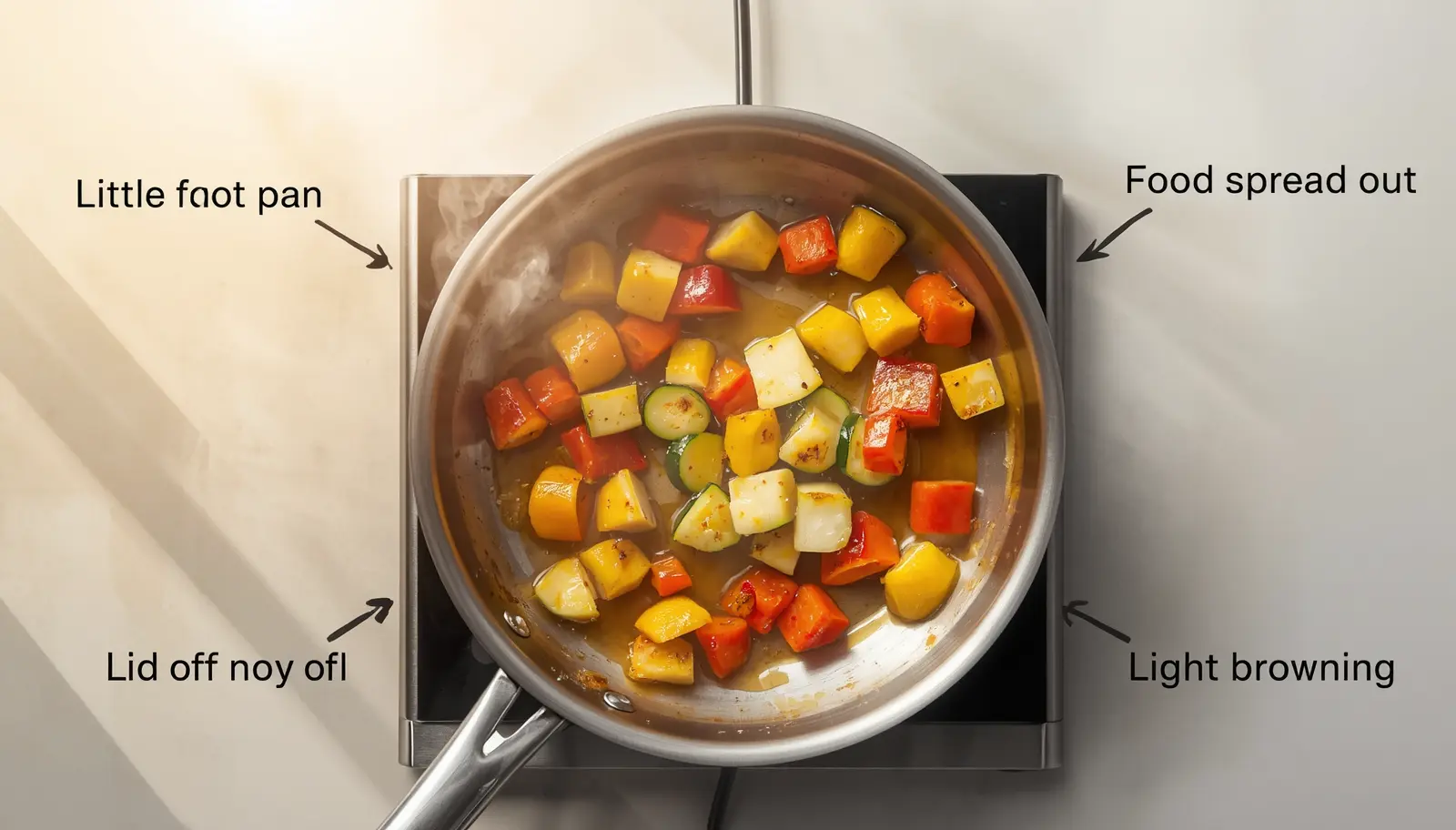
Hot pan. Little fat. Food spread out. Lid off. Stir or turn. Cook until softened, browned, fragrant, or done.
Once you understand Saute, it becomes much easier to follow. It is simply one of the fastest ways to build flavor in everyday cooking.
Click Here To Read About : what does kaylee mean

Hi, I’m Geoffrey Chaucer. I explore the stories and meanings behind words, turning ideas into clear, insightful writing. Through every article I craft, I aim to spark curiosity, share knowledge, and help readers uncover practical, meaningful truths in everyday life.