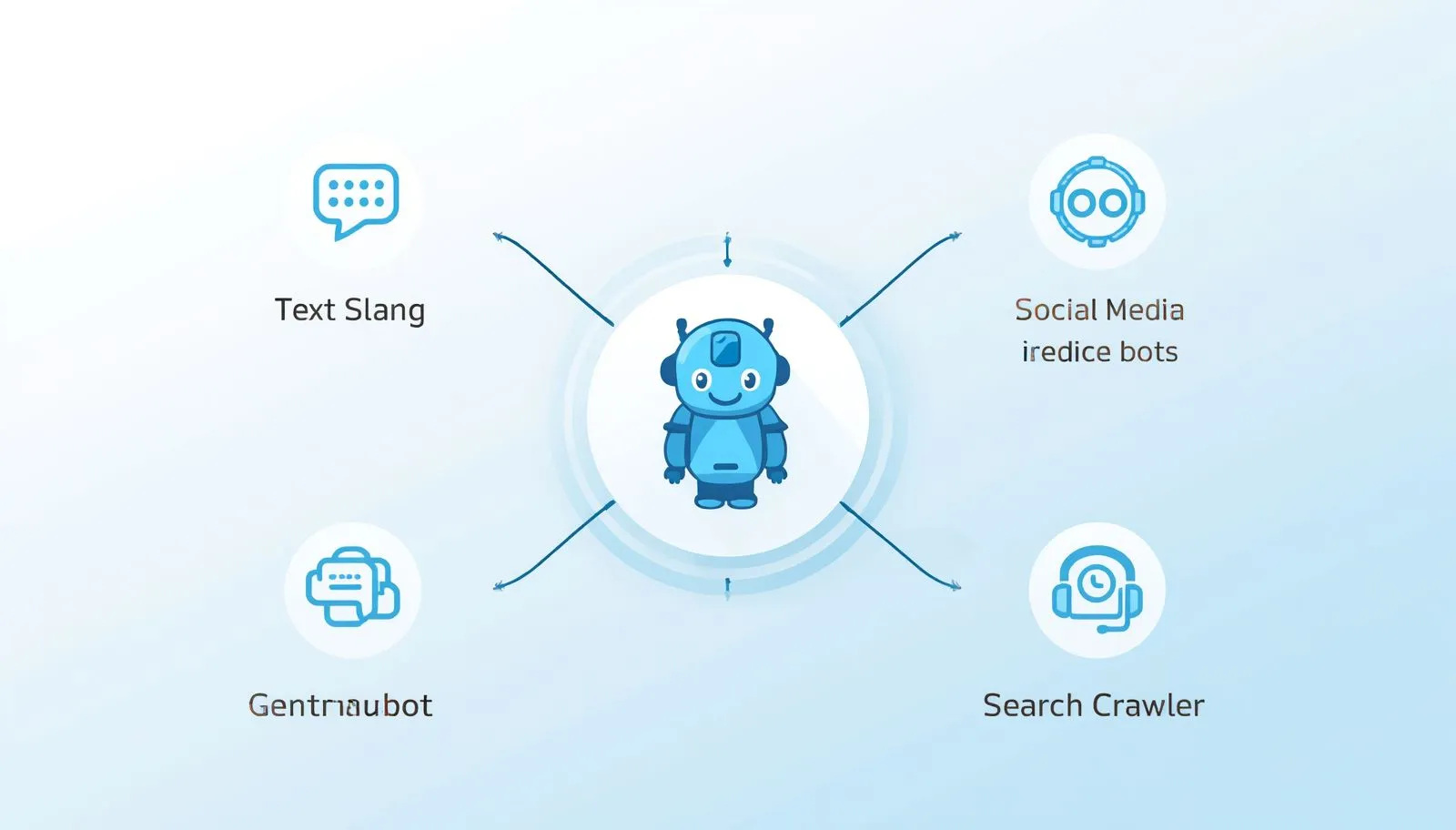
A bot usually means a software program that performs tasks automatically, especially online. It can answer messages, crawl websites, post comments, collect data, play games, or send spam. In casual slang, the word can also describe someone who acts robotic, fake, repetitive, or low-skill.
You may see the term in a text message, social media comment, gaming chat, website support box, or online security warning. In most cases, the meaning connects to automation. However, the exact meaning depends on where and how someone uses it.
Bot Meaning at a Glance
| Where you saw the word | What it likely means | Example |
|---|---|---|
| Text message | Someone sounds robotic, fake, or repetitive | “You sound like a bot.” |
| Social media | An automated or suspicious account | “Those comments look automated.” |
| Gaming | A computer-controlled player or weak-player slang | “This lobby has too many bots.” |
| Website chat | An automated support assistant | “The support assistant answered my question.” |
| Cybersecurity | Automated software, sometimes harmful | “The site blocked automated traffic.” |
| Search engines | A crawler that visits web pages | “Googlebot crawls websites for Google Search.” |
Put simply: the word usually points to automation, but slang changes the meaning.
What Is a Bot in Simple Terms?
A bot is a program that carries out tasks without a person doing each step manually. The word comes from “robot,” although online it usually refers to software rather than a physical machine.
For example, an automated program may:
- Reply to common questions
- Visit web pages
- Post comments
- Monitor a website
- Collect information
- Send alerts
- Run repeated checks
- Play as a computer-controlled opponent
- Help search engines discover pages
Because these tools can perform repetitive work quickly, businesses, websites, platforms, and attackers all use them in different ways. As a result, the word can sound helpful, neutral, or negative depending on the situation.
What Does It Mean in Text?
In texting, the term often works as casual slang. Someone may use it when a reply sounds unnatural, overly fast, scripted, or repetitive.
For example:
- “Why did you reply so fast? Are you a bot?”
- “That answer sounds automated.”
- “You keep saying the same thing.”
- “That account does not seem real.”
Sometimes, the person means an actual automated account. Other times, they simply mean someone sounds robotic or fake. Therefore, tone matters.
Is Calling Someone a Bot Rude?
Yes, it can be rude.
In many conversations, calling someone a bot suggests they lack originality, emotion, skill, or authenticity. Among friends, it may come across as a joke. In an argument, comment thread, or gaming chat, it usually feels insulting.
So, before using the word for a real person, consider the context. It can sound playful in one setting and disrespectful in another.
What Does It Mean in Slang?
As slang, the word describes someone or something that seems:
- Robotic
- Fake
- Scripted
- Repetitive
- Awkward
- Predictable
- Unoriginal
- Low-skill
For instance, someone might say:
“That comment sounds like it came from an automated account.”
This does not always mean a real program wrote the message. Instead, the speaker may think the person sounds unnatural or copy-and-paste.
You will often see this slang on:
- TikTok
- Discord
- YouTube
- X/Twitter
- Gaming chats
- Comment sections
What Does It Mean on Social Media?
On social media, the word often refers to an account that appears automated, fake, or suspicious.
An account may raise suspicion when it:
- Posts the same comment repeatedly
- Likes or follows accounts very quickly
- Shares suspicious links
- Copies other people’s posts
- Uses a generic profile image
- Has little personal history
- Promotes products, scams, or spam
- Acts like many other similar accounts
However, suspicious behavior does not always prove automation. A strange account could belong to a real person, a scammer, a troll, a hacked account, or someone using automation tools.
Because of that, it is usually more accurate to say an account shows bot-like behavior rather than claiming proof.
What Is a Bot Account?
A bot account is an online profile that runs partly or fully through automation.
People may use these accounts to:
- Inflate follower counts
- Boost likes
- Spread spam
- Promote links
- Repeat messages
- Manipulate engagement
- Imitate real users
Some automated accounts look obvious. Others try to look human by using profile photos, normal usernames, and mixed activity.
Signs an Account May Be Automated
| Possible sign | What it may suggest |
|---|---|
| Repeated comments | Automated posting or spam |
| Very fast activity | Scripts or coordinated behavior |
| Generic profile details | Low-effort or fake account |
| Many suspicious links | Possible scam promotion |
| No real conversation history | Limited human activity |
| Copied posts | Engagement manipulation |
| Similar usernames | Possible account network |
One sign alone does not prove anything. Instead, look for repeated patterns.
What Does It Mean in Gaming?
In gaming, the term has two common meanings.
1. A Computer-Controlled Player
Many games include computer-controlled opponents for practice, tutorials, or easier matches.
Example:
“I practiced against computer-controlled players before joining multiplayer.”
This use is literal. The game controls the character.
2. A Predictable or Low-Skill Player
Gamers also use the word as slang when someone plays in a clumsy, predictable, or inexperienced way.
Example:
“That player just stood still.”
In this case, the person does not mean the player is software. They mean the player acted like an easy computer opponent.
What Is a Bot Lobby?
A bot lobby is a game match with very easy opponents. Depending on the game, those opponents may include real computer-controlled characters, new players, or people who simply play poorly.
The phrase often appears in competitive games when players describe an unusually easy match.
Bot vs NPC in Gaming
A bot usually acts as an automated player or opponent. An NPC, or non-player character, belongs to the game world and often supports the story, setting, shop system, or quests.
| Term | Meaning |
|---|---|
| Bot | Automated player or opponent |
| NPC | Game-controlled character in the world or story |
In slang, people sometimes use both terms to describe someone who seems predictable or unoriginal.
How Do Bots Work?
Most automated programs follow instructions.
A simple one may use rules such as:
- When a user types “shipping,” show delivery information.
- When a website goes offline, send an alert.
- When a page changes, save the update.
- When a comment breaks a rule, remove it.
More advanced systems may use artificial intelligence, but many do not. Some rely on scripts, schedules, APIs, pattern matching, or fixed rules.
In other words, automation does not always mean intelligence. A tool can repeat actions quickly without truly understanding what it does.
Are Bots Good or Bad?
They can be helpful, harmful, or neutral.
| Type | Usually helpful or harmful? | What it does |
|---|---|---|
| Search crawler | Helpful | Helps search engines discover pages |
| Chatbot | Usually helpful | Answers questions or guides users |
| Monitoring tool | Helpful | Checks whether systems work |
| Moderation assistant | Helpful | Helps filter spam or rule-breaking content |
| Shopping tracker | Depends | Tracks prices or availability |
| Scraper | Depends | Collects information from websites |
| Spam tool | Harmful | Posts unwanted messages or links |
| Credential-stuffing tool | Harmful | Tries stolen login details |
| Botnet | Harmful | Uses compromised devices as a controlled network |
The technology itself is not the issue. The purpose and behavior matter.
Common Types You May See Online
Chatbots
A chatbot helps users through text or voice conversations.
You may find one on:
- Business websites
- Banking apps
- Online stores
- Help centers
- Booking platforms
- Messaging apps
Some chatbots follow simple scripts. Others use AI to understand more flexible questions.
Search Engine Crawlers
Search engines use crawlers to discover and revisit web pages. These crawlers help search engines understand what pages exist and when content changes.
Website owners often think about crawlers when they work on SEO, indexing, sitemaps, and crawl access.
Social Media Automation
Social platforms often deal with automated activity. Some tools post useful alerts or reminders. Others spread spam, inflate engagement, or promote suspicious links.
Because of this, platforms use different systems to detect unusual patterns.
Spam Tools
Spam tools send unwanted comments, messages, links, or emails. You may see them in contact forms, blog comments, social media replies, forums, or direct messages.
When an unknown account sends a link, asks for money, or requests login details, treat it carefully.
Scrapers
Scrapers collect information from web pages. Some support legitimate uses, such as research or price comparison. Others copy content, harvest emails, or place heavy demand on websites.
Botnets
A botnet is a network of infected devices that someone controls remotely. Attackers may use these networks for spam, cyberattacks, credential abuse, or traffic floods.
This is one reason the word can sound serious in cybersecurity conversations.
Bot vs Chatbot vs AI vs Robot vs Botnet
These terms overlap, but they do not mean the same thing.
| Term | Simple meaning | Key difference |
|---|---|---|
| Bot | Automated software that performs tasks | Broad digital meaning |
| Chatbot | A conversational automated tool | Focuses on chat |
| AI bot | Automation powered by artificial intelligence | More flexible than rule-based tools |
| Robot | A machine or system that performs actions | Often physical |
| Botnet | Network of compromised devices | Usually a security threat |
| Web crawler | Tool that visits web pages | Often used by search engines |
| Fake account | Profile using a false identity | May or may not use automation |
| Troll | Person or account trying to provoke others | Can be human or automated |
| NPC | Game-controlled character | Mainly a gaming term |
Is It the Same as AI?
No. A bot may use AI, but it does not need AI to function.
A simple support tool may follow this rule:
When someone types “hours,” show store hours.
An AI-powered assistant may understand a more natural question:
“Are you open late on Friday?”
Both tools automate responses. However, only the second one may use AI to interpret language.
Is It a Real Person?
Usually, no. In the literal sense, the word refers to software.
Still, slang changes that. People may call a real person a bot when that person acts robotic, repetitive, or predictable.
So the meaning depends on context:
- In technology, it usually means software.
- In slang, it may describe a real person.
- On social media, it may describe a suspicious account.
- In gaming, it may mean either an AI opponent or an insult.
How to Tell the Meaning from Context
Use this simple test.
1. Is someone talking about software?
Then the word probably has a literal meaning.
Example:
“The automated tool checks the website every hour.”
2. Is someone describing behavior?
Then it may be slang.
Example:
“You keep repeating the same line.”
3. Is the conversation about gaming?
Then it could mean either a computer-controlled opponent or a player who seems easy to beat.
4. Is the topic social media?
Then it may refer to an automated account, fake profile, spammer, or suspicious pattern.
Context gives the clearest answer.
Real Examples in Sentences
| Sentence | Meaning |
|---|---|
| “The website assistant answered my question.” | Chatbot |
| “Googlebot visited the page.” | Search crawler |
| “That account keeps posting the same link.” | Possible social media automation |
| “I practiced against computer players.” | Game-controlled opponents |
| “You play like a bot.” | Gaming insult |
| “That comment sounds scripted.” | Slang for robotic or fake-sounding |
| “The login page blocked automated traffic.” | Security-related automation |
| “Attackers used a botnet.” | Network of compromised devices |
Common Misconceptions
All Bots Are Bad
Many automated tools help users, businesses, and search engines. Problems happen when people use them for spam, scams, fake engagement, or attacks.
Every Bot Uses AI
Many automated tools follow simple instructions. They do not learn, reason, or understand language.
A Suspicious Account Is Definitely Automated
Not always. A real person, scammer, hacked account, or troll may behave suspiciously too.
Bot Always Means Fake Account
Social media users often use it that way. However, the same word can also mean a support assistant, game opponent, search crawler, or security threat.
Calling Someone a Bot Means They Are Literally Software
In slang, it usually means the person seems robotic, repetitive, or predictable.
What Should You Do If an Account Seems Suspicious?
Take practical steps rather than trying to prove whether automation exists.
- Avoid suspicious links.
- Do not share passwords, codes, or payment details.
- Check the profile history.
- Look for repeated or copied messages.
- Report spam or impersonation when needed.
- Block accounts that keep contacting you.
You do not need certainty before protecting yourself.
What Most Articles Miss About This Topic
Many explanations define the word as automated software and stop there. That definition helps, but it does not solve the real confusion.
The term changes meaning by context.
It can describe:
- A helpful website assistant
- A search crawler
- A suspicious social account
- A spam tool
- A game opponent
- A casual insult
- A cybersecurity threat
- A network of infected devices
Therefore, the best way to understand the word is to ask:
- Where did I see it?
- Did the person mean software or slang?
- Did the action seem helpful, harmful, or simply automated?
Once you answer those questions, the meaning becomes much easier to understand.
Quick Takeaway
A bot usually means automated software. It can chat, crawl websites, post content, check systems, or repeat tasks.
In slang, the word can describe someone who seems robotic, fake, repetitive, predictable, or low-skill.
The simplest rule is:
Bot usually means automation. Slang depends on context.
FAQs
What does bot mean in simple words?
It means a program that performs tasks automatically. It may answer questions, visit web pages, post messages, monitor systems, or repeat actions online.
What does bot mean in texting?
In texting, it can describe someone who sounds robotic, fake, scripted, or repetitive. It can also refer to an automated account or message.
What does bot mean on social media?
On social media, it often means an account that appears automated or suspicious. Such accounts may post repeated comments, share links, or create fake engagement.
What does bot mean in gaming?
In gaming, it can mean a computer-controlled player. It can also work as slang for someone who plays predictably or poorly.
Is bot an insult?
Sometimes. When people use it for a person, it can suggest that the person seems robotic, fake, repetitive, or unskilled.
Is a bot a real person?
Usually no. Literally, it means software. However, people may use the word as slang for a real person.
Is a chatbot a bot?
Yes. A chatbot is a type of automated tool that chats with users, answers questions, or guides them through a process.
Are bots illegal?
Not automatically. Many serve useful purposes. Problems arise when people use them for scams, spam, fraud, unauthorized access, or other harmful activity.
What is a bot account?
It is an online profile that runs partly or fully through automation. It may post, like, follow, reply, or share without manual action each time.
How can you tell if someone is a bot?
Look for repeated comments, extremely fast activity, generic profile details, suspicious links, copied posts, or coordinated behavior. These signs suggest automation, but they do not prove it alone.
What is the difference between a bot and a fake account?
Automation controls a bot. A fake account uses a false identity. A fake account may run manually, automatically, or through a mix of both.
What is the difference between a bot and a troll?
A bot usually relies on automation. A troll tries to provoke reactions. A troll can be human, automated, or both.
What does “I am not a bot” mean?
It means a website wants proof that a human, not an automated tool, is using the page. Sites often ask this to reduce spam, fake signups, and automated requests.
What is a good bot?
A good one performs helpful tasks, such as answering questions, checking website uptime, crawling pages for search engines, or filtering spam.
What is a bad bot?
A bad one supports harmful activity, such as spam, fake engagement, credential attacks, scams, scraping abuse, or cyberattacks.
Conclusion
A bot usually means automation. In technology, it often refers to software that performs tasks on its own. On social media, it may mean a suspicious or automated account. In gaming, it can mean a computer-controlled opponent or a casual insult. In everyday slang, it can describe behavior that seems robotic, fake, or repetitive.
So, when you see the word, look at the context first. That context will tell you whether someone means software, slang, social media behavior, gaming performance, or an online safety concern.
Click Here To Read About : what does determined mean

Hi, I’m Geoffrey Chaucer. I explore the stories and meanings behind words, turning ideas into clear, insightful writing. Through every article I craft, I aim to spark curiosity, share knowledge, and help readers uncover practical, meaningful truths in everyday life.