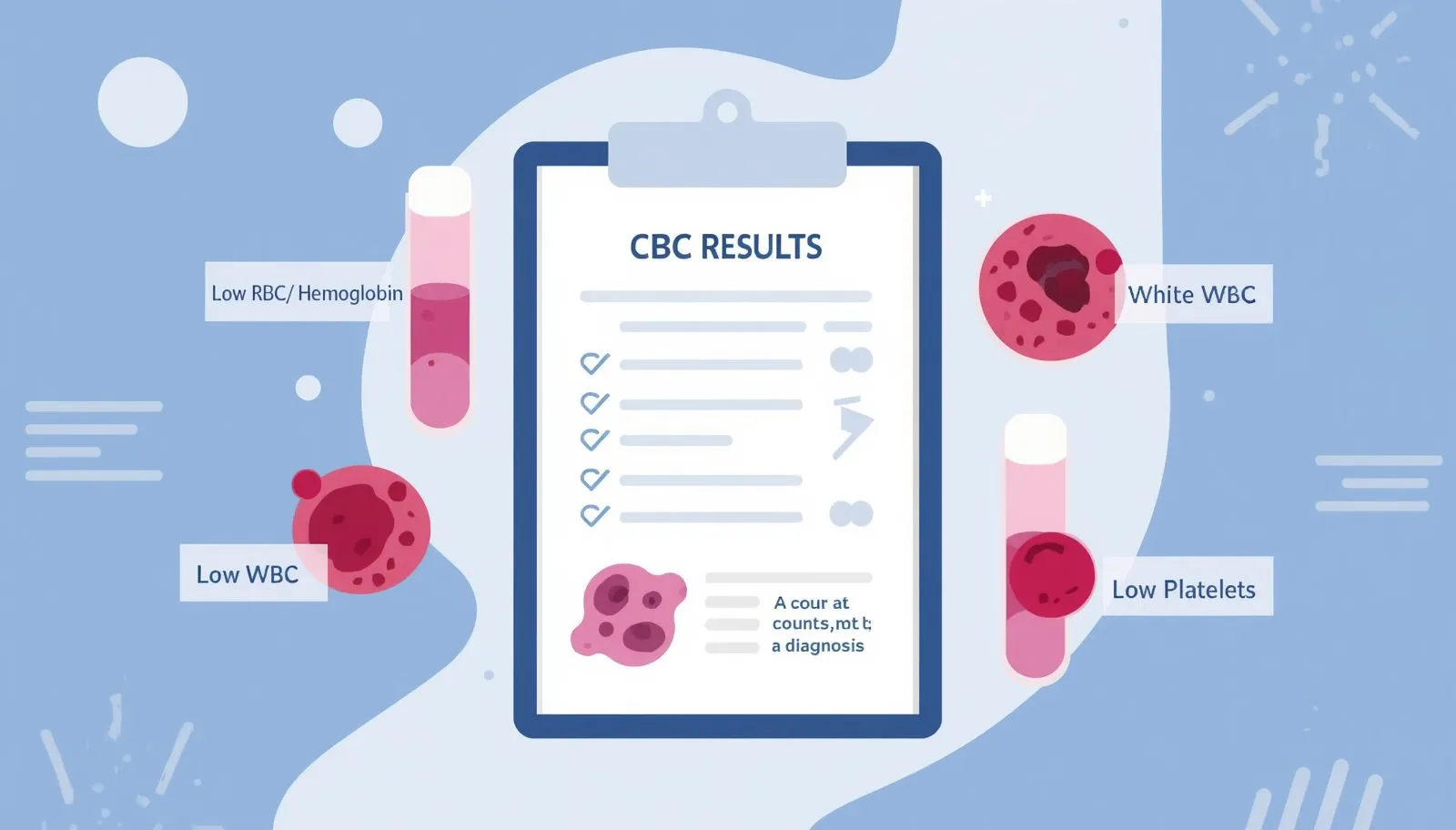
A low blood count does not automatically mean cancer. It means one or more parts of your complete blood count, or CBC, are below the expected range. Common causes include iron deficiency, vitamin B12 or folate deficiency, infection, bleeding, medications, chronic illness, or cancer treatment. Some cancers can cause low blood counts, so persistent, severe, or unexplained results should be reviewed by a doctor.
Seeing “low blood count” on a lab report can make your mind jump to the worst possibility. But a CBC result is not a cancer diagnosis. The more important questions are: which count is low, how low is it, whether it is changing, and whether you have symptoms.
A CBC measures several parts of the blood, including red blood cells, white blood cells, hemoglobin, hematocrit, and platelets. It may be used to help check overall health and look for conditions such as anemia, infection, and leukemia, but it does not confirm most diagnoses by itself.
First, Which Situation Matches You?
This article is for several common situations:
| Your situation | What it may mean | What to do next |
|---|---|---|
| One CBC value is mildly low | Often temporary or related to a common cause | Ask whether repeat testing is needed |
| Hemoglobin or red blood cells are low | Often anemia | Ask about iron, ferritin, B12, folate, bleeding, and kidney function |
| White blood cells are low | May affect infection defense | Ask whether a CBC with differential or ANC is needed |
| Platelets are low | May affect clotting | Ask about bleeding risk, medications, infections, liver/spleen issues |
| Red cells, white cells, and platelets are all low | More concerning pattern called pancytopenia | Needs prompt medical evaluation |
| You have cancer or are receiving chemotherapy/radiation | Low counts may be treatment-related | Follow your oncology team’s monitoring plan |
The key point: “low blood count” is too broad to interpret without knowing the exact CBC values.
What Does “Low Blood Count” Mean?
“Low blood count” is not one specific disease. It usually means one or more blood cell levels are below the lab’s reference range.
Doctors may use different terms depending on what is low:
| Low result | Medical term | Main concern |
|---|---|---|
| Low red blood cells or low hemoglobin | Anemia | Less oxygen carried through the body |
| Low white blood cells | Leukopenia | Lower infection defense |
| Low neutrophils | Neutropenia | Higher risk from certain infections |
| Low platelets | Thrombocytopenia | Easier bruising or bleeding |
| Low red cells, white cells, and platelets | Pancytopenia | Anemia, infection risk, and bleeding risk together |
Cleveland Clinic defines cytopenia as low levels of red blood cells, white blood cells, or platelets, and pancytopenia as low levels of all three major blood cell groups.
Does Low Blood Count Mean Cancer?
Usually, no. A low blood count can be linked to cancer, but many low blood count results are caused by non-cancer conditions.
For example:
- Low hemoglobin may come from iron deficiency, heavy menstrual bleeding, digestive bleeding, kidney disease, inflammation, or vitamin deficiency.
- Low white blood cells may follow a viral infection or occur because of medications.
- Low platelets may be related to infections, immune conditions, liver or spleen problems, or medications.
- Low counts during cancer treatment may happen because some treatments affect bone marrow activity.
Cancer becomes a bigger concern when low blood counts are unexplained, persistent, worsening, severe, or involve more than one blood cell type.
What a CBC Test Measures
A CBC is a blood test that looks at the number and features of blood cells. Some CBCs include a differential, which breaks white blood cells into types such as neutrophils, lymphocytes, monocytes, eosinophils, and basophils. Mayo Clinic notes that people receiving certain cancer treatments may be monitored with a CBC with differential because low blood cell counts can increase the risk of complications.
| CBC marker | What it measures | Why it matters |
|---|---|---|
| Red blood cells, or RBCs | Cells that carry oxygen | Low levels may suggest anemia |
| Hemoglobin | Oxygen-carrying protein in red blood cells | Often the key anemia marker |
| Hematocrit | Percentage of blood made up of red cells | Helps assess anemia or dehydration context |
| White blood cells, or WBCs | Infection-fighting cells | Low or high values may need follow-up |
| Differential | Types of white blood cells | Helps identify which immune cells are affected |
| Absolute neutrophil count, or ANC | Number of neutrophils | Important for infection risk |
| Platelets | Cells involved in clotting | Low levels may increase bleeding risk |
| MCV | Average red blood cell size | Helps classify anemia causes |
| RDW | Variation in red blood cell size | Can support anemia evaluation |
Reference ranges vary by lab, age, sex, pregnancy status, altitude, and medical context. Your doctor interprets your result against your full situation, not just one number.
Low Red Blood Cells or Low Hemoglobin: Does It Mean Cancer?
Low red blood cells or low hemoglobin usually means anemia. Anemia can make you feel tired, weak, dizzy, short of breath, or unusually cold.
Cancer can sometimes cause anemia, but common non-cancer causes include:
- Iron deficiency
- Heavy menstrual bleeding
- Hidden digestive bleeding
- Vitamin B12 deficiency
- Folate deficiency
- Chronic kidney disease
- Chronic inflammation
- Certain medications
- Pregnancy
- Poor nutrient absorption
The American Cancer Society explains that anemia is a low red blood cell count and may occur in people with cancer for several reasons, including the cancer itself, cancer treatment, blood loss, low iron, low vitamin levels, or kidney problems.
When low hemoglobin is more concerning
Low hemoglobin needs more careful evaluation when it is:
- New and unexplained
- Severe
- Getting worse over time
- Paired with low white blood cells or low platelets
- Linked with black stools, blood in stool, or vomiting blood
- Paired with unexplained weight loss, fever, night sweats, or swollen lymph nodes
Low White Blood Cells: Does It Mean Leukemia?
A low white blood cell count does not automatically mean leukemia. White blood cells can drop after viral infections, with certain medications, autoimmune conditions, nutritional deficiencies, or bone marrow problems.
The important detail is often the white blood cell differential. This shows which type of white blood cell is low.
Why neutrophils matter
Neutrophils are white blood cells that help fight bacterial and fungal infections. A low neutrophil count is called neutropenia. In people receiving cancer treatment, low neutrophils can increase infection risk, which is why oncology teams monitor CBC results closely.
When low white blood cells are more concerning
Follow up promptly if low white blood cells come with:
- Fever
- Frequent infections
- Mouth sores
- Unexplained weight loss
- Night sweats
- Swollen lymph nodes
- Bone pain
- Abnormal cells reported on the blood smear
- Other low counts, such as low hemoglobin or low platelets
Low Platelets: Does It Mean Cancer?
Low platelets are called thrombocytopenia. Platelets help your blood clot, so low platelets can increase the chance of easy bruising or bleeding.
Low platelets may be caused by:
- Viral infections
- Medications
- Immune thrombocytopenia
- Liver disease
- Enlarged spleen
- Alcohol-related disease
- Bone marrow disorders
- Cancer treatment
- Certain blood cancers
Low platelets are more concerning when they are very low, worsening, unexplained, or paired with bleeding symptoms.
Symptoms that need prompt attention
Contact a healthcare professional if you notice:
- Easy or unexplained bruising
- Tiny red or purple spots on the skin
- Nosebleeds
- Bleeding gums
- Heavy or unusual bleeding
- Blood in urine or stool
- Black, tar-like stool
When More Than One Blood Count Is Low
If red blood cells, white blood cells, and platelets are all low, the pattern is called pancytopenia. This is more concerning than one mildly low result.
Cleveland Clinic describes pancytopenia as low levels of red blood cells, white blood cells, and platelets, which can increase the risk of anemia, infection, and excessive bruising.
Pancytopenia may be caused by:
- Severe vitamin B12 or folate deficiency
- Certain infections
- Autoimmune disease
- Medication effects
- Liver or spleen problems
- Aplastic anemia
- Myelodysplastic syndromes
- Leukemia, lymphoma, multiple myeloma, or cancers affecting the bone marrow
Pancytopenia usually needs timely medical evaluation because it suggests a broader problem with blood cell production, destruction, or storage.
Low Blood Count Patterns Doctors Take More Seriously
| Pattern | Often less concerning when… | More concerning when… |
|---|---|---|
| One mildly low value | You recently had an infection and feel well | It keeps dropping or has no clear cause |
| Low hemoglobin only | Iron deficiency or heavy periods are confirmed | It is severe, persistent, or linked with blood loss |
| Low WBC only | It follows a recent viral illness | You have fever, infections, or very low neutrophils |
| Low platelets only | Mild and temporary | You have bruising, bleeding, or very low platelets |
| Two blood cell types are low | There is a clear medication or deficiency cause | It is unexplained or worsening |
| All three major blood cell types are low | Rarely ignored | Needs prompt evaluation |
This is one of the most important points: the pattern matters more than the phrase “low blood count.”
When Low Blood Count Can Be Linked to Cancer
Cancer may affect blood counts in several ways.
1. Blood cancers can affect bone marrow
Blood cancers such as leukemia, lymphoma, and multiple myeloma can interfere with normal blood cell production. This may lead to anemia, low platelets, abnormal white blood cells, or multiple low counts.
2. Cancer can cause bleeding
Some cancers, especially in the digestive tract, may cause slow blood loss. That blood loss can lead to iron deficiency anemia.
3. Cancer can spread to bone marrow
Some cancers can involve the bone marrow and reduce normal blood cell production.
4. Cancer treatment can lower blood counts
Chemotherapy and radiation can affect the bone marrow. The American Cancer Society notes that cancer and cancer treatment can cause drops in some types of blood cells, and the problems depend on which cell type is affected.
Can a CBC Detect Cancer?
A CBC can sometimes show patterns that raise concern for cancer, especially blood cancers. But a CBC usually cannot diagnose cancer by itself.
A CBC may lead to more testing if it shows:
- Very low or very high white blood cells
- Anemia without a clear cause
- Low platelets
- Immature or abnormal cells
- Multiple low blood cell lines
- A pattern that suggests bone marrow disease
For example, Mayo Clinic notes that a CBC may be used to find a wide range of conditions, including anemia, infection, and leukemia.
But cancer diagnosis usually requires additional testing, depending on the suspected condition.
What Tests May Come Next?
Your doctor may order different tests depending on which count is low and your symptoms.
| Test | Why it may be ordered |
|---|---|
| Repeat CBC | Confirms whether the result is temporary or persistent |
| CBC with differential | Shows which white blood cell types are high or low |
| Peripheral blood smear | Looks at blood cell shape, size, and abnormal cells |
| Reticulocyte count | Shows whether bone marrow is making new red blood cells |
| Ferritin and iron studies | Checks for iron deficiency or blood loss patterns |
| Vitamin B12 and folate | Checks for vitamin-related anemia |
| Kidney and liver tests | Looks for chronic organ-related causes |
| Thyroid tests | May help explain anemia or fatigue |
| Inflammation markers | May support chronic disease evaluation |
| Stool blood test | Looks for hidden digestive bleeding |
| Flow cytometry | May be used if abnormal blood cells are suspected |
| Bone marrow biopsy | May be needed when marrow disease is suspected |
A peripheral smear can be especially useful because it allows the lab or pathologist to examine how blood cells look, not just how many there are.
What Symptoms Should You Not Ignore?
Seek medical advice promptly if a low blood count comes with:
- Unexplained or worsening fatigue
- Shortness of breath with normal activity
- Chest pain
- Dizziness or fainting
- Fever
- Frequent infections
- Easy bruising
- Unusual bleeding
- Nosebleeds or bleeding gums
- Blood in stool or urine
- Black, tar-like stool
- Unexplained weight loss
- Drenching night sweats
- Swollen lymph nodes
- Bone pain
Seek urgent care for severe symptoms such as chest pain, trouble breathing, fainting, confusion, uncontrolled bleeding, high fever, or signs of serious infection.
If You Already Have Cancer or Are Receiving Treatment
Low blood counts are common during some cancer treatments. This does not always mean the cancer is worsening. It may mean the treatment is affecting the bone marrow’s ability to make blood cells.
Mayo Clinic explains that low blood cell counts during cancer treatment can increase the risk of serious complications, including infection, anemia-related symptoms, and bleeding problems.
Ask your oncology team:
- Which count is low?
- How low is it?
- Is this expected with my treatment?
- Do I need treatment delay, dose adjustment, transfusion, growth factor medicine, or infection precautions?
- What symptoms should make me call immediately?
- What fever temperature should I report?
- Do I need to avoid certain activities, foods, or medications?
Do not stop, delay, or change cancer treatment without guidance from your oncology team.
How Low Blood Count Is Treated
Treatment depends on the cause. A low blood count is not treated the same way for everyone.
Possible approaches may include:
- Iron replacement if iron deficiency is confirmed
- Vitamin B12 or folate replacement if deficient
- Treating infection or inflammation
- Reviewing medications that may affect counts
- Treating bleeding or blood loss
- Managing kidney disease or chronic disease
- Blood transfusion in selected severe cases
- Growth factor medicines in certain cancer-treatment situations
- Hematology referral when marrow disease is suspected
American Cancer Society’s anemia guidance for people with cancer includes approaches such as treating underlying causes, replacing low nutrients when needed, transfusion in some cases, and medicines that help red blood cell production in selected situations.
The safest approach is to identify the cause before trying to treat the number.
What Not to Do After Seeing a Low Blood Count
Avoid these common mistakes:
Do not assume it is cancer
Cancer is one possible cause, but many low blood counts come from non-cancer conditions.
Do not ignore it because you feel fine
Some people have few symptoms at first. Follow-up matters, especially if the result is new or worsening.
Do not take iron blindly
Iron helps only if iron deficiency is part of the problem. Some types of anemia are not caused by low iron.
Do not stop medications without medical advice
Some medicines can affect blood counts, but stopping a prescribed medicine suddenly can be risky.
Do not compare your result to someone else’s
CBC interpretation depends on your age, sex, medical history, symptoms, lab range, medications, and prior results.
Questions to Ask Your Doctor
Bring your CBC report and ask:
- Which count is low?
- How low is it compared with the lab range?
- Is this new, or has it happened before?
- Is the result mild, moderate, or severe?
- Do I need a repeat CBC?
- Do I need a CBC with differential?
- Are my red cells, white cells, and platelets all affected?
- Should I have iron, ferritin, B12, or folate checked?
- Could medications, infection, bleeding, or chronic illness explain this?
- Do I need a peripheral blood smear?
- Should I see a hematologist?
- What symptoms should make me seek urgent care?
This turns a frightening lab result into a clear next-step conversation.
What Most Articles Miss About This Topic
Most articles answer the question “Can low blood count mean cancer?” but do not explain the most useful clinical idea:
A low blood count is a pattern to interpret, not a diagnosis to guess.
A mildly low hemoglobin level is not the same as low hemoglobin plus low platelets plus abnormal white cells. A temporary low white blood cell count after a virus is not the same as a count that keeps falling. A low platelet count with bleeding symptoms needs different attention than a stable, mildly low platelet count found by chance.
The best question is not only:
“Is this cancer?”
It is:
“Which blood cells are low, how low are they, are they changing, and do my symptoms point to a serious cause?”
That is how doctors decide whether the next step is simple repeat testing, nutritional testing, medication review, bleeding evaluation, hematology referral, or urgent care.
FAQs
Can a low blood count be the first sign of cancer?
Sometimes, but it is not the most common explanation for every low count. Cancer is more concerning when low counts are unexplained, persistent, severe, worsening, or involve more than one blood cell type.
Does low hemoglobin mean cancer?
Not usually by itself. Low hemoglobin often means anemia, which may be caused by iron deficiency, blood loss, vitamin deficiency, kidney disease, inflammation, or other non-cancer causes. Unexplained anemia should still be evaluated.
Does low white blood cell count mean leukemia?
No, not automatically. Low white blood cells can happen after infections, with medications, autoimmune conditions, nutritional deficiencies, or bone marrow problems. Leukemia is considered when the CBC pattern, symptoms, smear, or follow-up tests raise concern.
Does low platelet count mean cancer?
Low platelets can be caused by many things besides cancer, including infections, medications, immune conditions, liver disease, and spleen problems. It needs prompt follow-up if it is severe, worsening, or causing bleeding.
What blood count is usually low with leukemia?
Leukemia may cause anemia, low platelets, abnormal white blood cell counts, or multiple abnormal blood cell lines. Some people have high white blood cells, while others may have low or abnormal white blood cells. A CBC alone does not confirm leukemia.
Is pancytopenia a form of cancer?
No. Pancytopenia means red blood cells, white blood cells, and platelets are all low. It can be caused by cancer, but it can also be caused by severe deficiencies, infections, autoimmune disease, medications, liver or spleen problems, and bone marrow disorders.
Can a CBC miss cancer?
Yes. A CBC can show some blood-related abnormalities, but many cancers do not always cause obvious CBC changes early. If symptoms persist despite normal or mildly abnormal blood tests, further evaluation may still be needed.
When should I worry about low blood count?
Worry less about the phrase and more about the pattern. Follow up promptly if the count is very low, getting worse, unexplained, involves more than one cell type, or comes with fever, infections, bruising, bleeding, weight loss, night sweats, swollen lymph nodes, or severe fatigue.
Can low blood count go back to normal?
Yes. Low counts may improve after infection recovery, nutrient replacement, medication adjustment, treatment of bleeding, or management of an underlying illness. Persistent or unexplained low counts need follow-up.
Should I see a hematologist for low blood count?
You may need a hematologist if the result is severe, persistent, unexplained, involves multiple blood cell types, shows abnormal cells, or does not improve after initial evaluation.
Conclusion
A low blood count can be scary, but it does not automatically mean cancer. It means one or more blood cell levels are below the expected range, and the meaning depends on the exact CBC pattern.
The most useful next step is to identify which count is low, whether the change is mild or severe, whether it is new or persistent, and whether you have symptoms that need prompt attention.
If your CBC report shows a low blood count, review it with a healthcare professional. Ask what the pattern suggests, whether repeat testing is needed, and which symptoms should make you seek urgent care.
Click Here To Read About : what does moon sign mean

Hi, I’m Geoffrey Chaucer. I explore the stories and meanings behind words, turning ideas into clear, insightful writing. Through every article I craft, I aim to spark curiosity, share knowledge, and help readers uncover practical, meaningful truths in everyday life.