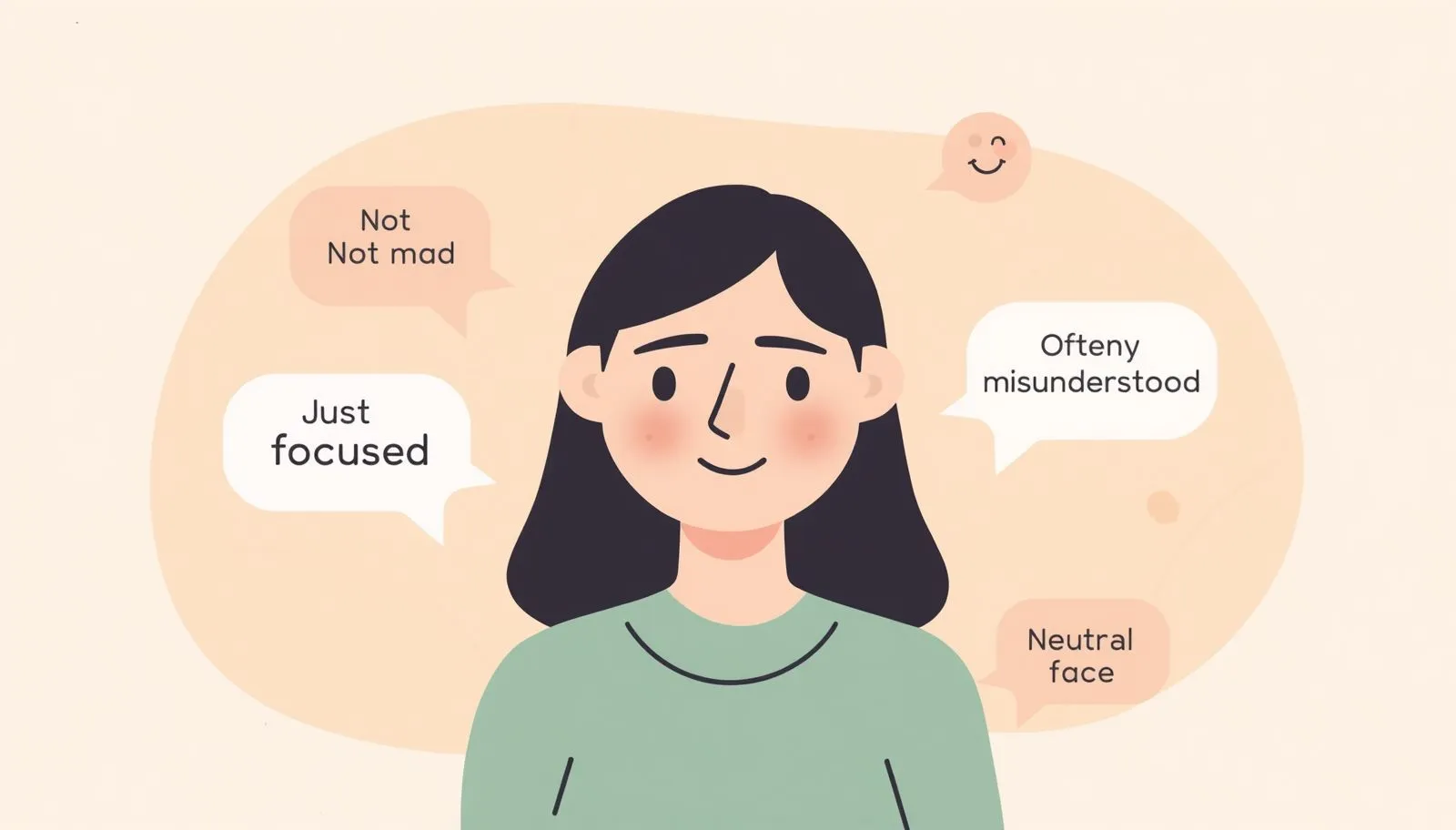
RBF is a slang abbreviation for “resting bitch face.” It describes a neutral facial expression that may look serious, annoyed, unfriendly, or irritated even when the person feels completely fine. You may see the term in texts, memes, captions, comments, and casual conversations, but it can sound rude when used carelessly.
You may have seen this acronym in a message, social media post, dating profile, or meme and wondered what it meant. In most casual situations, people use it to explain why someone’s relaxed face looks more intense than they actually feel.
However, the term needs context. Sometimes people use it jokingly about themselves. In other cases, it can come across as a judgment about someone’s appearance.
Quick Answer Table
| Question | Answer |
|---|---|
| Full form | Resting bitch face |
| Simple meaning | A neutral face that looks serious, annoyed, or unfriendly |
| Common use | Texts, DMs, memes, captions, comments, casual speech |
| Actual emotion | The person may not feel upset at all |
| Tone | Often joking, but sometimes rude |
| Polite alternative | Serious resting face, neutral expression, naturally serious face |
RBF Meaning in Simple Terms
The term describes a relaxed face that other people may read as irritated, bored, or unfriendly.
For example, someone may look:
- annoyed
- serious
- unimpressed
- tired
- focused
- unapproachable
- emotionally flat
Even so, their expression may not match their mood.
A person could feel calm, shy, distracted, or deep in thought. Because of that, the phrase says more about how others interpret the face than what the person actually feels.
What Does RBF Mean in Text?
In texting, the acronym usually appears when someone wants to explain a serious-looking expression in a casual way.
For example:
| Text Example | What It Means | Tone |
|---|---|---|
| “I’m not mad, it’s just my face.” | The person looks serious but feels fine | Playful |
| “My ID photo makes me look so intense.” | Their photo captured a stern expression | Self-joking |
| “She looked annoyed, but maybe that’s just her resting face.” | Someone may have misread her expression | More neutral |
| “Your face looks scary today.” | A direct comment on appearance | Risky or rude |
| “I always look serious in group photos.” | The person jokes about their natural expression | Casual |
When Someone Says “I Have RBF”
When someone says they have it, they usually mean:
“My face looks more annoyed than I actually feel.”
Often, this is a light joke. It can also explain why others mistake them for being angry, bored, or unfriendly.
When Someone Says “You Have RBF”
This version is more sensitive.
Even if the person means it playfully, the comment can sound like criticism. A better option is:
“You looked serious, so I wasn’t sure how you were feeling.”
That wording avoids judging the person’s face and focuses on the possible misunderstanding instead.
What It Means on TikTok, Instagram, Snapchat, and Social Media
On social media, people usually use the term in captions, comments, memes, and short videos about being misunderstood.
On TikTok
TikTok users often connect the phrase with first impressions, awkward moments, school, work, or being told to smile.
Example:
“Everyone thinks I’m mad, but I’m just focused.”
On Instagram
Instagram captions often use the expression with selfies or group photos.
Example:
“Not angry. Just a serious resting face and bad lighting.”
On Snapchat or in DMs
In private messages, someone may use the phrase to explain a photo.
Example:
“Ignore my expression in that snap. I wasn’t upset.”
In Dating Profiles
Some people use the phrase jokingly in bios.
Example:
“Nicer than my serious face suggests.”
That kind of line can work when the tone feels playful. Still, some readers may find the original phrase too harsh, so a softer version often works better.
Does It Mean Someone Is Mad?
No. A serious-looking resting face does not prove that someone feels angry.
Instead, it shows how easily people can misread facial expressions.
| What someone may assume | What may actually be true |
|---|---|
| “They’re angry.” | They are concentrating. |
| “They dislike me.” | They are shy or quiet. |
| “They look annoyed.” | They are relaxed. |
| “They seem rude.” | Their face naturally rests that way. |
| “They should smile more.” | They do not owe anyone a smile. |
As a result, it is better not to judge someone’s mood from one expression.
Is the Term Rude or Offensive?
It can be.
The full phrase includes a harsh, gendered insult. Although many people use it casually, it may still sound disrespectful in the wrong setting.
It May Be Fine When:
- someone uses it about themselves
- close friends are joking comfortably
- the tone is clearly playful
- the conversation is informal
- nobody feels criticized or pressured to smile
It Can Sound Rude When:
- someone uses it about a stranger
- the setting is professional
- it appears in serious feedback
- it criticizes a person’s appearance
- it implies someone should look happier
- the person already feels self-conscious
Because of this, “serious resting face” or “neutral expression” is usually safer.
Is the Phrase Gendered?
The idea can apply to anyone. Still, the wording often affects women more because the full phrase contains a gendered insult.
This matters because people sometimes expect women, in particular, to look pleasant, cheerful, or approachable. When someone labels a neutral face negatively, the comment can reinforce that unfair expectation.
Therefore, use the term carefully, especially when describing someone else.
RBF vs Resting Face, Poker Face, and Serious Face
| Term | Meaning | Difference |
|---|---|---|
| RBF | A neutral face that looks annoyed or unfriendly | Slangy and potentially rude |
| Resting face | A person’s natural relaxed expression | More neutral |
| Serious resting face | A naturally serious-looking expression | Polite alternative |
| Poker face | A controlled expression that hides emotion | Usually intentional |
| Neutral expression | A face showing little or no visible emotion | Best for professional use |
| Focused look | A serious expression caused by concentration | Explains a likely reason |
Can RBF Mean Anything Else?
Yes, context changes the meaning.
In casual texts, captions, memes, and social media posts, the acronym usually refers to a serious-looking resting face.
In technical fields, however, it can also stand for radial basis function, a term used in mathematics, artificial intelligence, and machine learning.
So, context gives you the clue. A meme or DM likely uses the slang meaning. A math or AI article likely uses the technical one.
Where Did the Term Come From?
The phrase became widely known through internet culture, comedy, and memes. Over time, people shortened it to the acronym because it was easier to use in captions, comments, and casual messages.
Today, most people treat it as informal slang rather than a formal description.
How to Use the Term Correctly
Use the phrase with care. It works best when someone describes their own expression or makes an obvious joke.
Better Uses
- “I’m not upset. My face just looks serious in photos.”
- “My resting face always looks intense.”
- “I need to smile in passport photos, or I look annoyed.”
Risky Uses
- “She has such bad RBF.”
- “Your face makes you look mean.”
- “You should smile more.”
The main difference is respect. Self-description usually feels safer. Judging someone else’s face can feel rude.
Polite Alternatives
To explain the same idea without using harsh slang, try:
- serious resting face
- neutral expression
- naturally serious face
- focused look
- calm expression
- unreadable expression
- relaxed face
- serious-looking expression
Instead of saying:
“She has RBF.”
Say:
“She has a naturally serious expression.”
Instead of saying:
“Your face makes you look annoyed.”
Say:
“I wasn’t sure how you were feeling because you looked serious.”
How to Reply If Someone Says You Have It
You do not need to apologize for your natural expression. Depending on the situation, you can respond casually, directly, or with humor.
| Situation | Possible Reply |
|---|---|
| Friend joking | “I’m not mad. That’s just my face.” |
| Photo comment | “The camera caught my serious side.” |
| Workplace situation | “I wasn’t upset. I was focused.” |
| Unwanted comment | “I know you may not mean it badly, but I don’t like comments about my face.” |
| Lighthearted moment | “My face looks dramatic even when I’m relaxed.” |
When Not to Use the Term
Avoid this slang in formal, professional, or sensitive situations.
For example, do not use it:
- in workplace feedback
- in school evaluations
- with strangers
- when commenting on someone’s appearance
- when someone may already feel judged
- when a neutral phrase would work better
Instead, say “neutral expression,” “serious expression,” or “focused look.”
Common Mistakes People Make
Assuming a Serious Face Means a Bad Attitude
A person can look intense and still be kind, warm, and friendly.
Treating the Expression as Proof of Anger
Facial expressions can mislead. One look does not confirm someone’s mood.
Using Slang in Professional Settings
Because the phrase can sound insulting, it does not belong in formal communication.
Telling Someone to Smile More
That comment often feels dismissive. People should not have to change their natural expression to make others comfortable.
Forgetting That Tone Changes Everything
Among close friends, the phrase may feel funny. In a workplace, public comment, or serious conversation, it may sound disrespectful.
What Most Articles Miss About This Topic
Most articles only explain the full form. However, the more useful point is that this phrase describes an interpretation, not a fact.
A person who looks annoyed may feel calm. Someone who seems unfriendly may simply be quiet. A serious expression in a meeting may show concentration, not irritation.
In addition, the wording carries baggage. The term may sound funny when someone uses it about themselves, yet it can feel insulting when used toward another person.
The best rule is simple: use the slang mostly for self-description or obvious jokes. When talking about someone else, choose “serious resting face” or “neutral expression.”
FAQs
What is the full form of RBF?
The full form is “resting bitch face.”
What does it mean in text?
In text, it describes a neutral face that looks serious, annoyed, or unfriendly, even when the person feels fine.
What does “I have RBF” mean?
It means the person thinks their relaxed face looks more irritated or serious than they actually feel.
What does it mean from a girl?
It usually has the same meaning. She may be joking that her natural expression looks serious or annoyed.
What does it mean from a guy?
The meaning stays the same. Anyone can have a naturally serious-looking face.
Is it an insult?
It can be. Self-use is often playful, but saying it about someone else can sound rude.
Is it a compliment?
Usually, no. People use it as a joke or observation, not as a compliment.
Is it the same as a poker face?
No. A poker face usually hides emotion on purpose. A serious resting face is usually unintentional.
What is a nicer way to say it?
Use “serious resting face,” “neutral expression,” “focused look,” or “naturally serious face.”
Can it mean radial basis function?
Yes. In math, AI, and machine learning, the same acronym can mean “radial basis function.” In casual messages, it usually refers to the slang phrase.
Conclusion
RBF is informal slang for a neutral face that others may mistake for anger, irritation, or unfriendliness. The person may actually feel calm, focused, tired, or completely fine.
Because the phrase can sound harsh, use it carefully. It works best as a self-joke or casual comment among people who understand the tone. For clearer and kinder communication, use “serious resting face” or “neutral expression” instead.
Click Here To Read About : what does the name asher mean

Hi, I’m Geoffrey Chaucer. I explore the stories and meanings behind words, turning ideas into clear, insightful writing. Through every article I craft, I aim to spark curiosity, share knowledge, and help readers uncover practical, meaningful truths in everyday life.