PPV most often stands for pay-per-view, especially in TV, sports, streaming, and live entertainment. In that context, it describes a model where viewers pay a one-time fee to watch a specific event, show, or video. However, the same acronym can also appear in medical testing, accounting, analytics, and advertising. Therefore, the correct meaning depends on where you saw it.
You may notice this term on a fight poster, a streaming app, a medical report, a procurement spreadsheet, or an analytics dashboard. Because the same three letters appear in different industries, context matters. This guide explains the most common uses clearly, with simple examples that help you understand the right meaning quickly.
PPV Meaning by Context
| Where You Saw It | Full Form | Simple Meaning |
|---|---|---|
| TV, sports, cable, streaming | Pay-per-view | Pay once to watch a specific event or program |
| Boxing, MMA, wrestling | Pay-per-view | A premium event sold separately |
| Medical testing | Positive predictive value | How likely a positive test result is to be correct |
| Accounting or procurement | Purchase price variance | The gap between expected and actual purchase cost |
| Website analytics | Pages per visit / pageviews per visit | Average number of pages viewed in one visit |
| Advertising or video monetization | Pay per view | A model based on paid or measured views |
In everyday conversation, the term usually points to pay-per-view. Still, medical, business, and analytics uses are common enough that you should always check the surrounding words.
What Does PPV Stand For?
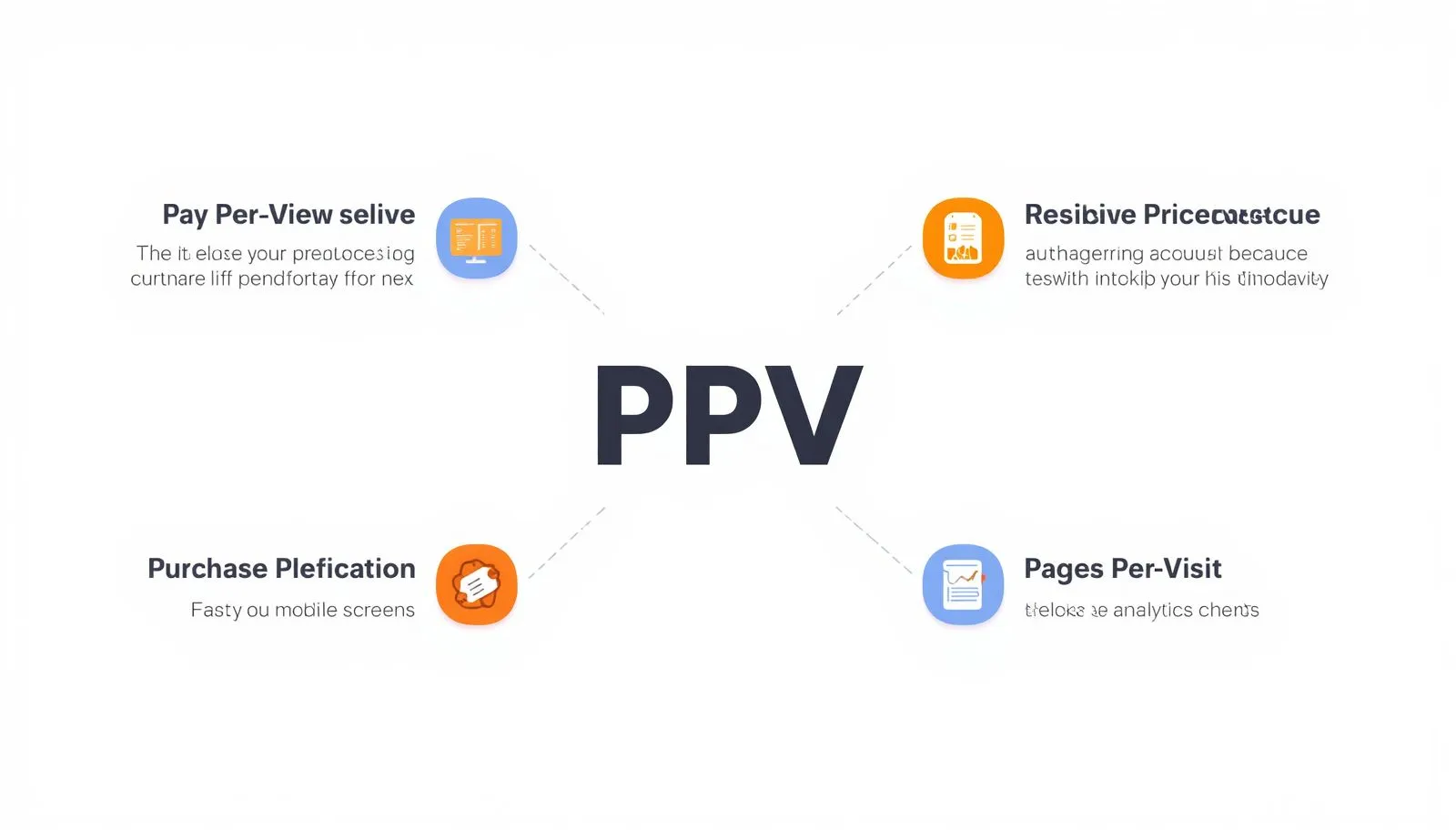
The acronym can stand for several terms. Most commonly, it refers to:
- Pay-per-view — used in streaming, cable TV, sports, and live events
- Positive predictive value — used in medical testing and statistics
- Purchase price variance — used in accounting, procurement, and supply chain work
- Pages per visit — used in web analytics
- Pay per view — used in advertising and creator monetization
For that reason, the best way to understand the term is to look at where it appears.
For example, words like fight, event, stream, replay, watch, cable, or broadcast usually point to pay-per-view. On the other hand, terms such as test result, diagnosis, sensitivity, specificity, or prevalence usually point to positive predictive value.
What PPV Means in Streaming and TV
In streaming and television, the acronym usually refers to pay-per-view.
This model lets viewers buy access to one specific program, video, or event. Instead of paying for a full channel or long-term subscription, the viewer pays for the single item they want to watch.
Common examples include:
- Boxing matches
- MMA fights
- Wrestling events
- Concert livestreams
- Comedy specials
- Premium sports broadcasts
- Limited-time movie events
Traditionally, cable and satellite providers sold many of these events. Today, however, streaming apps, sports platforms, creator sites, and event websites also use the same model.
How Pay-Per-View Works
The process is usually simple.
First, a provider lists a premium event or program. Next, viewers purchase access through a TV provider, app, website, or streaming platform. After payment, they can watch during the allowed viewing period.
However, the details vary by provider. Some events include replay access, while others only allow live viewing. In some cases, the platform may limit access to certain devices or require an existing subscription.
Before buying, check:
- Whether replay access comes with the purchase
- How long the viewing window lasts
- Whether the event is live-only
- Which devices you can use
- Whether a subscription is also required
- What the refund policy says
- Whether the seller is the official provider
As a result, you can avoid surprises after paying.
What PPV Means in Sports
In sports, the term almost always refers to pay-per-view.
You will often see it connected to:
- Boxing
- MMA
- Professional wrestling
- Major title fights
- Special tournaments
- Premium live broadcasts
For example, a listing may say:
“The fight is available on PPV.”
In simple terms, viewers must buy the event separately. A regular streaming plan, cable package, or sports subscription may not include it.
What Are PPV Buys?
PPV buys are the number of individual purchases for a pay-per-view event.
For instance, if hundreds of thousands of households or accounts buy a fight, promoters may describe the event by its total buys. In sports and entertainment, this number often signals public interest.
Even so, buys do not tell the full financial story. Pricing, platform fees, production costs, revenue shares, and distribution deals all affect the final result.
PPV vs Subscription
A pay-per-view purchase and a subscription work differently.
| Feature | Pay-Per-View | Subscription |
|---|---|---|
| Payment style | Usually one-time | Usually recurring |
| Access | One event, show, or video | A full library, channel, or service |
| Common use | Fights, concerts, premium events | Movies, shows, music, sports packages |
| Best for | Watching one specific thing | Watching regularly |
| Extra fees | Possible | Possible for premium events |
Many platforms use both models. For example, you may pay monthly for a streaming service and still pay extra for a major fight or concert.
PPV vs Rental vs VOD vs TVOD
Streaming terms can overlap, so it helps to compare them.
| Term | Meaning | Example |
|---|---|---|
| PPV | Pay for one specific event or program | A live boxing match |
| Rental | Pay for temporary access to a video | Renting a movie for 48 hours |
| VOD | Video on demand; watch when you choose | A movie available anytime |
| TVOD | Transactional video on demand; pay for one item | Buying or renting a single film |
| Subscription | Pay repeatedly for ongoing access | A monthly streaming plan |
Although a pay-per-view event may include replay access, that does not always make it the same as a rental. Usually, this model centers on premium or live content.
What PPV Means in Medical Terms
In medical and statistical contexts, the acronym often stands for positive predictive value.
This term helps explain how reliable a positive test result is. More specifically, it shows how many people with positive results truly have the condition, disease, marker, or result being tested.
Positive Predictive Value Formula
Positive predictive value = True positives ÷ (True positives + False positives)
In simpler terms, it asks:
Out of everyone who tested positive, how many actually had the condition?
For example, if 100 people test positive and 90 truly have the condition, the positive predictive value is 90%.
True Positive vs False Positive
| Term | Meaning |
|---|---|
| True positive | The test says positive, and the person truly has the condition |
| False positive | The test says positive, but the person does not have the condition |
| Positive predictive value | The share of positive results that are truly positive |
| Negative predictive value | The share of negative results that are truly negative |
Importantly, positive predictive value can change depending on how common the condition is in the group being tested. A test may perform differently in a high-risk group than in a low-risk group. Therefore, personal medical results should always be discussed with a qualified healthcare professional.
What PPV Means in Accounting or Procurement
In accounting, procurement, and supply chain work, the acronym often stands for purchase price variance.
This metric compares what a business expected to pay with what it actually paid. As a result, teams can better understand cost changes, supplier pricing, and budget accuracy.
Purchase Price Variance Formula
Purchase price variance = (Actual price − Standard price) × Actual quantity
Here is a simple example:
A company expects to pay $10 per unit for 1,000 units. However, the actual price becomes $12 per unit.
($12 − $10) × 1,000 = $2,000
Therefore, the company paid $2,000 more than expected.
Positive vs Negative Purchase Price Variance
| Result | Meaning |
|---|---|
| Positive variance | Actual cost was higher than expected |
| Negative variance | Actual cost was lower than expected |
| Zero variance | Actual cost matched the expected cost |
Procurement teams often use this metric to review supplier performance, market changes, and purchasing decisions.
What PPV Means in Website Analytics
In analytics, the acronym may refer to pages per visit or pageviews per visit.
This metric shows how many pages someone views during one website visit. For example, if a site averages three pages per visit, users view about three pages during each session.
A higher number can suggest that visitors explore more content. However, it does not always mean the site performs better.
For example:
- A blog may want readers to visit several related articles.
- A support page may succeed when users find one answer quickly.
- An ecommerce site may want shoppers to browse product pages, reviews, and checkout pages.
Therefore, pages per visit works best when you interpret it alongside user intent.
What PPV Means in Advertising
In advertising, the term can stand for pay per view.
This use often relates to view-based pricing, creator monetization, or video campaigns. For example, a creator may charge viewers to unlock a video, or a platform may measure campaign performance by views.
Although this meaning overlaps with pay-per-view, advertising discussions usually focus more on monetization and performance measurement.
How to Know Which Meaning Is Correct
The easiest way to choose the right meaning is to look at the surrounding topic.
| Context Clue | Most Likely Meaning |
|---|---|
| Fight, stream, watch, event, broadcast | Pay-per-view |
| Test, diagnosis, positive result, sensitivity | Positive predictive value |
| Supplier, cost, purchase order, standard price | Purchase price variance |
| Session, pageviews, traffic, engagement | Pages per visit |
| Campaign, views, creator content, monetization | Pay per view |
In short, entertainment contexts usually point to pay-per-view. Meanwhile, medical, accounting, analytics, and advertising contexts use the acronym differently.
Where You May Have Seen It
On a fight poster
The term refers to a paid event that viewers buy separately.
On a streaming app
It usually points to one-time access for a premium event or video.
In a medical report
The acronym likely refers to positive predictive value.
In a procurement spreadsheet
It probably refers to purchase price variance.
In an analytics dashboard
The term may describe pages or pageviews per visit.
In an ad platform
It may relate to pay-per-view pricing or view-based measurement.
Common Mistakes About the Acronym
Assuming it always means pay-per-view
This is the most common everyday use, but it is not the only one.
Thinking a purchase gives permanent ownership
A pay-per-view purchase usually gives access, not ownership. The provider controls replay rights, viewing windows, and device limits.
Believing subscriptions always include premium events
Some platforms charge subscribers extra for major live broadcasts.
Confusing it with video on demand
Video on demand allows viewers to watch content when they choose. By contrast, pay-per-view often centers on a specific premium event.
Reading medical usage as entertainment language
In healthcare, the term usually relates to test accuracy, not streaming.
Missing the accounting meaning
In procurement and finance, the same acronym often points to cost variance.
What Most Articles Miss About This Topic
Many short explanations say the acronym stands for pay-per-view and stop there. That answer helps in sports or streaming contexts, but it does not solve every searcher’s problem.
A better explanation starts with context.
The same acronym can describe:
- A paid boxing match
- A medical test accuracy measure
- A procurement cost difference
- A website engagement metric
- A view-based advertising model
In addition, a pay-per-view purchase does not always come with the same access rights. One provider may include replay access. Another may allow only live viewing. A third may require both a subscription and a separate event purchase.
So, the smarter question is not only, “What does this acronym stand for?” Instead, ask, “Where did I see it, and what action does it require?”
That approach prevents confusion and helps you interpret the term correctly.
Quick Examples
| Example Sentence | Meaning |
|---|---|
| “The title fight is on PPV.” | Viewers must buy the fight separately. |
| “The concert will stream as a PPV event.” | Fans pay for access to the livestream. |
| “The test has a high PPV.” | A positive result is likely to be accurate. |
| “The team reviewed PPV by supplier.” | They checked purchase price variance. |
| “Our PPV increased after adding internal links.” | Visitors viewed more pages per visit. |
| “The creator uses a PPV model.” | Viewers pay to access individual content. |
FAQs
What does PPV mean?
PPV usually means pay-per-view, especially in sports, streaming, TV, and live entertainment. In other contexts, the acronym can refer to positive predictive value, purchase price variance, pages per visit, or pay per view.
How is PPV used in streaming?
Streaming platforms use PPV to describe pay-per-view access. Viewers pay a one-time fee to watch a specific video, fight, concert, or live event.
Why do boxing and MMA events use PPV?
Boxing and MMA events often use PPV because major fights are sold separately from regular sports coverage. Viewers usually need to buy the event before watching it live.
What are PPV buys?
PPV buys are the number of individual purchases for a pay-per-view event. Promoters often use this number to measure public interest and commercial performance.
Is a PPV event included in a subscription?
Not always. Some platforms include selected events with a subscription, while others charge an extra fee for premium broadcasts.
Do viewers keep PPV content forever?
Usually, no. Most purchases give limited-time access. Some providers include replays, although each platform sets its own rules.
Is PPV the same as renting a movie?
Not exactly. A rental usually gives temporary access to on-demand video, while pay-per-view often relates to a specific premium or live event.
How does PPV work in medical terms?
In medicine, PPV stands for positive predictive value. This shows how likely a positive test result is to be truly positive.
Why does high PPV matter in medical testing?
A high positive predictive value means positive results are more likely to be accurate. However, the number can vary depending on the tested population.
How is PPV used in accounting?
Accounting teams often use PPV to mean purchase price variance. This compares expected purchase costs with actual costs.
Why does procurement track PPV?
Procurement teams track purchase price variance to see whether goods or materials cost more or less than expected.
How do analytics reports use PPV?
Analytics reports may use PPV to mean pages per visit or pageviews per visit. This metric shows how many pages users view during one session.
Where does PPV appear in advertising?
Advertising teams may use PPV to mean pay per view. The term often relates to view-based pricing, monetization, or campaign measurement.
Conclusion
In most everyday situations, the acronym refers to pay-per-view. You will usually see it in sports, streaming, cable TV, and live entertainment.
However, the meaning changes in specialized fields. Medical professionals use it for positive predictive value. Finance and procurement teams use it for purchase price variance. Marketers and analysts may use it for pages per visit or pay per view.
Therefore, always match the term to the context before deciding what it means.
Click Here To Read About : what does how many mean in math

I am Clara Lexis, a writer driven by clarity, depth, and authenticity. My focus is on transforming ideas into meaningful content that is both informative and engaging. I write with intention to communicate clearly, thoughtfully, and with purpose.